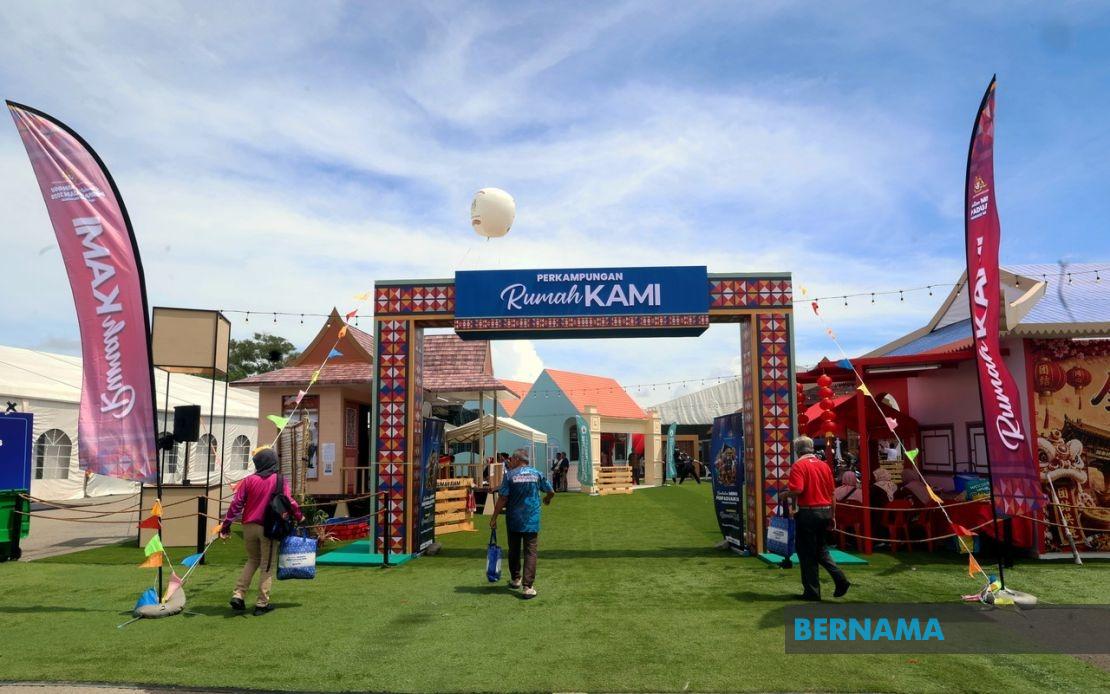
The National Unity Week celebration held in Kota Kinabalu from June 11 to 14 has set a new attendance milestone, drawing 284,448 visitors across the four-day event. National Unity Minister Datuk Aaron Ago Dagang confirmed that this represents the strongest turnout since the national programme commenced in 2023, signalling an intensifying public appetite for platforms that celebrate Malaysia's multicultural character.
The minister attributed the robust attendance to deepening public awareness of the vital relationship between Malaysia's cultural mosaic and national strength. He emphasized that the diverse heritage, traditions, and identities woven through Malaysian society serve as foundational pillars that sustain cohesion and resilience. This interpretation aligns with the MADANI Government's strategic framework, which positions cultural appreciation as integral to building a united nation that transcends conventional boundaries of race, religion, and geography.
Three specific attractions emerged as the primary draws throughout the event. The Ethnic Village provided an immersive window into the everyday realities and lifestyles of Malaysia's principal communities, moving beyond superficial cultural representation to showcase lived experiences. The Ethnic Houses exhibition detailed the distinctive architectural, artistic, and cultural heritage of groups including the Bajau, Melanau, Banjar, Kedayan, and Portuguese communities. Meanwhile, the Negara Bangsa and Raja Kita Exhibition particularly captured the imagination of younger visitors, indicating successful efforts to anchor national consciousness and historical awareness among the generation expected to drive Malaysia forward in coming decades.
Acknowledging the record turnout, the Ministry of National Unity confirmed its intention to institutionalize this gathering as an annual national fixture. Rather than treating unity-building as episodic or event-driven, the ministry framed its commitment as part of a sustained, multigenerational effort. This distinction carries significance for Malaysian policymakers and civil society, as it reflects recognition that meaningful social cohesion cannot be manufactured through occasional celebrations but demands consistent cultivation over extended timeframes.
The decision to continue the programme addresses a broader imperative facing Malaysia's development trajectory. As the nation navigates demographic shifts, urbanization, and economic transformation, maintaining social fabric becomes increasingly complex. The enthusiastic public response to Kota Kinabalu's celebration suggests receptiveness among Malaysians to curated spaces where diverse communities interact authentically, provided such spaces are structured with clarity and purpose.
Minister Aaron articulated a comprehensive vision for future iterations, indicating that the ministry would systematize opportunities for Malaysians to engage across cultural boundaries, cultivate deeper interpersonal connections, and strengthen reciprocal comprehension. This language suggests movement beyond tokenistic inclusion toward substantive interaction designed to challenge stereotypes and foster genuine understanding among participants.
The Kota Kinabalu venue itself carries symbolic weight. Sabah's geographic position within Malaysia's federal structure, combined with its profound ethnic heterogeneity, positions it as an apt laboratory for national unity initiatives. The state's own experience managing inter-communal relations within a context of resource competition and distinct political history offers particular lessons for national unity programming elsewhere in Malaysia.
For Malaysia's business community and civil society organizations, the record attendance presents both opportunity and expectation. The minister specifically invoked the private sector and civil society as essential partners in the unity agenda, implying that future iterations will require collaboration extending beyond government machinery. Organizations seeking to align their corporate social responsibility portfolios with national priorities may recognize in this initiative a channel for meaningful engagement.
The emphasis on youth engagement through historical exhibitions warrants particular attention given Malaysia's demographic structure. Approximately one-third of the population consists of citizens under twenty-five, many of whom lack direct memory of Malaysia's formative post-independence period. Creating vehicles through which younger Malaysians develop emotional investment in national narratives and recognize contemporary diversity as a feature rather than a bug in the country's fabric carries implications for long-term social stability and national identity formation.
From a regional perspective, Malaysia's systematic approach to celebrating diversity offers comparative insights for neighbouring Southeast Asian nations navigating similar pluralistic challenges. Thailand, Myanmar, and the Philippines each grapple with questions of national integration amid communal difference. Malaysia's public positioning of diversity as strength—demonstrated through initiatives like National Unity Week—provides a distinct counternarrative to approaches emphasizing assimilation or minimization of difference.
The ministry's framing of unity as requiring "commitment of all parties" reflects implicit acknowledgment that government proclamations alone cannot engineer social harmony. The attendance figures and exhibition popularity suggest that Malaysians themselves seek opportunities to encounter difference constructively. Whether such moments accumulate into sustained shifts in intercommunal attitudes and behaviour remains an open empirical question warranting continued monitoring.
Looking ahead, the challenge for policymakers involves scaling and sustaining the momentum generated in Kota Kinabalu. The record figures demonstrate latent demand for such programming, yet the pathway from positive event experiences to concrete improvements in inter-ethnic relations, institutional trust, and everyday pluralism requires careful attention to follow-up mechanisms, community integration initiatives, and structural reinforcement beyond celebratory moments.

%22%2F%3E%3C%2Fpattern%3E%3C%2Fdefs%3E%3Crect%20width%3D%22100%25%22%20height%3D%22100%25%22%20fill%3D%22url(%23ph21o2sg)%22%2F%3E%3Crect%20width%3D%22100%25%22%20height%3D%22100%25%22%20fill%3D%22url(%23ph21o2sp)%22%2F%3E%3Ctext%20x%3D%2250%25%22%20y%3D%2250%25%22%20text-anchor%3D%22middle%22%20dominant-baseline%3D%22central%22%20fill%3D%22rgba(255%2C255%2C255%2C0.95)%22%20font-family%3D%22Georgia%2C%20'Times%20New%20Roman'%2C%20serif%22%20font-weight%3D%22700%22%20font-size%3D%22170%22%20letter-spacing%3D%22-0.02em%22%3EGabungan%3C%2Ftext%3E%3C%2Fsvg%3E)