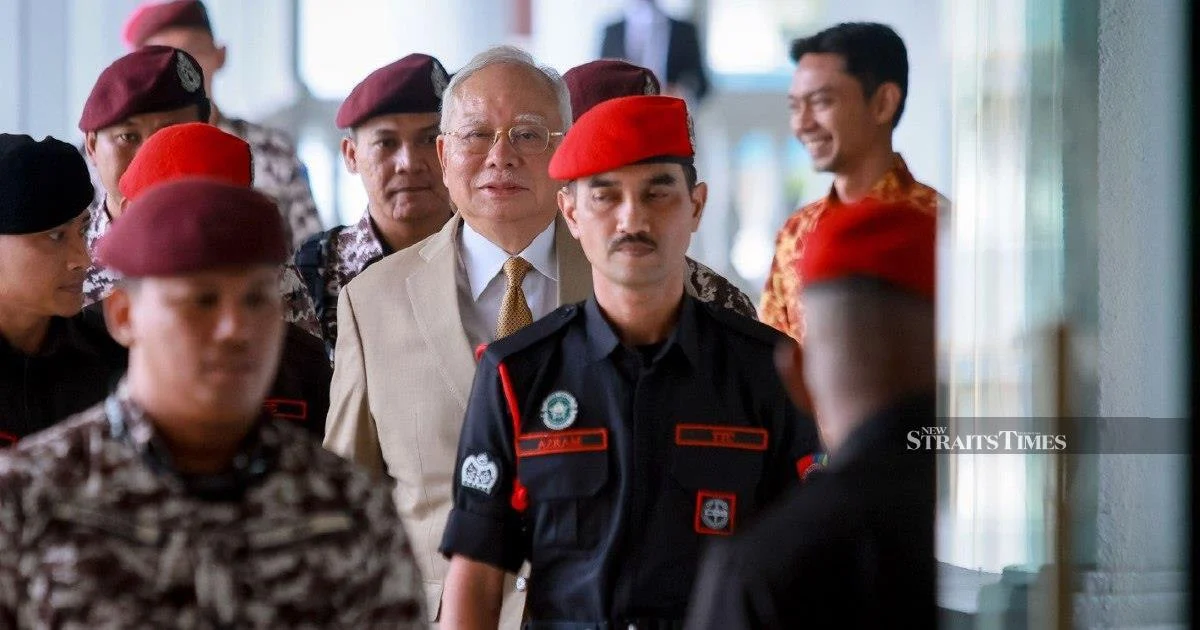
The High Court in Kuala Lumpur delivered its long-awaited comprehensive judgment on the 1Malaysia Development Bhd scandal on Monday, marking a watershed moment in Malaysia's legal and political history more than six months after Datuk Seri Najib Razak was found guilty across all charges lodged against him. The judgment, which had been eagerly anticipated by legal observers, political analysts, and the Malaysian public, represents the court's most detailed examination of the financial malfeasance that shook the nation's institutions and global standing.
The scale of the theft perpetrated through the state investment vehicle struck the presiding judge as almost incomprehensible in its audacity and scope. In vivid language intended to convey the gravity of the wrongdoing, the judge compared Najib's actions unfavourably even to those of Attila the Hun, the fifth-century ruler infamous for his ruthlessness and destructive military campaigns. The rhetorical flourish underscores how thoroughly the court viewed the former prime minister's conduct as an extraordinary breach of public trust and stewardship of national resources.
The 1MDB case has captivated Malaysian society and international observers for years, consuming considerable media attention and public discourse across Southeast Asia. The fund, established during Najib's administration, became the vehicle through which hundreds of millions of dollars were allegedly misappropriated, with money flowing to various destinations including offshore accounts, real estate purchases, and luxury acquisitions. The scandal reverberated far beyond Malaysia's borders, drawing scrutiny from law enforcement agencies in Singapore, the United States, Switzerland, and the United Arab Emirates.
Najib's conviction on all counts represented a rare occurrence in Malaysian jurisprudence—the prosecution of a sitting or former prime minister for financial crimes while in or shortly after leaving office. The guilty verdicts addressed charges including criminal breach of trust, abuse of power, and money laundering. Each conviction carried serious implications for sentencing and Malaysia's global reputation, particularly given the nation's efforts to strengthen anti-corruption frameworks and attract international investment.
The full judgment provides the court's detailed reasoning for these convictions, examining evidence presented across months of testimony and exploring the legal principles that applied to Najib's conduct. The document likely addresses how funds moved through various accounts, the roles of co-conspirators and intermediaries, and the mechanisms by which state money was diverted from legitimate 1MDB purposes into private channels. Such granular analysis serves not only to justify the guilty verdicts but also to establish precedent for future financial crimes prosecutions in Malaysia.
For Malaysian readers and the broader Southeast Asian audience, the judgment carries implications extending beyond Najib's personal accountability. It reflects institutional confidence in Malaysia's judiciary to examine high-level political conduct impartially, a concern that has occupied observers given questions about judicial independence and executive influence. The case tests whether Malaysia's legal system can credibly prosecute those who wielded power, sending signals about governance standards and the rule of law throughout the region.
The timing of the judgment's release, half a year after conviction, reflects the complexity inherent in cases of this magnitude. The court presumably required substantial time to prepare the written judgment, documenting findings of fact, legal analysis, and responses to defence arguments. Each such decision becomes part of the public record and judicial history, available for appeal courts to examine and for legal scholars to analyse.
For Malaysia's international standing, the case carries weight in demonstrating commitment to combating financial crime and corruption despite the involvement of a former leader. Other nations and international bodies assessing Malaysia's governance trajectory and anti-corruption resolve will scrutinise both the verdict and the judgment's reasoning. The case has already prompted discussions about asset recovery, with various jurisdictions examining how stolen funds might be repatriated to Malaysia.
The 1MDB affair also catalysed significant political change within Malaysia. The initial investigation and prosecution commenced under a different administration, and the case's progression through the courts has continued across multiple government changes. This continuity, despite electoral shifts, suggests some institutional resilience in pursuing accountability regardless of which coalition holds executive power.
Sentencing considerations loom ahead for Najib, assuming he does not successfully appeal the convictions. The comprehensive judgment provides the foundation upon which sentencing guidelines and the determination of punishment will rest. The penalty imposed could significantly influence how Najib spends his remaining years and whether he might pursue further legal avenues to contest the convictions.
Beyond the immediate legal proceedings, the judgment contributes to Malaysia's evolving narrative about accountability and institutional strength. As Southeast Asia navigates questions about democratic resilience, judicial independence, and the consequences of high-level corruption, the 1MDB case and its associated judgments offer a case study in how systems respond to extraordinary breaches of public trust.
%22%2F%3E%3C%2Fpattern%3E%3C%2Fdefs%3E%3Crect%20width%3D%22100%25%22%20height%3D%22100%25%22%20fill%3D%22url(%23ph21o2sg)%22%2F%3E%3Crect%20width%3D%22100%25%22%20height%3D%22100%25%22%20fill%3D%22url(%23ph21o2sp)%22%2F%3E%3Ctext%20x%3D%2250%25%22%20y%3D%2250%25%22%20text-anchor%3D%22middle%22%20dominant-baseline%3D%22central%22%20fill%3D%22rgba(255%2C255%2C255%2C0.95)%22%20font-family%3D%22Georgia%2C%20'Times%20New%20Roman'%2C%20serif%22%20font-weight%3D%22700%22%20font-size%3D%22170%22%20letter-spacing%3D%22-0.02em%22%3EGabungan%3C%2Ftext%3E%3C%2Fsvg%3E)