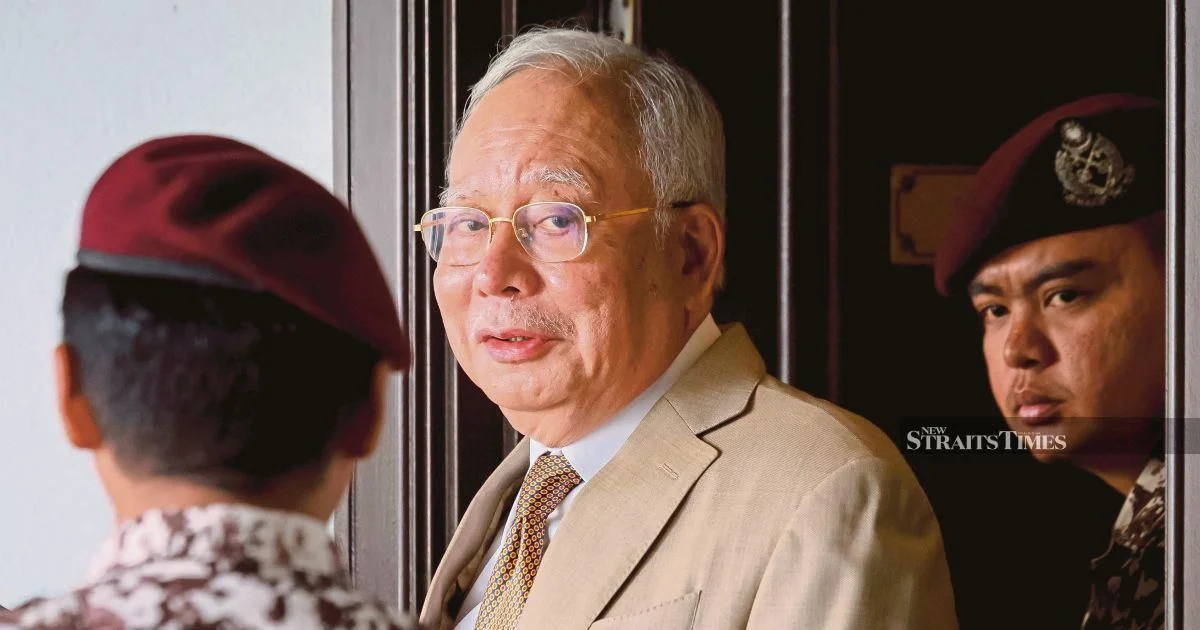
The judiciary has determined that former Prime Minister Datuk Seri Najib Razak demonstrated no genuine contrition regarding his involvement in the 1Malaysia Development Bhd (1MDB) scandal, with evidence suggesting he sought to distribute responsibility among other parties rather than accept accountability for his actions. This assessment emerged during court proceedings that examined Najib's conduct and statements throughout the legal process.
The 1MDB scandal represents one of the most significant financial and political crises in Malaysia's modern history, involving the alleged misappropriation of billions of ringgit from the state-owned development fund established during Najib's tenure as Prime Minister. The revelations surrounding the scandal prompted international investigations, particularly from the United States Department of Justice, and damaged Malaysia's international standing and domestic confidence in institutions. The investigation uncovered a complex web of financial transfers, shell companies, and alleged corruption that implicated numerous figures across government, banking, and business sectors.
Najib's trial proceedings have documented various statements and testimony related to his awareness and involvement in transactions associated with the fund. The court's observation about his lack of remorse carries significant weight within Malaysia's legal and political context, particularly given the national conversation about accountability and institutional integrity that has dominated discourse since the scandal's exposure. The finding suggests a pattern of deflection rather than acknowledgment, which observers note contrasts with approaches taken by other individuals implicated in the affair.
The significance of the court's assessment extends beyond the individual trial, touching on broader questions about leadership responsibility in Malaysia. When high-ranking officials face serious allegations, the manner in which they respond—whether with acceptance of wrongdoing or defensive positioning—influences public perception of the justice system's effectiveness. Najib's apparent strategy of attributing fault elsewhere raises concerns among governance advocates about whether accountability mechanisms are functioning as intended.
International observers have tracked the various legal proceedings related to 1MDB with particular attention to Malaysia's willingness to pursue accountability at the highest levels of government. The court's documented findings become part of the public record that shapes Malaysia's reputation in global forums concerned with anti-corruption efforts and rule of law. Several neighboring Southeast Asian nations have followed the case closely, viewing Malaysia's handling as indicative of the region's broader commitment to addressing grand corruption.
The deflection of blame to other parties, as noted by the court, reflects a defence strategy that has characterized Najib's legal response throughout the proceedings. Rather than acknowledging involvement and seeking mitigation through expressions of regret, the approach maintains that responsibility rests with subordinates, advisors, or other officials who allegedly acted without proper authorization or oversight. This positioning has proven contentious within Malaysia's political ecosystem, where differing interpretations of the evidence have reinforced partisan divisions.
For Malaysian civil society organizations focused on corruption and governance, the court's assessment provides documentary evidence of the stark absence of accountability from former leadership during one of the nation's most damaging financial episodes. Anti-corruption advocates argue that genuine remedial action and rebuilding of public trust require not merely legal consequences but also acknowledgment of harm caused. The court's finding becomes a critical marker in assessing whether Malaysia's institutions can meaningfully address executive accountability.
The implications for future governance standards remain contested across Malaysian political discourse. Some observers contend that the legal system's determination that remorse was absent strengthens the case for robust prosecutorial action and proportionate consequences. Others suggest that the focus on subjective assessments of contrition should remain secondary to establishing factual culpability through evidence. Nevertheless, the court's explicit notation of this dimension indicates that Malaysia's judicial framework considers moral accountability alongside legal responsibility.
The 1MDB affair continues to reverberate through Malaysian institutional development and international relations. Najib's legal challenges proceed through various courts and appellate processes, with each finding accumulating into a comprehensive record of the investigation and trial outcomes. The court's determination that he demonstrated no remorse adds texture to the overall assessment of his conduct during a period when Malaysia occupied an uncomfortable position in global discussions about financial transparency and anti-corruption standards.
For Malaysians contemplating the meaning and consequences of the 1MDB scandal more than a decade after its discovery, the court's observation about the absence of remorse represents one element within a broader reckoning with how the nation's institutions respond to breaches of public trust. The proceedings continue to influence public debate about governmental accountability, judicial independence, and the complex relationship between legal process and moral responsibility in societies addressing historical wrongdoing.

%22%2F%3E%3C%2Fpattern%3E%3C%2Fdefs%3E%3Crect%20width%3D%22100%25%22%20height%3D%22100%25%22%20fill%3D%22url(%23ph21o2sg)%22%2F%3E%3Crect%20width%3D%22100%25%22%20height%3D%22100%25%22%20fill%3D%22url(%23ph21o2sp)%22%2F%3E%3Ctext%20x%3D%2250%25%22%20y%3D%2250%25%22%20text-anchor%3D%22middle%22%20dominant-baseline%3D%22central%22%20fill%3D%22rgba(255%2C255%2C255%2C0.95)%22%20font-family%3D%22Georgia%2C%20'Times%20New%20Roman'%2C%20serif%22%20font-weight%3D%22700%22%20font-size%3D%22170%22%20letter-spacing%3D%22-0.02em%22%3EGabungan%3C%2Ftext%3E%3C%2Fsvg%3E)