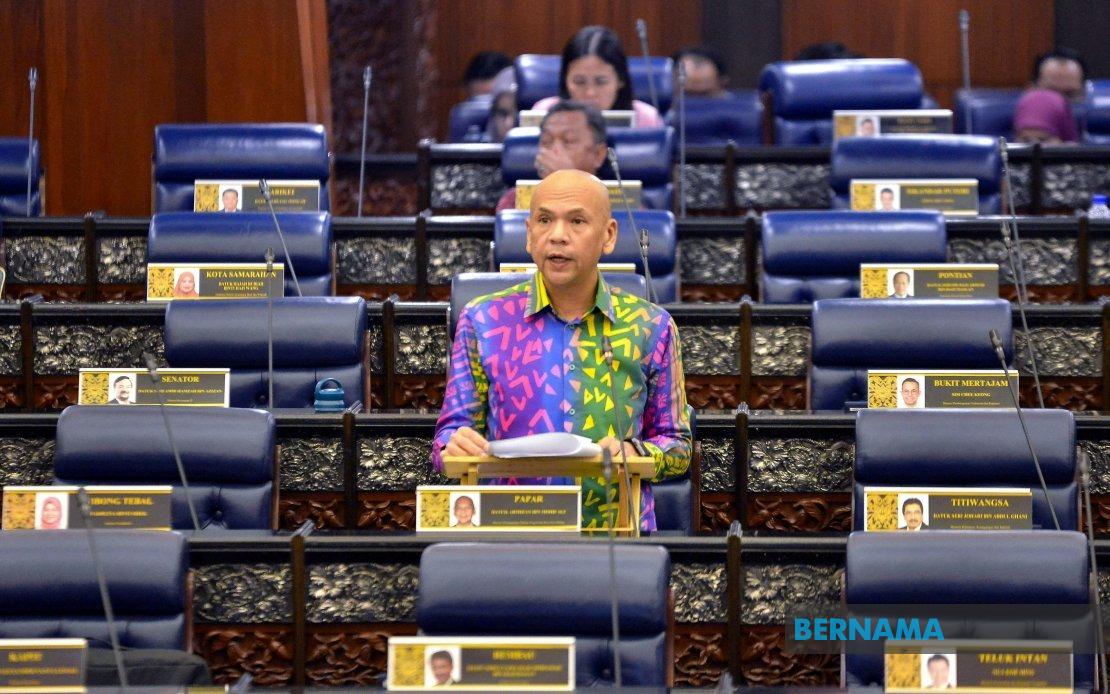
The Malaysia Competition Commission is poised to receive substantial new enforcement capabilities following parliamentary approval of the Competition (Amendment) Bill 2026, which introduces financial incentives for informants and settlement mechanisms that could fundamentally reshape how the agency tackles anticompetitive behaviour in Malaysia's markets.
Domestic Trade and Cost of Living Minister Datuk Armizan Mohd Ali outlined the legislative package during parliamentary debate, emphasising that the amendments represent a watershed moment in competition law enforcement. The centrepiece involves two new provisions—Sections 64A and 64B—that establish a dedicated framework for both protecting and rewarding individuals who come forward with intelligence about cartel arrangements. This distinction matters considerably because Malaysia's existing Whistleblower Protection Act 2010 was designed for criminal and disciplinary misconduct, leaving a significant gap in civil competition matters where cartels typically operate.
The introduction of cash rewards for whistleblowers addresses a longstanding vulnerability in Malaysia's competition enforcement architecture. Unlike criminal conspiracies, competition violations involve civil liability, meaning traditional whistleblower protections do not automatically apply. By establishing Section 64B, the amendment removes this critical barrier and creates concrete financial incentives for employees, business partners, or industry observers to report price-fixing schemes, market allocation arrangements, or output restrictions. This financial dimension is crucial—many jurisdictions have found that monetary rewards dramatically increase the likelihood that individuals will overcome the professional and personal risks associated with reporting their own organisations or competitors.
Equally transformative is the Settlement Offer mechanism introduced through Section 38A, which permits enterprises to negotiate reduced penalties of up to 40 per cent if they acknowledge liability and cooperate early in investigations. Armizan characterised this approach as a resource optimisation strategy, enabling MyCC to resolve cases more efficiently without exhausting investigative capacity or prolonging litigation. For businesses, particularly smaller enterprises that may lack sophisticated legal defences, this creates a genuine incentive to cooperate voluntarily rather than defending proceedings to completion. The psychological and financial calculus shifts substantially when companies recognise that early admission produces meaningfully lighter sanctions than fighting enforcement actions through to final determination.
The efficiency gains from settlement mechanisms extend beyond individual cases to systemic benefits for the entire enforcement regime. MyCC can redirect investigative resources from protracted inquiries into multiple suspected cartels toward identifying new violations, conducting proactive surveillance, and building deterrence across the economy. By shortening case timelines and reducing contested hearings, the Commission also minimises the accumulation of litigation costs that ultimately burden Malaysian consumers through higher prices and reduced market dynamism. Armizan's emphasis on reducing "the risk of litigation after final decisions" suggests that settlement frameworks prevent the appeals and subsequent procedural challenges that often delay resolution and create uncertainty for market participants.
Another significant expansion concerns the statutory definition of "enterprise" under competition law. Currently narrower in scope, the amended definition will encompass all forms of economic activity rather than solely commercial transactions. This seemingly technical change carries profound practical implications because it authorises MyCC to investigate industry associations and professional bodies whose collective decisions may facilitate cartel conduct. In Malaysia's context, where trade associations wield considerable influence in sectors ranging from construction to professional services, this expanded definitional scope could unlock investigation opportunities that previously faced legal constraints. Industry associations that coordinate pricing, allocate customers or territories, or impose output restrictions among members have long operated in a grey zone where MyCC's authority was questionable.
The timing of these amendments reflects regional and international momentum toward tougher competition enforcement. Regional peers including Thailand and Indonesia have similarly enhanced their competition agencies' investigative and remedial powers in recent years. The ASEAN Secretariat has promoted convergence on competition law standards, and Malaysia's legislative evolution positions it competitively among regional economies demonstrating commitment to fair market principles. For multinational enterprises operating across Southeast Asia, harmonisation of enforcement approaches reduces compliance complexity and creates predictability.
For Malaysian consumers and smaller businesses, the practical consequences could prove substantial. Enhanced cartel detection and prosecution reduces the hidden tax that anticompetitive conduct imposes—estimated globally at between 1 and 3 per cent of GDP through artificially elevated prices, restricted output, and reduced innovation incentives. Industries historically vulnerable to cartelisation in Malaysia, such as cement, building materials, pharmaceuticals, and automotive components, may face intensified scrutiny. This disciplinary effect should theoretically improve market competitiveness and price outcomes for downstream industries and final consumers.
The Settlement Offer mechanism also introduces an interesting dynamic for corporate compliance culture. Companies facing potential investigation now have a clear pathway to negotiate reduced exposure if they promptly disclose violations and demonstrate remedial action. This incentive structure encourages internal compliance programmes and self-monitoring rather than purely reactive defensive postures. Organisations may invest more substantially in competition law training and internal audit functions, knowing that demonstrated commitment to compliance can factor into settlement negotiations.
However, the amendments also raise implementation questions that will shape their real-world effectiveness. MyCC will require sufficient resources to evaluate whistleblower tips, manage confidentiality and protection protocols, negotiate settlements efficiently, and maintain credible prosecution threats that make voluntary disclosure and early admission genuinely attractive options. The quantum of whistleblower rewards and the criteria for award determination remain to be established through subsequent regulations. Additionally, the protection framework must operate robustly enough that informants face minimal professional or personal jeopardy—a substantial operational challenge in Malaysia's relatively compact business environment where cartel participants and potential whistleblowers often operate within interconnected networks.
The legislation passed the policy stage and will advance to committee stage on Monday, followed by readings of the parallel Competition Commission (Amendment) Bill 2026. This sequencing suggests ministerial confidence in parliamentary passage, though the committee stage may refine specific provisions based on further stakeholder input. Industry groups, legal practitioners, and business associations will likely scrutinise the regulations implementing these provisions carefully, as the practical operation of settlement negotiations and whistleblower protection programmes will ultimately determine whether the amendments translate aspirational enforcement authority into genuine market discipline.
Broader competitive dynamics in Southeast Asia will likely follow Malaysia's implementation experience. If the amendment successfully increases cartel detection and yields meaningful settlements, neighbouring jurisdictions may adopt comparable frameworks. Conversely, implementation difficulties could caution other region members against similar comprehensive overhauls. Malaysia's approach to balancing corporate incentives for voluntary compliance against robust prosecution of uncooperative violators will become an instructive case study in how emerging market competition authorities can maximise enforcement effectiveness within resource constraints.

