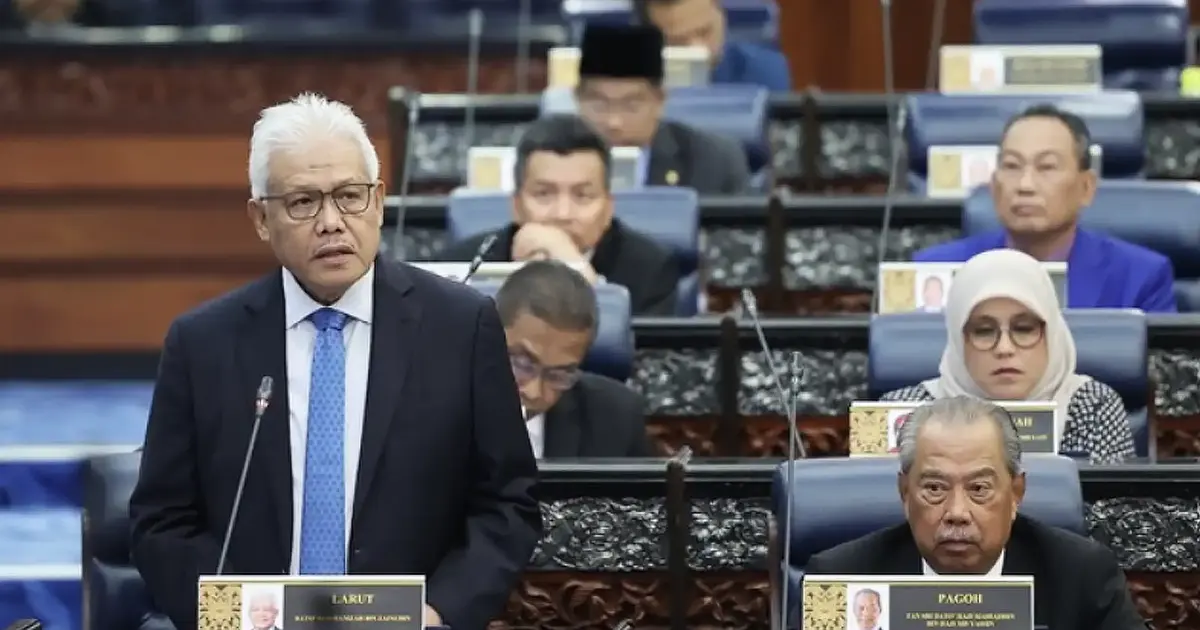
Dewan Rakyat Speaker Johari Abdul has revealed that former Prime Minister Muhyiddin Yassin submitted a request to modify his seating position within the lower house chamber. The disclosure came as the speaker confirmed receipt of formal correspondence validating Larut MP Hamzah Zainudin's position as the recognised opposition leader in parliament.
The request from Muhyiddin regarding his parliamentary seat represents an administrative matter handled through the speaker's office, reflecting routine procedures that occasionally arise when legislators seek adjustments to their designated positions in the chamber. Such requests are not uncommon in parliamentary practice, though they typically attract minimal public attention unless associated with broader political shifts or factional realignments within political parties or coalitions.
Muhyiddin's tenure as Prime Minister ended in August 2021, following the collapse of the Perikatan Nasional coalition government he led. His subsequent political journey has seen him navigate changing dynamics within Bersatu, the party he founded, as well as shifting parliamentary alignments. The seat change request, while procedurally straightforward, nonetheless underscores evolving considerations regarding his positioning and visibility within the legislative chamber.
The confirmation of Hamzah Zainudin's status as opposition leader holds greater significance for Malaysian parliamentary politics. Hamzah, who represents the Larut constituency, succeeded to the opposition leadership position through formal notification to the speaker's office. This development reflects the structured constitutional processes through which parliament recognises and formally designates the leader of the opposition bloc, a position carrying both ceremonial and substantive responsibilities within the parliamentary framework.
The opposition leader's role encompasses several key functions, including the right to participate in parliamentary debates with specific speaking priorities, access to parliamentary questions and scrutiny mechanisms, and symbolic representation of the parliamentary opposition. The Dewan Rakyat maintains protocols that grant the opposition leader particular standing in proceedings, reflecting democratic principles embedded within Malaysia's parliamentary system.
Hamzah's ascension to this position follows the established mechanisms through which opposition coalitions or individual parties communicate their chosen representatives to the speaker. The formal notification process ensures that parliament's administrative structures accurately reflect current leadership alignments and coalition compositions. This clarity proves essential for maintaining the orderly conduct of parliamentary business and ensuring appropriate recognition of opposition constituencies and their spokespeople.
The speaker's confirmation of these matters, while relatively routine in parliamentary administration, has become noteworthy against the backdrop of Malaysia's complex and fluid political landscape. The composition and leadership of opposition groupings in the current parliament reflects considerable evolution from the previous electoral cycle, with various parties and personalities occupying adjusted positions relative to their earlier standing.
For Malaysian observers and political analysts, Hamzah's formalisation as opposition leader signals the continued importance of the Perikatan Nasional coalition and its allies in structuring parliamentary opposition dynamics. The group has positioned itself as a substantial counter-balancing force to the ruling coalition, maintaining distinct policy platforms and pursuing aggressive parliamentary scrutiny strategies.
Parliamentary seating arrangements, though sometimes dismissed as ceremonial matters, carry practical implications for legislative dynamics. The physical positioning of legislators within the chamber influences debate patterns, media visibility, and the informal networks through which parliamentary business develops beyond formal voting processes. Muhyiddin's request reflects considerations about optimal positioning for his continued parliamentary participation and engagement with legislative proceedings.
The speaker's role in managing these administrative matters demonstrates the substantial behind-the-scenes coordination required to maintain parliamentary operations. Beyond presiding over debates and maintaining order, the speaker's office handles numerous procedural and logistical arrangements that enable parliament to function effectively as a legislative institution. Public disclosure of such matters offers insight into the workings of Malaysia's parliamentary machinery that often remain invisible to casual observers.
Looking forward, the formalisation of opposition leadership and parliamentary seating arrangements will influence the rhythm and character of parliamentary business throughout the current session. Hamzah's elevated position as recognised opposition leader will shape how opposition parties coordinate their parliamentary strategies, coordinate question periods, and frame their legislative priorities and critiques of government initiatives.
These developments also reflect the ongoing renegotiation of political alignments that has characterised Malaysian politics since the 2022 general elections. The fluid nature of coalition configurations and party positioning continues to generate adjustments in parliamentary structures and protocols, each reflecting substantive shifts in political power and parliamentary composition.