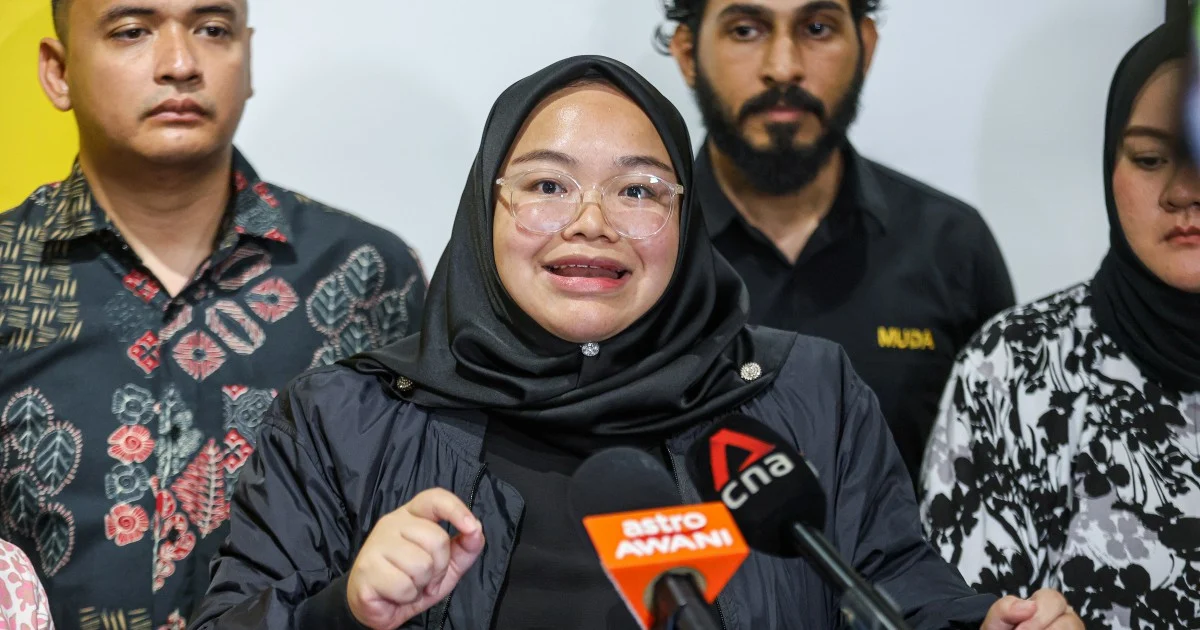
Muda, the youth-centric political force that emerged from Malaysia's 2022 political upheaval, is fostering constructive relations with Bersatu across Johor but remains uncommitted to any formal electoral partnership as the southern state approaches its polling date. The pragmatic stance reflects broader coalitional uncertainties within Malaysia's fragmented political landscape, where traditional alliances continue shifting in response to state-level dynamics and national developments.
The relationship between Muda and Bersatu, which split from the United Malays National Organisation (UMNO) in 2020, carries particular weight in Johor given the state's strategic importance to national politics. As the peninsula's second-largest state by population and an influential swing region, Johor has consistently shaped the trajectory of federal government formation. The absence of a binding cooperation agreement between the two parties underscores the complexity of coalition-building in contemporary Malaysian politics, where short-term tactical flexibility often takes precedence over long-term institutional arrangements.
Muda's position reflects its evolution from an opposition outsider into a pragmatic operator capable of negotiating multiple pathways. The party, which has positioned itself as distinct from both Pakatan Harapan and the Perikatan Nasional alliance, maintains that its strength lies in retaining optionality rather than locking into exclusive partnerships prematurely. In Johor, this translates into friendly engagement with Bersatu while exploring whether formal cooperation aligns with the party's broader electoral mathematics and ideological positioning.
The timing of coalition negotiations carries considerable significance. The Johor state election, anticipated within Malaysia's five-year electoral cycle but not yet formally called, presents Muda with critical decisions about resource allocation and candidate deployment. Unlike larger established parties with extensive grassroots machinery and entrenched support bases, Muda must carefully calibrate each electoral engagement to maximise limited organisational capacity whilst building the party's institutional foundations across multiple constituencies.
Bersatu's position in Johor reflects its own strategic recalibration following its merger into Perikatan Nasional. The party maintains meaningful presence in certain Johor constituencies whilst struggling to recover from electoral setbacks in other regions. For Bersatu, cooperation with Muda could theoretically broaden its appeal among younger voters and urban constituencies, though such benefits must be weighed against risks of diluting its own party identity or alienating existing supporters who view Muda with ambivalence.
The absence of a formalised agreement also reflects Malaysian political parties' increasingly transactional approach to electoral alliances. Rather than establishing fixed coalitions that persist across multiple election cycles, contemporary Malaysian political actors frequently negotiate issue-by-issue and constituency-by-constituency arrangements. This fluidity enables parties to respond to local circumstances whilst maintaining negotiating leverage with multiple potential partners simultaneously.
Johor's political environment contains additional complexities that shape these deliberations. The state remains a bastion of Barisan Nasional strength, particularly within UMNO's heartland constituencies, yet has demonstrated receptiveness to opposition and alternative voices in urban centres. This bifurcated political terrain complicates coalition mathematics significantly, as any partnership between Muda and Bersatu must address how to compete effectively against Barisan's entrenched machinery whilst potentially avoiding direct contests that fragment the anti-Barisan vote.
Regional dynamics within Southeast Asia add another dimension to these considerations. Malaysia's political configuration influences and is influenced by broader regional trends toward political fragmentation and the rise of issue-based rather than ideology-based coalitions. Muda's emergence exemplifies this regional pattern, alongside similar youth-oriented movements in other Southeast Asian democracies seeking to disrupt traditional party systems.
Looking ahead, the decision on electoral cooperation between Muda and Bersatu in Johor will likely depend on how negotiations proceed across multiple domains. Both parties retain flexibility to adjust their positioning as the election draws closer, constituency-level discussions advance, and the broader national political environment crystallises. The current phase of cordial but non-committal relations may represent either an interim stage before formalised cooperation emerges or a definitive alignment where limited cooperation proves mutually beneficial without requiring institutional integration.
For Malaysian voters monitoring these developments, the lack of clarity underscores contemporary politics' volatility. In previous election cycles, coalition arrangements were typically announced months in advance with clear parameters. The current approach, where parties maintain positive relations whilst deferring major commitments, reflects both heightened strategic uncertainty and genuine disagreement about optimal electoral strategies. In Johor specifically, the delayed decision-making allows party leaders to gauge voter sentiment and competitive dynamics more precisely before finalising their positioning, potentially generating more responsive outcomes than predetermined arrangements would allow.

%22%2F%3E%3C%2Fpattern%3E%3C%2Fdefs%3E%3Crect%20width%3D%22100%25%22%20height%3D%22100%25%22%20fill%3D%22url(%23ph21o2sg)%22%2F%3E%3Crect%20width%3D%22100%25%22%20height%3D%22100%25%22%20fill%3D%22url(%23ph21o2sp)%22%2F%3E%3Ctext%20x%3D%2250%25%22%20y%3D%2250%25%22%20text-anchor%3D%22middle%22%20dominant-baseline%3D%22central%22%20fill%3D%22rgba(255%2C255%2C255%2C0.95)%22%20font-family%3D%22Georgia%2C%20'Times%20New%20Roman'%2C%20serif%22%20font-weight%3D%22700%22%20font-size%3D%22170%22%20letter-spacing%3D%22-0.02em%22%3EGabungan%3C%2Ftext%3E%3C%2Fsvg%3E)