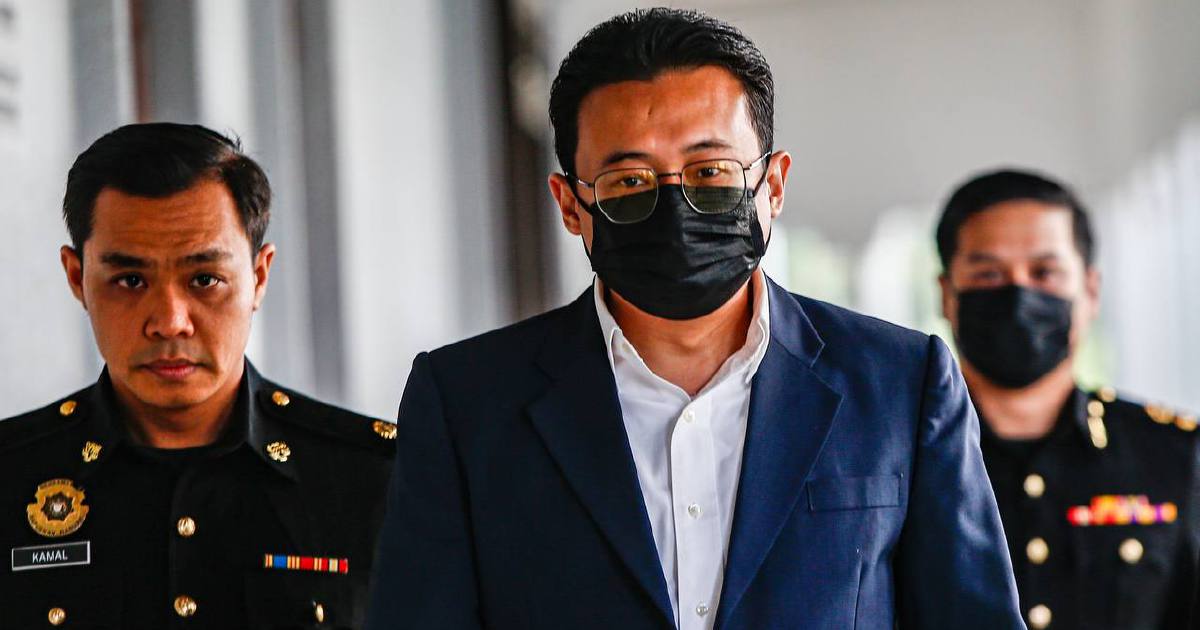
The chief executive officer of Malaysia Stadium Corporation appeared in the Sessions Court in Kuala Lumpur today to face accusations of soliciting and accepting bribes worth RM1.45 million. The executive entered a not guilty plea to all seven charges, which centre on alleged corrupt conduct related to the awarding of a tender for upgrading work at the National Squash Centre, a sporting facility under the state corporation's purview.
The allegations form part of an ongoing investigation into potential misconduct within Malaysia's sports infrastructure management. The National Squash Centre, a prominent venue for the country's squash programme, underwent scrutiny as authorities examined how tender decisions were made for facility enhancement projects. Such investigations underscore persistent concerns about governance standards in organisations responsible for managing public sporting assets, a matter that extends beyond this single case to touch broader systemic issues within the sector.
Malaysia Stadium Corporation operates multiple sports venues across the nation and plays a central role in maintaining and developing facilities used by national teams and sporting bodies. The tenure of any MSC leader involves substantial decision-making authority over multi-million ringgit contracts and procurement processes. When allegations of improper conduct emerge at this level, they inevitably raise questions about oversight mechanisms and the adequacy of internal controls designed to prevent such situations.
The nature of the charges—specifically solicitation and acceptance of bribes as inducement to favour a particular contractor—suggests a pattern of alleged misconduct rather than an isolated incident. Multiple charges indicate that the accused individual may have repeatedly engaged in similar behaviour across different transactions or timeframes. This distinction matters significantly for understanding the scope of potential institutional failure and whether safeguards were simply bypassed or fundamentally absent from decision-making procedures.
Tender processes for public infrastructure projects represent a critical juncture where transparency and integrity must be rigorously maintained. When individuals responsible for evaluating bids and selecting contractors become compromised through corrupt arrangements, the entire competitive process is undermined. Legitimate bidders who refuse to participate in bribery schemes are disadvantaged, costs to public institutions typically increase, and quality of work may suffer if the contract goes to a company selected for wrongful reasons rather than competitive merit.
For Malaysian sports development, such governance failures carry particular implications. The country's ambitions in various sporting codes depend partly on quality facilities and appropriate resource allocation. When substantial sums designated for facility upgrades are diverted through corrupt channels or spent inefficiently due to inflated contracts, the cumulative effect weakens the infrastructure foundation upon which athletic programmes depend. This extends beyond the squash community to affect national sporting capacity more broadly.
The MSC's role in the Asian sports ecosystem also warrants consideration. Malaysia hosts various regional and international sporting events, and the reputation of institutions managing these venues matters for attracting future competitions. Corruption allegations against senior officials can diminish confidence in an organisation's ability to manage major tournaments professionally and transparently. Southeast Asian sports tourism and the prestige associated with hosting events both depend on demonstrable institutional integrity.
The trial process ahead will examine evidence related to the alleged transactions, communications between parties, and documentation surrounding the tender award decision. The prosecution must establish that the accused individual knowingly solicited or accepted benefits as consideration for decisions made in an official capacity. The defence will have opportunity to challenge the evidence, dispute the characterisation of events, and present alternative explanations for any transactions or communications presented as proof.
This case arrives amid broader regional scrutiny of governance practices in public institutions across Southeast Asia. Malaysia, alongside neighbouring countries, has invested considerable effort in anti-corruption frameworks and enforcement mechanisms. High-profile prosecutions of senior officials serve as visible demonstrations of commitment to accountability, though observers note that systemic prevention—through robust institutional design and transparent processes—remains equally important as post-facto punishment.
The outcome of this trial will likely influence future oversight approaches within Malaysia Stadium Corporation and potentially across other sports management bodies. Depending on the verdict and any resulting recommendations, authorities may implement enhanced vetting procedures for major tenders, strengthen segregation of duties within decision-making structures, or increase external audit scrutiny of contract awards. Such institutional reforms, if implemented thoroughly, could help prevent similar situations and restore confidence in public sports facility management.
The MSC's leadership will face considerable pressure to demonstrate responsiveness to the allegations and commitment to remedial action regardless of the trial's outcome. Stakeholders including national sports associations, athletes relying on MSC-managed facilities, and the broader public have legitimate interests in seeing the institution function with integrity. How the corporation addresses governance weaknesses and rebuilds institutional reputation will be watched closely as this legal process unfolds.

%22%2F%3E%3C%2Fpattern%3E%3C%2Fdefs%3E%3Crect%20width%3D%22100%25%22%20height%3D%22100%25%22%20fill%3D%22url(%23ph21o2sg)%22%2F%3E%3Crect%20width%3D%22100%25%22%20height%3D%22100%25%22%20fill%3D%22url(%23ph21o2sp)%22%2F%3E%3Ctext%20x%3D%2250%25%22%20y%3D%2250%25%22%20text-anchor%3D%22middle%22%20dominant-baseline%3D%22central%22%20fill%3D%22rgba(255%2C255%2C255%2C0.95)%22%20font-family%3D%22Georgia%2C%20'Times%20New%20Roman'%2C%20serif%22%20font-weight%3D%22700%22%20font-size%3D%22170%22%20letter-spacing%3D%22-0.02em%22%3EGabungan%3C%2Ftext%3E%3C%2Fsvg%3E)