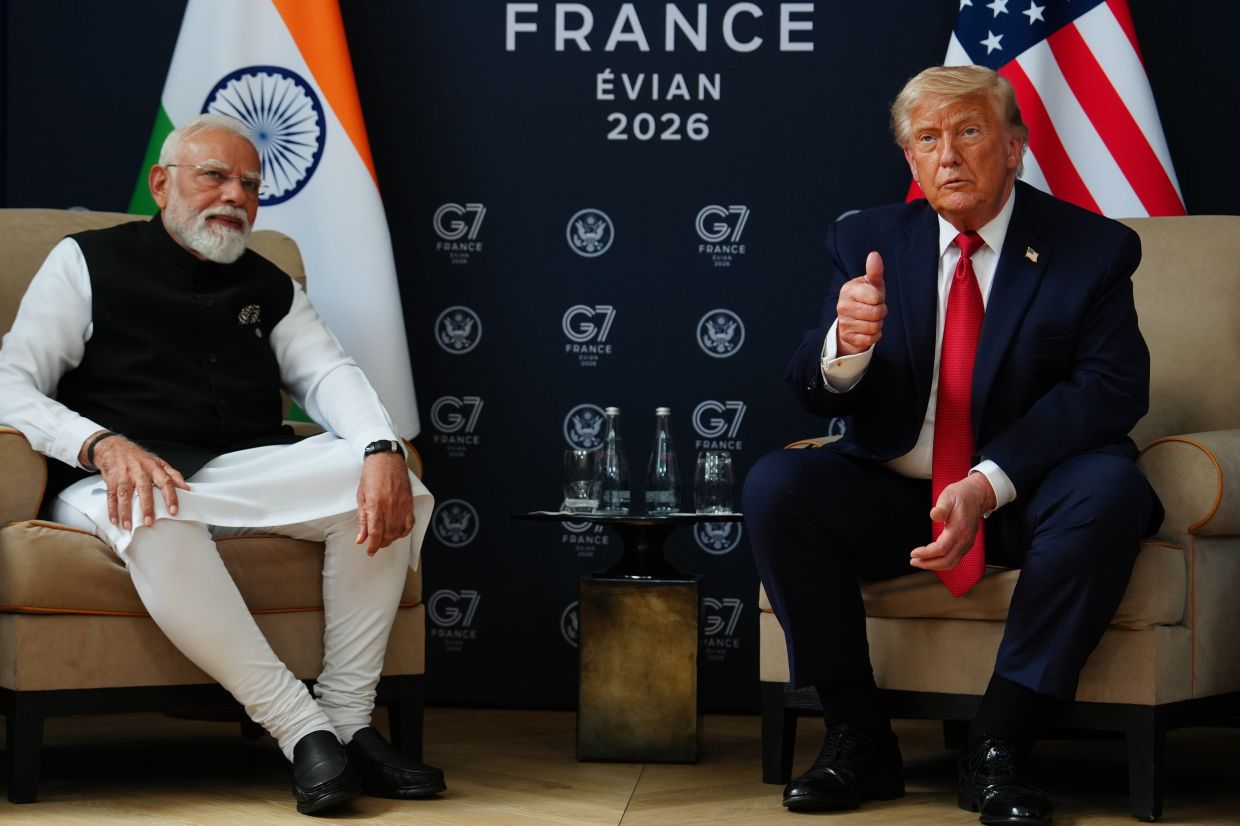
Indian Prime Minister Narendra Modi declared substantial progress in negotiations towards a comprehensive trade agreement with the United States following his meeting with President Donald Trump at the G7 summit in Evian, France. The two leaders convened on Wednesday for their first in-person discussions since February 2025, when they last met in Washington. According to India's foreign ministry statement released Thursday, both sides expressed satisfaction with the trajectory of talks aimed at establishing an interim bilateral trade framework. Trump characterised the state of negotiations as being "very close" to resolution when questioned by reporters, reinforcing the optimistic tone surrounding discussions that have stretched over several years and remained laden with complexities around tariff schedules and market access.
The bilateral trade relationship between the United States and India has assumed heightened importance within the broader strategic partnership between the two democracies, particularly as both nations navigate shifting geopolitical dynamics in Asia. The ambitious target of reaching US$500 billion in annual bilateral trade by 2030 reflects the scale of commercial opportunity both sides envision, though achieving this would require substantive tariff reductions and removal of non-tariff barriers that have historically hindered commerce. The negotiations have involved multiple rounds of talks spanning several years, punctuated by periods of stalled progress and renewed momentum. US Trade Representative Jamieson Greer is scheduled to travel to India next week for additional negotiations, signalling that momentum has resumed after a period of uncertainty following recent judicial and administrative developments in the United States.
Trump's characterisation of Modi as "the most beautiful looking man" and "the toughest" negotiator underscored the personal rapport between the two leaders, despite their divergent political styles and domestic priorities. The US president's colourful description of Modi as "like an angel, but actually he's a killer" reflected the complex dynamic of negotiating with India, which has consistently demonstrated willingness to defend its commercial interests even when facing pressure from a significantly larger economy. India's insistence on protecting domestic sectors, particularly pharmaceuticals, agriculture, and technology services, has provided counterbalance to American demands for greater market access in these same areas. The personal chemistry between Modi and Trump appears to have facilitated productive dialogue despite underlying tensions between their respective trade policy approaches.
Significantly, India's Commerce Minister Piyush Goyal stated in early June that negotiators had completed approximately ninety-nine percent of the initial tranche of a comprehensive trade deal. This claim suggests that outstanding disagreements centre on a narrow band of contentious items rather than fundamental structural issues dividing the two economies. The first phase of the agreement is expected to address immediate concerns on both sides, while subsequent phases would tackle more complex issues including intellectual property protections, services market access, and investment regulations. The emphasis on completing an "interim" deal reflects both sides' desire to achieve early wins before addressing the more protracted and difficult second and third phases of negotiation.
However, the US trade negotiating environment has grown considerably more volatile following Trump's sweeping tariff proposals and their subsequent rejection by the US Supreme Court. After the court invalidated certain tariff measures, the Trump administration pivoted to launching investigations into alleged unfair trade practices by multiple countries, including India. Simultaneously, a blanket ten percent tariff was imposed across the board, creating uncertainty about the baseline tariff environment against which any negotiated reduction would be measured. For India, these sudden policy shifts necessitated recalibration of negotiating strategies and reconsideration of potential outcomes, even as both sides publicly maintained commitment to reaching agreement.
The slowdown in talks earlier this year coincided with the tariff-related legal challenges and investigations, though recent statements from Modi and Trump suggest renewed determination to conclude negotiations before attention shifts to other priorities. The timing of Greer's planned visit and the leaders' meeting at the G7 summit indicate deliberate choreography aimed at signalling progress to business communities in both countries. For Indian exporters, particularly in sectors like pharmaceuticals, textiles, and IT services, clarity on future tariff treatment carries significant implications for investment and hiring decisions. Similarly, American companies operating in India's market are keen for greater certainty regarding regulatory treatment and access to India's massive consumer base.
Beyond trade mechanics, Modi used his meeting with Trump to raise concerns about the safety of Indian seafarers operating in the volatile Middle East region. Three Indian sailors perished in a US military strike against a commercial vessel off Oman on June 10, prompting the Indian government to request assurances that implementation of an Iran-US deal aimed at resolving Middle East tensions would prioritise maritime safety protections. This concern reflects India's acute vulnerability to disruptions in the Middle East, where approximately eighty percent of India's oil imports originate. The Strait of Hormuz, through which the vast majority of this energy flows, has become increasingly precarious due to escalating regional hostilities, with Iran's recent closure of the waterway aggravating supply chain disruptions.
The regional conflict's impact on India extends well beyond energy security into the broader ecosystem of global commerce upon which the South Asian economy depends. Modi warned that disruptions affecting fuel, fertiliser, and food supply chains triggered by the crisis would continue burdening the Global South for an extended period. This messaging served multiple purposes: it underscored India's humanitarian concerns regarding the broader geopolitical situation, pressured the United States to exercise restraint in its military operations, and sought to build international consensus on the need for rapid conflict resolution. For Malaysia and other Southeast Asian nations similarly dependent on Middle Eastern energy and vulnerable to supply chain disruptions, Modi's concerns about prolonged impacts carry particular resonance.
The convergence of trade negotiations with broader strategic concerns demonstrates how commercial relationships between major powers increasingly intertwine with security, geopolitical positioning, and humanitarian considerations. India's approach to negotiating with the United States reflects its effort to balance the benefits of deepening economic partnership with the need to maintain strategic autonomy and protect vital national interests. The success or failure of these trade negotiations could influence India's broader orientation toward Western democracies versus other emerging powers, particularly given concurrent discussions about regional supply chain resilience and economic cooperation frameworks. For the broader Indo-Pacific region, including Southeast Asia, the trajectory of US-India relations carries implications for trade architecture, technology standards, and strategic alignment among major powers.
As negotiations advance toward completion of the interim agreement, both sides appear positioned to declare victory and move toward implementation of initial tariff reductions and regulatory harmonisation measures. The celebration of "significant progress" serves political purposes in both capitals, demonstrating to domestic constituencies that their negotiators have achieved meaningful outcomes. However, the more challenging phases of negotiation remain ahead, particularly addressing services market access and intellectual property standards where American and Indian preferences have historically diverged significantly. The coming weeks will prove crucial in determining whether the momentum visible at the G7 summit can translate into concrete contractual commitments that withstand the inevitable domestic political pressures both governments face from import-competing industries and labour groups.
%22%2F%3E%3C%2Fpattern%3E%3C%2Fdefs%3E%3Crect%20width%3D%22100%25%22%20height%3D%22100%25%22%20fill%3D%22url(%23ph21o2sg)%22%2F%3E%3Crect%20width%3D%22100%25%22%20height%3D%22100%25%22%20fill%3D%22url(%23ph21o2sp)%22%2F%3E%3Ctext%20x%3D%2250%25%22%20y%3D%2250%25%22%20text-anchor%3D%22middle%22%20dominant-baseline%3D%22central%22%20fill%3D%22rgba(255%2C255%2C255%2C0.95)%22%20font-family%3D%22Georgia%2C%20'Times%20New%20Roman'%2C%20serif%22%20font-weight%3D%22700%22%20font-size%3D%22170%22%20letter-spacing%3D%22-0.02em%22%3EGabungan%3C%2Ftext%3E%3C%2Fsvg%3E)