The Menu RAHMAH affordability initiative is gaining traction across Malaysia, with Domestic Trade and Cost of Living Deputy Minister Datuk Dr Fuziah Salleh announcing that 3,210 food and beverage premises have registered as participating operators as of July this year. The robust participation rate signals industry willingness to collaborate with government efforts aimed at lightening the financial load on Malaysian households struggling with elevated everyday expenses.
The composition of participating establishments reveals interesting patterns in sector engagement. Food stalls and food court operators dominate the programme with 1,016 registrations, substantially outpacing other categories. This reflects the prominence of informal dining establishments in Malaysia's food landscape and their central role in feeding ordinary citizens. Traditional restaurants, hawker stalls, mobile food trucks, and bazaar operators round out the participant base, collectively demonstrating that the initiative resonates across diverse food service segments from premium dining to street-level vendors.
According to Dr Fuziah, the government views Menu RAHMAH as far more than a temporary relief measure. Rather, it represents a cornerstone component of the administration's long-term commitment to keeping cost-of-living pressures manageable for ordinary Malaysians. This framing carries significant implications for businesses considering participation, signalling that operators investing in Menu RAHMAH menus and pricing structures can expect sustained demand rather than a fleeting programme that might dissolve after temporary economic concerns pass.
Geographic prioritisation remains central to the programme's rollout strategy. The government has deliberately focused expansion efforts on high-traffic zones and locations with documented public demand, particularly Rest and Service Areas along Malaysia's major highway corridors. This targeted approach ensures that travellers and mobile populations can access affordable meals during their journeys, addressing a specific consumer need whilst building the programme's visibility among diverse demographic groups.
The Ministry of Domestic Trade and Cost of Living intends to intensify promotion through its 'Jom Cari Menu RAHMAH' campaign, positioning the initiative as a consumer-friendly search-and-discover effort. Simultaneously, the ministry is cultivating relationships with industry associations and traders' organisations to facilitate further geographic and operational expansion. By enlisting existing trade networks, the government leverages established distribution channels and peer influence rather than relying solely on top-down bureaucratic promotion.
Complementing Menu RAHMAH is the MADANI RAHMAH Sales Programme, which has simultaneously scaled up its operations to bring subsidised essential goods closer to consumers nationwide. As of July 2026, this parallel initiative had been executed 19,322 times, comfortably surpassing the year's initial target of 17,500 implementations and generating nearly 25.5 million individual transactions. The programme's ability to exceed its own targets suggests both strong community uptake and operational effectiveness in reaching intended beneficiaries.
The MADANI RAHMAH Sales Programme delivers documented price reductions ranging from ten to thirty percent below comparable local market rates, making measurable economic difference for price-conscious shoppers. The programme's basket spans essential proteins including chicken and fish, staple carbohydrates like rice and flour, cooking oils vital to Southeast Asian home cooking, fresh produce, eggs, and household necessities. This comprehensive product range reflects understanding that genuine cost-of-living relief requires addressing multiple categories of routine household expenditure rather than isolated budget items.
Operational coverage demonstrates the programme's expansive footprint across Malaysia's political geography. The MADANI RAHMAH Sales Programme now functions across 600 state constituencies and encompasses all forty administrative zones within the Federal Territories of Kuala Lumpur, Labuan, and Putrajaya. This saturation strategy deliberately prioritises communities facing genuine affordability challenges, ensuring resources concentrate where necessity is demonstrable rather than dispersing thinly across the entire population.
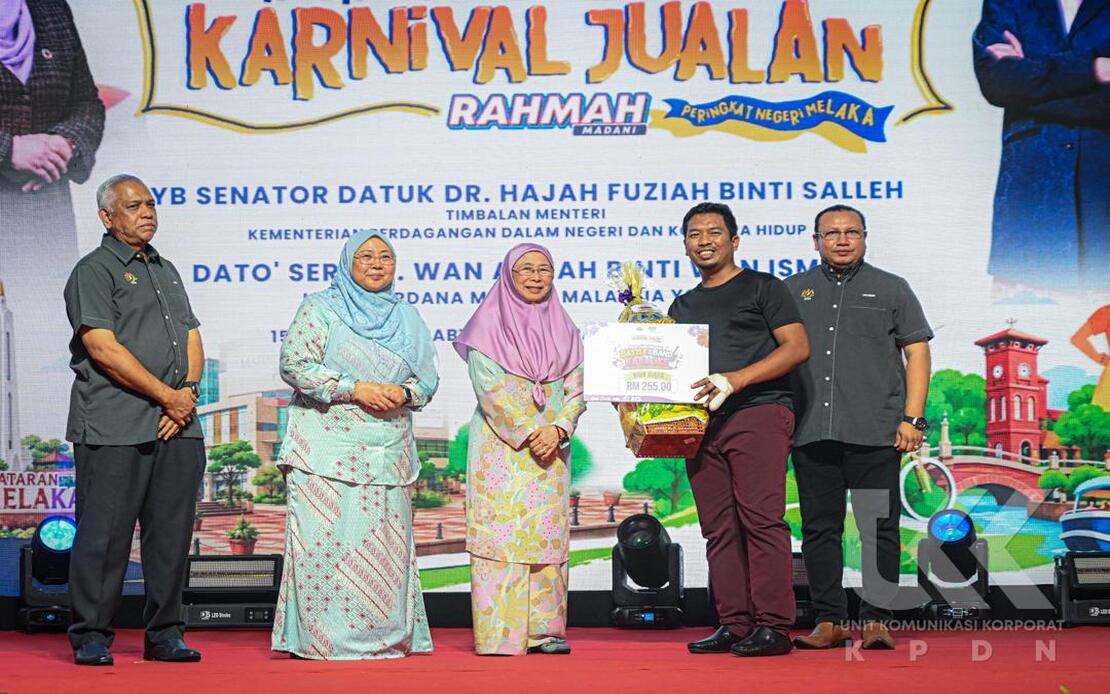
The government's commitment to these initiatives received tangible demonstration through the KPDN Mini Carnival held in Melaka, which functioned as a comprehensive exhibition of cost-of-living assistance programmes. The carnival simultaneously showcased Menu RAHMAH partnerships, presented MADANI RAHMAH Sales Programme operations, hosted business-matching opportunities for potential industry participants, and provided direct advisory services to consumers and traders. Additionally, the event featured competitively priced merchandise from twenty-seven traders, live entertainment on multiple stages, public competitions, and an electronic sports tournament executed in partnership with gaming organisation Todak.
The carnival's opening day attracted nearly three thousand visitors, with organisers anticipating increasing attendance through the event's concluding day. This attendance level reflects genuine public interest in accessible pricing opportunities and suggests that comprehensive, experiential programming—combining shopping opportunities with entertainment and information—succeeds in driving consumer awareness and participation in government affordability schemes. For Malaysian policymakers tracking the success of grassroots outreach efforts, the Melaka carnival provides a replicable model potentially applicable to other states and Federal Territories seeking to promote cost-of-living initiatives.
These parallel programmes represent the government's multifaceted approach to addressing Malaysia's cost-of-living concerns through combination of demand-side subsidisation and supply-side industry collaboration. Rather than imposing price controls or attempting to manipulate market mechanisms directly, the administration incentivises food operators and retailers to participate voluntarily whilst subsidising consumer purchases at the point of sale. This mechanism-design approach harnesses market competition and entrepreneurial incentives whilst simultaneously delivering tangible price relief to households navigating Malaysia's economic environment.

