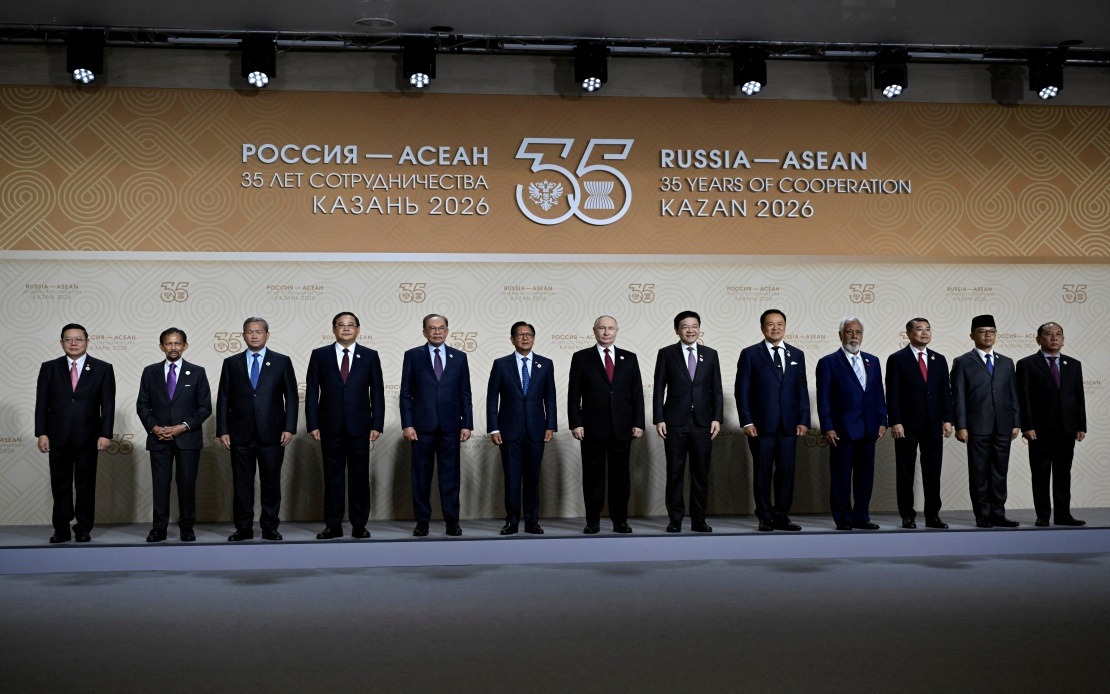
Philippine President Ferdinand R. Marcos Jr has laid out an ambitious vision for reinvigorating relations between ASEAN and Russia, arguing that the two sides have barely scratched the surface of their collaborative potential despite maintaining formal ties for more than three decades. Speaking after attending the ASEAN-Russia Commemorative Summit in Kazan, Marcos identified emerging technological sectors as the primary arena where the bloc and Moscow could forge deeper partnerships that would benefit both sides in an increasingly multipolar world.
The Philippine leader's remarks signal a significant shift in how ASEAN perceives its engagement with Moscow. Rather than viewing the relationship through the lens of traditional trade and diplomatic protocols that have characterised the partnership since the 1990s, Marcos has articulated a case for strategic expansion into domains that barely existed in earlier eras. His comments reflect a broader recognition within Southeast Asian leadership circles that the region must simultaneously manage relationships with diverse global powers while pursuing development goals that transcend conventional economic frameworks.
Marcos acknowledged that progress in ASEAN-Russia relations, while consistent, has proceeded at a measured pace. He noted that even within ASEAN's own membership, the depth and scope of bilateral engagement varies significantly from one country to another, with certain members having pursued substantially closer relationships with Moscow than their peers. This internal differentiation within the bloc has long complicated efforts to forge unified positions on major powers, though Marcos framed it as a natural reflection of ASEAN's foundational principle of non-interference in member states' internal affairs.
The emerging sectors Marcos identified—advanced technology, artificial intelligence, data centres, and power generation—represent arenas where Russia possesses recognised technical expertise and where ASEAN nations face pressing infrastructure and development needs. The confluence of these interests creates genuine opportunity for mutually beneficial collaboration that does not necessarily pit Southeast Asia against established Western partnerships. For Malaysian readers accustomed to balancing multiple great power relationships, this framing will resonate as a pragmatic approach to regional positioning in an era when strategic choices need not be binary.
Crucially, Marcos suggested that ASEAN's willingness to explore new partnership dimensions reflects the bloc's own maturation as a geopolitical actor. He described the current moment as a "new day" in which Southeast Asia is diversifying its external engagements and reassessing traditional alignments in light of evolving development priorities. This characterisation positions ASEAN not as a passive recipient of great power competition but as an active agent consciously shaping its own strategic architecture. The language of growth and adaptation that Marcos employed suggests confidence in ASEAN's ability to manage complex relationships without compromising core interests.
The Kazan summit itself produced substantive outputs designed to operationalise this renewed partnership vision. Beyond the symbolic weight of commemorating 35 years of formal dialogue, the participating nations adopted the Kazan Declaration 2026 and the ASEAN-Russia Comprehensive Plan of Action spanning 2026 to 2030. These framework documents commit both sides to concrete initiatives rather than rhetorical flourishes, addressing cooperation across cultural exchange and energy security—two domains where practical collaboration can generate tangible benefits for ASEAN citizens.
Energy cooperation merits particular attention for Southeast Asian observers. As the region grapples with balancing climate commitments against the electricity demands of rapid industrialisation and urbanisation, Russian expertise in hydrocarbon extraction, nuclear technology, and energy infrastructure could address gaps in ASEAN's current capacity. Malaysian policymakers, already exploring diverse energy partnerships to ensure supply security and technological advancement, will likely watch closely how bilateral energy dialogues evolve under this expanded framework.
Marcos's framing of ASEAN's geopolitical position as shaped by momentum from a "bipolar world" suggests he views the emerging multipolar system as fundamentally different from Cold War structures. Rather than requiring bloc alignment, multipolarity in his conception permits selective engagement across traditional dividing lines based on specific sectoral interests. This perspective accords with how many Southeast Asian leaders have consistently articulated their preference for flexible, interest-based diplomacy rather than rigid ideological commitments. For the Philippines and other ASEAN members, maintaining this flexibility while building genuine partnerships requires careful communication with all external partners about the limited, issue-specific nature of such cooperation.
The timing of this diplomatic emphasis is noteworthy. As geopolitical tensions in other regions intensify and great powers compete more assertively for influence and resources, ASEAN's deliberate cultivation of diverse partnerships takes on heightened significance. By maintaining constructive engagement with Moscow across specific domains while preserving broader connections with Western partners and other regional actors, ASEAN potentially positions itself to benefit from technological exchange and development cooperation that might otherwise be constrained by broader strategic competition.
For Malaysia specifically, the ASEAN-Russia framework could facilitate access to Russian expertise in areas ranging from data centre development to advanced manufacturing, sectors critical to Malaysia's Vision 2050 ambitions and digital transformation agenda. Similarly, expanded energy cooperation could diversify Malaysia's supply chains and technological options at a time when energy security has become inseparable from broader economic resilience. The framework documents emerging from Kazan thus carry implications extending well beyond bilateral Philippine-Russian relations into the architecture of ASEAN's collective development strategy.
Marcos's articulation of this partnership vision also underscores the importance of ASEAN unity in navigating great power competition. By presenting expanded cooperation with Russia as a collective bloc endeavour rather than fragmented bilateral arrangements, ASEAN maintains its centrist role in regional affairs. This approach allows member states to pursue individual interests while preserving the consensus-based diplomatic mechanisms that have enabled ASEAN to survive and sometimes thrive through decades of regional turbulence and external pressure.
Moving forward, the concrete implementation of the 2026-2030 cooperation plan will reveal whether this renewed engagement translates into substantive benefits for ASEAN peoples. The devil lies in execution—in whether frameworks become functioning partnerships or remain symbolic gestures. Southeast Asian observers, particularly those in Malaysia monitoring ASEAN's strategic direction, will assess the partnership's value by examining whether it delivers practical gains in technology transfer, infrastructure development, and human capacity building rather than merely expanding diplomatic rhetoric.