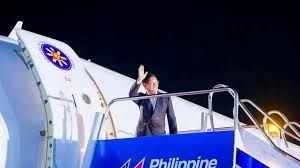
Philippine President Ferdinand R. Marcos Jr. embarked on a consequential diplomatic journey late Tuesday, June 16, heading to Kazan, Russia, to represent his nation at the Asean-Russia Commemorative Summit while pursuing critical bilateral discussions with Russian President Vladimir Putin. The presidential aircraft departed Villamor Airbase in Pasay City shortly after 11:55 pm, carrying Marcos and his delegation on what would prove to be an unusually compact but strategically dense visit to Moscow's ally state.
The timing of this summit carries profound symbolic weight for both parties involved. The gathering marks 35 years since Asean and Russia established formal relations, while simultaneously celebrating a golden milestone in Philippine-Russian diplomatic ties—50 years since the two nations formally recognised each other on June 2, 1976. For Manila, the occasion represents a chance to reinforce an often-overlooked partnership that extends deep into the Cold War era, when the Philippines maintained surprising pragmatism in its foreign relations despite its Western alignment during that period.
Marcos has positioned the summit as a pivotal moment for reassessing three decades of institutional cooperation between Asean as a bloc and Russia as a major Eurasian power. In his departure remarks, the President emphasised that the gathering would allow regional leaders and Putin to examine the trajectory of their engagement and chart a course for substantially deeper involvement across multiple dimensions. This framing suggests Manila views the summit not merely as a ceremonial occasion but as a practical forum for negotiating concrete arrangements that benefit both Southeast Asia and Russia.
The substantive agenda extends across an ambitious terrain. Beyond the headline issues of energy and food security—which directly reflect global preoccupations following geopolitical disruptions to supply chains and price volatility—the discussions will encompass peace and security considerations, trade and investment frameworks, scientific and technological collaboration, digital transformation initiatives, educational partnerships, tourism development, and mechanisms for enhancing people-to-people connections. This breadth indicates that Asean and Russia seek to construct a multifaceted relationship transcending any single sector or concern.
Energy security constitutes perhaps the most pressing practical consideration animating these conversations. Global markets have experienced extraordinary turbulence in recent years, with supply disruptions and geopolitical tensions creating sustained uncertainty in petroleum and gas pricing. For the Philippines—an energy-importing nation heavily reliant on imported fossil fuels—discussions with Russia, a dominant global energy supplier, carry immediate relevance to domestic economic stability and industrial competitiveness. Similarly, food security represents an existential concern for a region where agricultural productivity faces mounting pressure from climate volatility, population growth, and competing land use demands.
Marcos has deliberately framed Philippine participation through the prism of his nation's rotating Asean Chairmanship, invoking the theme "Navigating Our Future, Together." This rhetorical positioning serves multiple purposes: it anchors the Philippines within the broader Asean framework rather than presenting a purely bilateral Philippine-Russian engagement, reinforces Manila's commitment to regional cohesion and consensus-building, and subtly emphasises Asean centrality in regional architecture—a principle particularly resonant given ongoing strategic competition among major powers for influence in Southeast Asia. By elevating Asean above bilateral concerns, Marcos signals that the regional organisation remains the authentic vehicle for Southeast Asian agency.
The bilateral component of Marcos's visit—his one-on-one discussions with Putin—addresses dimensions that resist multilateral negotiation. The President explicitly identified energy and food security as focal points for these conversations, but the bilateral format permits more granular discussions regarding specific projects, investment commitments, and diplomatic arrangements that might prove difficult to negotiate in the presence of other Asean delegations with divergent national interests. This particular meeting carries additional weight as Marcos's inaugural visit to Russia as president, symbolically resetting relations and establishing direct personal rapport with Putin.
The compressed timeframe of Marcos's sojourn demands contextual understanding. Despite a combined 26 hours of flight time, the President will spend approximately 38 hours on Russian soil—a remarkable investment of presidential time and energy that underscores the importance Manila attaches to this engagement. First Lady Liza Araneta-Marcos publicly emphasised that every hour justifies scrutiny, noting that discussions touching food security and energy directly translate into tangible consequences for Filipino households through fuel prices and food affordability. This framing connects abstract diplomatic engagement to the lived economic experiences of ordinary citizens, a rhetorical choice that acknowledges domestic constituencies monitoring presidential activities.
The summit itself will convene on June 17 and 18, where participants will formally adopt key documents specifying future cooperation modalities between Asean and Russia. These documents—typically comprising joint statements, action plans, and institutional framework agreements—will constitute the concrete deliverables justifying the diplomatic expenditure. Such instruments generally establish working groups, technical committees, and exchange programmes designed to operationalise the strategic aspirations articulated by senior leaders during plenary sessions.
This engagement occurs against a distinctive geopolitical backdrop where regional nations increasingly recognise the necessity of maintaining pragmatic relations across ideological and strategic divides. The Philippines, despite historical and contemporary security ties with the United States, has under Marcos Jr. pursued a notably more balanced approach to great power relations compared to his predecessor's more vocally nationalist posture. This summit exemplifies that recalibration—acknowledging Russia's legitimate role in regional affairs while avoiding the zero-sum framing that increasingly characterises superpower competition globally.
For Malaysian observers and broader Southeast Asian audiences, the Marcos-Putin summit illuminates evolving regional dynamics. It demonstrates that Asean nations continue navigating sophisticated diplomatic terrain, managing relationships with multiple powers to advance specific national and regional interests. Energy and food security—the stated focal points—represent shared preoccupations across Southeast Asia, suggesting that bilateral achievements in Manila's engagement might establish templates or precedents relevant to other regional governments. The summit also illustrates how rotating Asean Chairmanships serve as diplomatic platforms for individual member states to shape broader regional priorities and demonstrate leadership beyond territorial confines.

%22%2F%3E%3C%2Fpattern%3E%3C%2Fdefs%3E%3Crect%20width%3D%22100%25%22%20height%3D%22100%25%22%20fill%3D%22url(%23ph21o2sg)%22%2F%3E%3Crect%20width%3D%22100%25%22%20height%3D%22100%25%22%20fill%3D%22url(%23ph21o2sp)%22%2F%3E%3Ctext%20x%3D%2250%25%22%20y%3D%2250%25%22%20text-anchor%3D%22middle%22%20dominant-baseline%3D%22central%22%20fill%3D%22rgba(255%2C255%2C255%2C0.95)%22%20font-family%3D%22Georgia%2C%20'Times%20New%20Roman'%2C%20serif%22%20font-weight%3D%22700%22%20font-size%3D%22170%22%20letter-spacing%3D%22-0.02em%22%3EGabungan%3C%2Ftext%3E%3C%2Fsvg%3E)