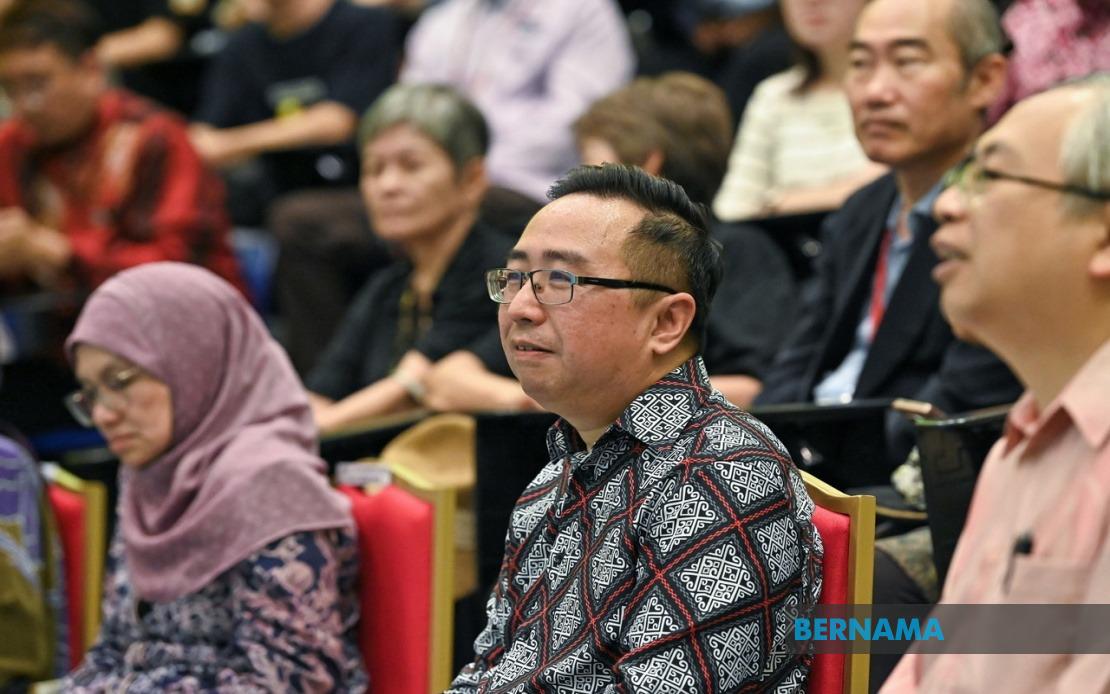
Science and technology graduates entering Malaysia's job market need not fear unemployment or underemployment, according to Science, Technology and Innovation Minister Datuk Chang Lih Kang, who emphasised the country's acute shortage of skilled talent to meet the demands of an expanding high-tech sector. Speaking at the 20th Malaysia Festival of the Minds held at Universiti Tunku Abdul Rahman's Kampar campus, Chang pointed to the growing number of technology-intensive investments flowing into the nation as the primary driver of robust hiring demand that currently outpaces the supply of qualified professionals.
The minister's remarks address a persistent anxiety among Malaysian students and parents about career viability in fields that require advanced technical knowledge. Rather than mere reassurance, Chang framed the employment outlook as one of genuine scarcity of talent, suggesting that companies across the high-tech ecosystem are actively competing to recruit qualified graduates. This reversal of traditional job-market dynamics—where employers have the upper hand—reflects the structural shifts underway as Malaysia positions itself as a regional hub for semiconductor manufacturing, electronics, and advanced technologies.
Beyond employment statistics, Chang used the festival as a platform to directly counter widespread public concerns about technological disruption and artificial intelligence displacing human workers. Rather than allowing such anxieties to influence student career choices, the Ministry of Science, Technology and Innovation adopted a proactive outreach strategy, engaging directly with young people to explain the ministry's perspective on how technology and human skills intersect in the modern economy. This messaging is particularly important in Southeast Asia, where rapid digitalisation has generated understandable concerns about job security and the relevance of traditional education pathways.
The government's partnership with universities and industry stakeholders reflects a comprehensive approach to workforce development. Rather than relying solely on educational institutions to anticipate market needs, policymakers have established mechanisms for continuous dialogue with employers, ensuring that curricula and student interests align with actual industry demands. This coordination between academia and the private sector remains underdeveloped in many Asian economies, making Malaysia's deliberate effort noteworthy for the region.
In a parallel development that underscores the government's commitment to technical capability-building, Chang announced RM185 million in combined funding directed toward strengthening Malaysia's advanced packaging technology sector. The investment structure itself carries strategic significance: the government is contributing RM92 million while five industry partners are collectively providing RM93 million. This near-equal cost-sharing arrangement reflects what Chang characterised as the ministry's matching-fund philosophy, wherein private enterprise assumes meaningful financial responsibility for developing technologies deemed strategically important.
Advanced packaging technology occupies a critical but often overlooked position within the semiconductor value chain. While chip design and fabrication attract considerable attention and investment globally, packaging—the process of protecting and connecting semiconductor components—represents a specialised field where Malaysia has developed particular expertise and competitive advantages. By concentrating resources on this segment, Malaysia can leverage existing industrial clusters and workforce capabilities rather than attempting to compete in saturated markets or sectors requiring entirely different skill bases.
The two-year timeline for achieving the initiative's objectives reflects both ambition and pragmatism. The ministry acknowledges that developing sophisticated technological capabilities faces genuine obstacles, particularly around funding availability and the technical complexity inherent in advanced manufacturing. However, the confident framing of the target suggests that planners believe the RM185 million commitment, combined with existing infrastructure and talent pools, provides sufficient foundation to achieve meaningful advancement. For Malaysian businesses and workers, this initiative signals government willingness to invest substantially in sectors offering long-term competitive advantage.
The timing of these announcements carries broader implications for Southeast Asia's technology sector. As global supply chain pressures continue and semiconductor manufacturing becomes increasingly geopoliticalised, countries offering stability, technical expertise, and government support attract investment that might otherwise flow to established hubs in Taiwan, South Korea, or North America. Malaysia's deliberate positioning in advanced packaging and other specialised semiconductor functions allows the nation to participate meaningfully in this essential industry without directly competing for volume-based manufacturing that generates lower margins and employment quality.
For Malaysian students currently deciding on educational pathways, the minister's message offers concrete encouragement grounded in observable economic trends rather than speculative projections. The existence of actual investment flowing into the country, combined with documented talent shortages, suggests that pursuing science and technology education carries genuine economic payoff. This certainty stands in contrast to many other sectors where labour market dynamics remain uncertain or where credential inflation has eroded the value of qualifications.
The broader context reveals a government attempting to guide Malaysia's economic evolution toward higher-value activities requiring sophisticated skills. By simultaneously addressing workforce development, securing industry partnership, and channelling capital toward strategic technologies, policymakers are attempting to avoid the middle-income trap that has constrained development in comparable economies. Success requires sustained commitment across multiple fronts—education, infrastructure, regulatory support, and funding—making these initial steps part of a longer trajectory.
Regionally, Malaysia's approach offers lessons for other Southeast Asian economies navigating similar transitions. The explicit government-industry partnership model, the direct engagement with students to address anxieties about technology, and the strategic selection of high-value specialised sectors within global value chains represent a coherent strategy that other nations might adapt to their own circumstances. As technological competition intensifies across Asia, countries that effectively mobilise their human capital and align educational systems with industry needs will likely capture disproportionate benefits from the ongoing digital transformation.

