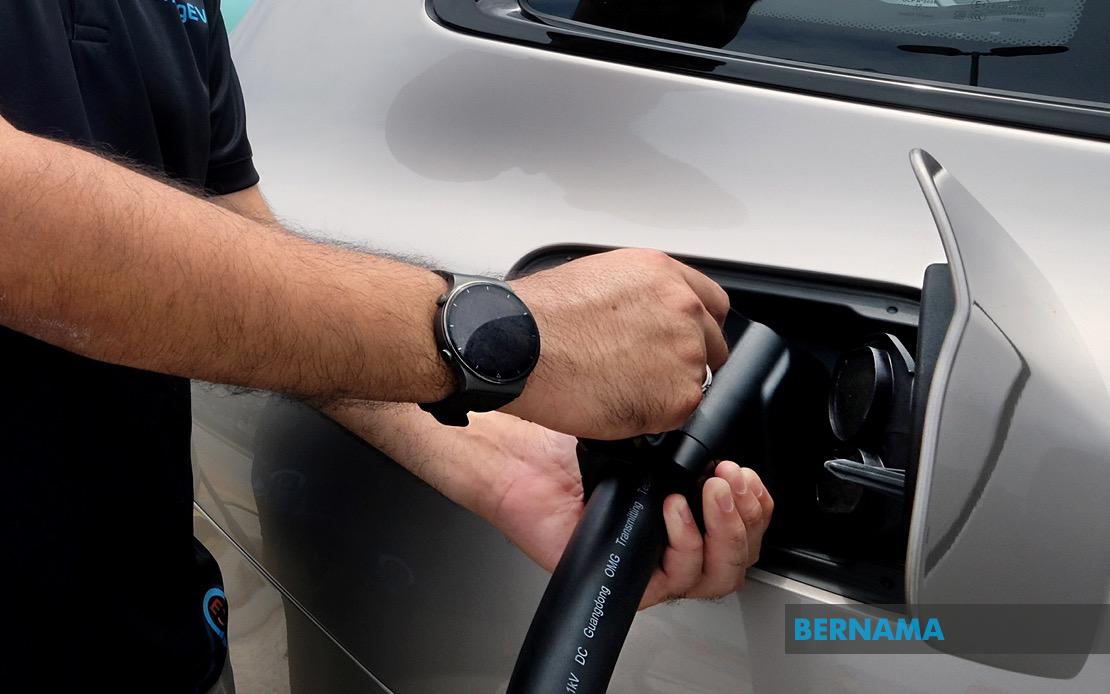
Malaysia's electric vehicle charging infrastructure has reached a significant milestone, with the Ministry of Investment, Trade and Industry confirming that 6,416 public chargers are now operational across the country as of May 31, 2026. The infrastructure consists of 2,143 direct current fast-charging units and 4,273 alternating current chargers, representing a distributed network designed to support the growing adoption of electric vehicles across urban and regional areas. This infrastructure expansion comes as the government intensifies its commitment to low-carbon mobility and reducing dependence on fossil fuels.
Addressing the persistent challenge of charging station shortages, which has been a significant barrier to EV adoption in Southeast Asia, the government has implemented a coordinated strategy involving multiple stakeholders and streamlined approval mechanisms. The Whole-of-Government approach reflects recognition that achieving sustainable transport transformation requires coordination across agencies rather than siloed efforts. PLANMalaysia's EV Charging Bay Planning Guidelines have substantially accelerated deployment by reducing approval timelines to as little as 14 working days, removing bureaucratic friction that previously delayed infrastructure projects.
The collaborative framework encompasses engagement with local authorities, the Energy Commission, Tenaga Nasional Bhd, charging point operators, industry associations and manufacturer groups. This multi-stakeholder model acknowledges that infrastructure development cannot succeed through government action alone; private sector participation and operational expertise are essential for achieving sustainable expansion. The Malaysia Zero Emission Vehicle Association and EV Charging Industry Association bring sectoral knowledge and implementation experience that complement government oversight.
Beyond infrastructure quantity, Malaysia's strategic focus extends to building a robust domestic electric vehicle manufacturing ecosystem. The National EV Project, spearheaded by Perodua under the New Industrial Master Plan 2030 framework, has mobilized 62 local supplier companies and engaged more than 300 Malaysian automotive engineers and specialists in national EV development. This approach seeks to transition Malaysia from a vehicle assembly hub toward higher-value component manufacturing, creating sustainable employment and technological capabilities within the automotive sector.
Proton's parallel EV initiative targets participation from 40 local companies in its supply chain, reflecting competition between Malaysia's two national automakers to establish themselves as credible EV manufacturers. This competitive dynamic, while creating institutional pressures, also drives innovation and efficiency improvements as both companies vie for market position and government support. The duplication of efforts, however, raises questions about resource allocation efficiency compared to a consolidated national platform.
The strategic emphasis on technology transfer represents a critical component of Malaysia's EV ecosystem development. Rather than importing complete vehicles and remaining dependent on foreign manufacturers, the government aims to develop local capabilities in battery production, electric drive motors, and Advanced Driver Assistance Systems. These components command higher value in global supply chains and create more substantial employment opportunities than assembly operations. Successful technology transfer requires not only capital investment but sustained engagement with global technology providers and patient management of learning curves.
Integrating Malaysian companies into global EV supply chains offers significant opportunities for export growth and foreign exchange earnings. As the automotive industry worldwide transitions toward electrification, opportunities exist for Malaysian suppliers to serve multinational manufacturers operating in the region. However, competing against established suppliers in China, Japan, and South Korea demands continuous investment in quality, cost efficiency, and innovation capacity. The government's emphasis on local vendor capability development addresses this competitive challenge.
For Malaysian consumers, the expansion of charging infrastructure removes a critical adoption barrier that has constrained EV market penetration. In previous years, concerns about charging availability deterred purchase decisions despite improving vehicle affordability through government incentive schemes. With over 6,400 public chargers now accessible, combined with private residential and workplace charging options, the user experience for EV owners has fundamentally improved. The distribution of DC fast chargers is particularly important for long-distance travel and commercial vehicle applications, enabling EV adoption beyond urban commuting.
Regional implications extend beyond Malaysia's borders, as the country positions itself as a Southeast Asian manufacturing hub for EV components. Thailand and Indonesia face similar supply chain challenges; Malaysia's experiences in technology transfer and local supplier development offer valuable lessons. Additionally, as Malaysia expands its EV ecosystem, it creates competitive dynamics that may accelerate electrification across Southeast Asia, with positive regional environmental and energy security benefits.
The infrastructure expansion also reflects evolving energy sector strategies, particularly regarding Tenaga Nasional Bhd's role in charging network development and grid management. As EV adoption accelerates, managing peak demand charging and integrating renewable energy sources becomes increasingly important. The government's inclusion of TNB in coordination frameworks suggests attention to these technical challenges, though public statements remain limited regarding renewable energy targets for charging station operations.
Looking forward, the challenge shifts from installation toward maintenance, optimization, and ensuring equitable geographic distribution. Rural areas and less economically developed regions may experience uneven charger deployment as private operators prioritize high-traffic, profitable locations. Addressing these disparities requires continued government intervention through targeted infrastructure investments and potentially subsidized charging in underserved areas.
The 6,416-charger milestone demonstrates tangible progress toward Malaysia's electrification goals, yet achieving the critical mass required for mainstream EV adoption demands sustained momentum. Current deployment rates must accelerate substantially to support projected EV sales targets and ensure charging availability does not again become a bottleneck as vehicle adoption increases. Continued coordination across government, industry, and local authorities remains essential for translating infrastructure capacity into realized low-carbon mobility transformation.

