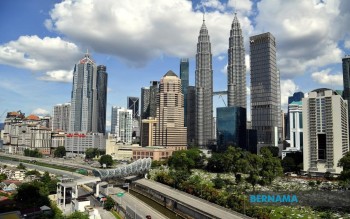
Prime Minister Datuk Seri Anwar Ibrahim has attributed Malaysia's sustained economic momentum to deliberate government interventions shielding the nation from global turmoil stemming from the West Asia conflict. Speaking through the Ministry of Finance, Anwar underscored how emergency financing for small and medium enterprises and carefully calibrated fuel subsidies have preserved household spending patterns and kept business activity flowing even as international supply networks faltered.
The second quarter of 2026 proved decisive for Malaysia's economic trajectory. The country's gross domestic product expanded by 6.0 per cent compared with the preceding quarter's 5.4 per cent growth, marking an acceleration that caught many observers by surprise. This performance exceeded both the Department of Statistics Malaysia's preliminary assessment and the median forecast compiled by Bloomberg analysts, who had predicted a more modest 5.8 per cent expansion. For Malaysian policymakers, the result vindicated a proactive stance taken months earlier when geopolitical risks first threatened regional economic stability.
What distinguishes Malaysia's response is the layering of support mechanisms within the broader MADANI Economy framework. Rather than relying solely on macroeconomic stimulus, the government deployed targeted cash transfers through Sumbangan Tunai Rahmah and Sumbangan Asas Rahmah programmes, while simultaneously introducing BUDI MADANI subsidy arrangements designed to insulate lower-income households from commodity price spikes. This dual approach has allowed purchasing power to remain relatively intact among vulnerable populations even as global inflationary pressures mounted elsewhere. The strategy reflects a recognition that economic growth measured in statistical aggregates can mask deeply uneven outcomes across different segments of society.
Inflation control has emerged as a particular strength in this environment. Despite widespread international supply chain disruptions pushing prices higher across much of the world, Malaysia's inflation remained anchored at just 1.9 per cent during the second quarter. This represents a considerable achievement for a small open economy heavily dependent on trade. Policymakers attribute much of this stability to the targeted subsidy architecture, which has cushioned domestic consumers from the full force of global commodity price movements while avoiding the budgetary distortions that blanket subsidies might have caused.
The broader economic performance in the first half of 2026 positions Malaysia favourably relative to both historical benchmarks and forward-looking projections. Accumulated growth across the first and second quarters reached 5.7 per cent, placing the nation on track to exceed its full-year target range of 4.0 to 5.0 per cent growth. The second quarter's 6.0 per cent rate represents Malaysia's strongest expansion in any second quarter outside pandemic-affected years since 2014, suggesting that underlying economic fundamentals remain robust even as external headwinds intensify.
Two distinct drivers powered this growth trajectory. Domestic demand remained resilient, underpinned by the consumption support measures and the generally sound performance of Malaysia's services sector. Simultaneously, the external sector contributed meaningfully, suggesting that Malaysian exporters have managed to maintain competitiveness and market access despite global supply chain turbulence. This twin-engine growth dynamic provides greater comfort than scenarios where performance depends on a single factor vulnerable to shock.
Yet Anwar's public statements reveal clear awareness of the uneven distribution of economic benefits across Malaysian society. While headline indicators paint an encouraging picture, the prime minister explicitly acknowledged that many Malaysians continue experiencing pressure on living costs and that certain worker cohorts and business categories face genuinely difficult operating environments. This candour distinguishes the government's public messaging from purely technocratic celebrations of GDP figures. The admission signals recognition that official growth statistics, even when robust, do not necessarily translate into improved circumstances for all citizens simultaneously.
Looking forward, policymakers have identified several vulnerability points requiring continued attention. Ongoing geopolitical uncertainty surrounding West Asia remains a source of potential economic disruption. Global supply chains, though adapting, continue to absorb shocks that feed into input and food price pressures. Employment conditions in specific sectors remain strained, creating localized pain that macroeconomic aggregates cannot fully capture. These acknowledged risks suggest the government intends to maintain its supportive posture rather than withdrawing interventions prematurely.
For Malaysia's neighbours and regional partners, this economic resilience carries implications beyond national borders. Southeast Asia's third-largest economy has historically served as a barometer for regional stability, and its capacity to absorb external shocks while maintaining growth rates above trend suggests that the broader region possesses greater structural resilience than periodic headlines might suggest. However, the Malaysian experience also underscores that such resilience requires deliberate policy choices and sustained governmental commitment to protecting vulnerable populations rather than assuming market mechanisms alone will produce equitable outcomes.
The government's stated commitment to translating continued economic growth into higher incomes, improved employment opportunities, and tangible improvements in living standards represents an implicit acknowledgment that growth itself becomes politically unsustainable if ordinary citizens cannot perceive its benefits in their daily circumstances. Whether Malaysia can maintain this balance—sustaining robust expansion while ensuring broadly shared prosperity—will likely define the success of the MADANI framework in coming quarters. The 2Q 2026 performance provides encouraging momentum, but the real test lies in whether these gains can be sustained as global conditions inevitably shift.

