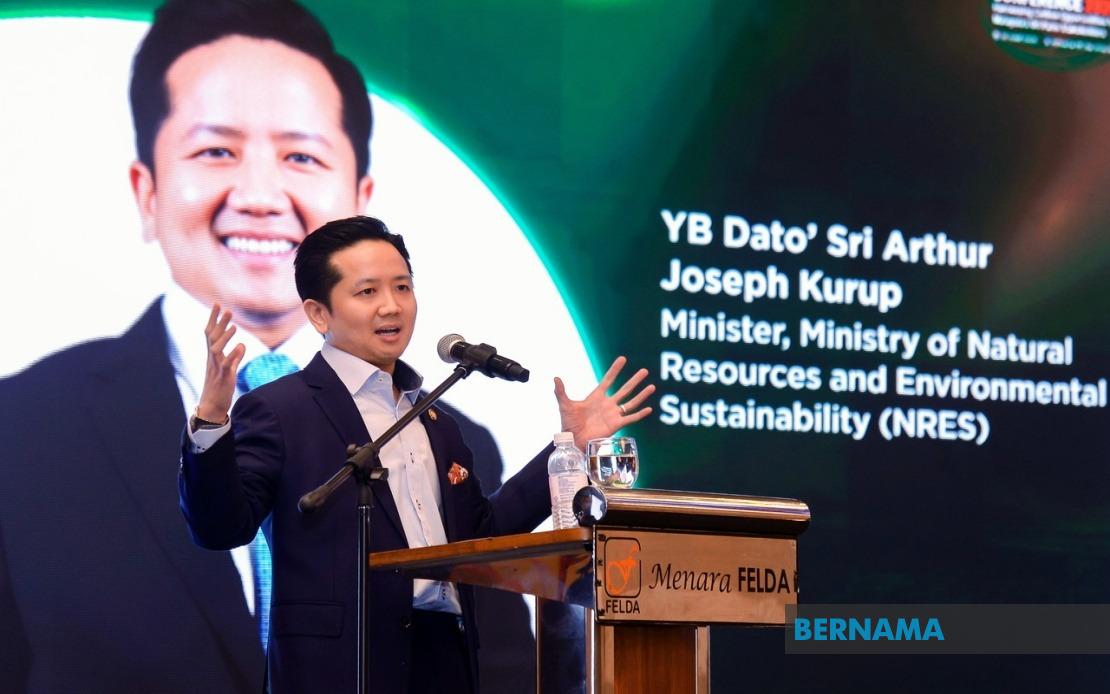
Malaysia's proposed carbon tax remains under active refinement as the government works through implementation details and timing, Natural Resources and Environmental Sustainability Minister Datuk Seri Arthur Joseph Kurup disclosed following his address at the Malaysia Palm Carbon Conference (MPC) 2026 in Kuala Lumpur. While the timing of the tax's introduction has not been finalised, Arthur assured stakeholders that the measure would eventually proceed, with authorities giving careful consideration to when the policy should take effect. This cautious approach reflects broader concerns about industrial competitiveness and economic stability in an uncertain global environment.
The phased deliberation surrounding the carbon tax highlights a delicate balance the Malaysian government must strike between its climate commitments and the immediate pressures facing key industrial sectors. Rather than representing a sudden or aggressive shift in environmental policy, the carbon tax is being positioned as an incentive-based mechanism designed to encourage business adoption of cleaner technologies and practices. Arthur stressed that the initiative should not be viewed as a punitive exercise targeting specific industries, but rather as a collaborative framework aimed at reducing emissions across the economy while supporting the transition to sustainable operations.
Industry preparedness has emerged as a central concern in determining the tax's rollout schedule. The government's decision to slow the original timeline—the carbon tax was initially earmarked for introduction in 2024 and was to target specific sectors including steel, cement and construction—reflects acknowledgment that businesses need adequate notice and support mechanisms before such a scheme takes effect. The April announcement signalled recognition of current global headwinds, including energy supply constraints and geopolitical tensions, which could amplify the cost burden on manufacturers already navigating volatile commodity prices and supply chain disruptions.
Beyond the mechanics of implementation, the government is simultaneously developing a comprehensive revenue allocation framework for funds collected through the carbon tax. Rather than allowing revenue to accumulate in general coffers, the ministry is considering proposals to channel these receipts directly toward climate adaptation projects, forest conservation initiatives and sustainable land management programmes. This approach would create a dedicated funding stream for environmental priorities while demonstrating to industry that the tax serves a transparent, reinvestment-based purpose rather than simply expanding government income.
The strategic deployment of carbon tax revenue carries particular significance for Malaysia given the country's reliance on natural resource extraction and its vulnerability to climate impacts. By linking tax collection to forest conservation and land management improvements, the government aims to strengthen national resilience to climate change while addressing historical concerns about environmental degradation. For palm oil producers and other resource-dependent sectors represented at the MPC 2026, this framework potentially offers visible, tangible benefits that justify the compliance costs they would incur.
The broader legislative architecture for Malaysia's climate response is advancing in parallel with the carbon tax deliberations. The National Climate Change Bill, expected to be tabled in the Dewan Rakyat during the current parliamentary session, will establish the legal and governance foundations for climate action across all sectors and government agencies. Together with the carbon tax, this legislation represents Malaysia's attempt to construct a comprehensive climate policy regime that moves beyond voluntary initiatives toward binding, measurable commitments aligned with international climate agreements.
For regional observers, Malaysia's cautious approach to carbon taxation offers instructive contrasts with neighbouring economies pursuing similar policies. Unlike some ASEAN neighbours that have implemented or announced rapid timelines for carbon pricing schemes, Malaysia is adopting a gradual, consultative approach that prioritises industry input and sectoral adaptation. This strategy reflects the country's complex economic structure, where traditional export-oriented manufacturing and resource sectors must coexist with emerging green technology initiatives.
The presence of Federal Land Development Authority chairman Datuk Seri Ahmad Shabery Cheek at Arthur's statement underscores the interconnected nature of climate policy and land use management in Malaysia. FELDA's substantial land holdings and agricultural operations make it a key stakeholder in any environmental policy affecting plantation and cultivation practices. The authority's involvement in carbon tax discussions signals that implementation planning extends beyond industrial emissions toward broader landscape management and agricultural sustainability measures.
For multinational companies operating in Malaysia or considering investments in the region, the ongoing refinement of the carbon tax framework presents both opportunity and uncertainty. While the delayed timeline reduces immediate compliance costs, businesses must begin assessing their emissions profiles and technological readiness now, given that the tax will eventually take effect. Companies in targeted sectors should use this preparation period to invest in efficiency improvements and green technologies, positioning themselves advantageously once the policy launches.
The government's emphasis on carbon tax revenue funding climate projects rather than serving as general revenue also carries implications for Malaysia's climate finance capacity. Rather than relying solely on international climate funds or development assistance, a domestically-financed climate adaptation and mitigation mechanism could enhance the country's financial autonomy in addressing climate impacts. This becomes increasingly important as extreme weather events, rising sea levels, and shifting rainfall patterns pose growing threats to Malaysian agriculture, coastal infrastructure and urban planning.
Looking ahead, the National Climate Change Bill and the carbon tax framework represent Malaysia's attempt to institutionalise climate action within permanent legislative and fiscal structures. The challenge lies in designing these instruments to be both ambitious enough to meaningfully reduce emissions and flexible enough to accommodate economic cycles and technological evolution. As Arthur indicated, government officials recognise that climate policy cannot operate in isolation from broader economic conditions, making the refinement period an essential step toward creating durable, politically sustainable environmental governance.

%22%2F%3E%3C%2Fpattern%3E%3C%2Fdefs%3E%3Crect%20width%3D%22100%25%22%20height%3D%22100%25%22%20fill%3D%22url(%23ph21o2sg)%22%2F%3E%3Crect%20width%3D%22100%25%22%20height%3D%22100%25%22%20fill%3D%22url(%23ph21o2sp)%22%2F%3E%3Ctext%20x%3D%2250%25%22%20y%3D%2250%25%22%20text-anchor%3D%22middle%22%20dominant-baseline%3D%22central%22%20fill%3D%22rgba(255%2C255%2C255%2C0.95)%22%20font-family%3D%22Georgia%2C%20'Times%20New%20Roman'%2C%20serif%22%20font-weight%3D%22700%22%20font-size%3D%22170%22%20letter-spacing%3D%22-0.02em%22%3EGabungan%3C%2Ftext%3E%3C%2Fsvg%3E)