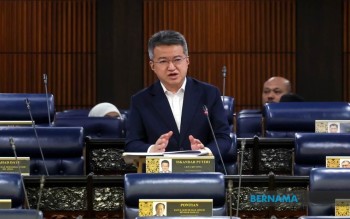
Malaysia's government will maintain its current fiscal projections under Budget 2027 based on first-half 2026 performance, Deputy Finance Minister Liew Chin Tong confirmed in Parliament on July 15, signalling official confidence in the nation's economic trajectory despite mounting external pressures. The decision to hold projections steady reflects the administration's measured approach to an increasingly complex fiscal landscape shaped by volatile energy markets and regional instability. Nevertheless, Liew cautioned that the government would remain vigilant, continuing its monitoring activities until Budget 2027 is formally presented in October, suggesting that circumstances could still prompt adjustments before final deliberations.
The backdrop to this fiscal stability claim involves substantial pressures on government finances. Rising crude oil prices have increased subsidy expenditure by an estimated RM40 billion, a significant outflow that could substantially strain Malaysia's budget capacity. This surge reflects the direct impact of global energy market turbulence on domestic consumer prices, a reality that becomes increasingly acute when regional conflicts threaten supply stability and drive up international benchmarks. The West Asia tensions referenced in parliamentary questioning have already injected considerable uncertainty into energy forecasting, making budgetary planning inherently provisional and subject to rapid revision.
However, Liew articulated a mitigating factor that partially offsets these subsidy pressures: higher crude oil prices simultaneously boost government revenue from petroleum-related sources. The correlation, he explained, operates at approximately RM300 million per US dollar per barrel increase in world crude prices, exclusive of dividend contributions from Petronas, the national oil company. This countervailing effect creates a natural hedge, whereby rising energy costs that burden government expenditure simultaneously enlarge the revenue pool available to meet those same obligations. While imperfect—subsidies often expand faster than price-proportional revenue gains—this relationship provides meaningful breathing room within the fiscal framework, allowing policymakers to absorb shocks without immediately resorting to supplementary revenue measures.
The government's approach extends beyond simple revenue accounting to encompass continuous surveillance of economic conditions and fiscal performance. Weekly engagement sessions conducted by the crisis management task force operating under the National Economic Action Council represent an institutional mechanism for real-time responsiveness to emerging challenges. This framework enables authorities to adjust policy interventions rapidly should energy markets deteriorate further or new geopolitical complications arise. The emphasis on regular monitoring reflects recognition that in a volatile external environment, static planning proves inadequate; rather, governments must embed adaptive capacity into their institutional structures, allowing course corrections before minor fluctuations crystallize into full-blown fiscal crises.
Liew's confidence in maintaining the medium-term fiscal consolidation trajectory hinges on several structural elements already embedded within government strategy. Targeted subsidy restructuring—moving toward means-tested rather than universal support mechanisms—represents the cornerstone of this approach, permitting government to protect vulnerable populations while reducing overall expenditure. Simultaneously, priority reallocation within existing spending envelopes allows continued investment in critical areas without proportional budget expansion. Enhanced spending efficiency across government agencies contributes incrementally to overall conservation, while administrative improvements in revenue collection and tax compliance strengthen the income side of the ledger. These measures, taken together, construct a multi-faceted response to fiscal pressure rather than relying on any single instrument.
The timing of Liew's parliamentary statement carries particular significance for Malaysian economic stakeholders. With Budget 2027 approaching in October, financial markets, business planners, and policy analysts closely parse government fiscal signals for indications of future policy direction. A statement of confidence in maintaining projections provides reassurance to investors concerned about potential tax increases or subsidy rationalisation measures that might disrupt economic activity. Conversely, it may disappoint those who believe Malaysia's fiscal position warrants more aggressive consolidation measures. The delicate balance Liew strikes—acknowledging substantial pressures while projecting stability—reflects the government's need to manage multiple constituencies with divergent expectations.
For Malaysian businesses and households, the implications of unchanged projections carry both positive and cautionary dimensions. On the positive side, stability in fiscal targeting suggests the government does not anticipate immediate emergency measures that might disrupt commercial activity or consumer purchasing power. On the cautionary side, the RM40 billion subsidy increase absorbs fiscal space that might otherwise fund infrastructure, healthcare, or education expansion, ultimately constraining growth potential even if immediate financial catastrophe is averted. Over the medium term, a fiscal position that simply maintains current trajectories without improvement risks accumulating imbalances that become increasingly difficult to address.
The government's confidence also reflects broader Southeast Asian context where several neighbouring economies face comparable challenges navigating between social protection obligations and fiscal discipline. Countries including Indonesia and Thailand have wrestled with subsidy burdens and energy price volatility with varying degrees of success. Malaysia's apparent ability to maintain its consolidation path without dramatic policy reversals positions it favorably within regional comparisons, potentially supporting currency stability and foreign investment confidence during a period of significant global economic uncertainty.
Looking ahead to October's Budget 2027 presentation, financial markets will scrutinise whether the government's current confidence holds under evolving circumstances. Oil prices may rise further, compounding subsidy costs beyond current RM40 billion estimates. Alternatively, prices could stabilise or decline, relieving pressure and permitting broader fiscal flexibility. The Asian financial landscape remains subject to multiple tail risks, from potential escalation in West Asia conflicts to disruptions in global semiconductor supply chains affecting Malaysian manufacturing export performance. Against this backdrop, Liew's measured optimism reflects not certainty but rather institutional commitment to managing volatility through structured processes and institutional resilience rather than dramatic policy pivots.

