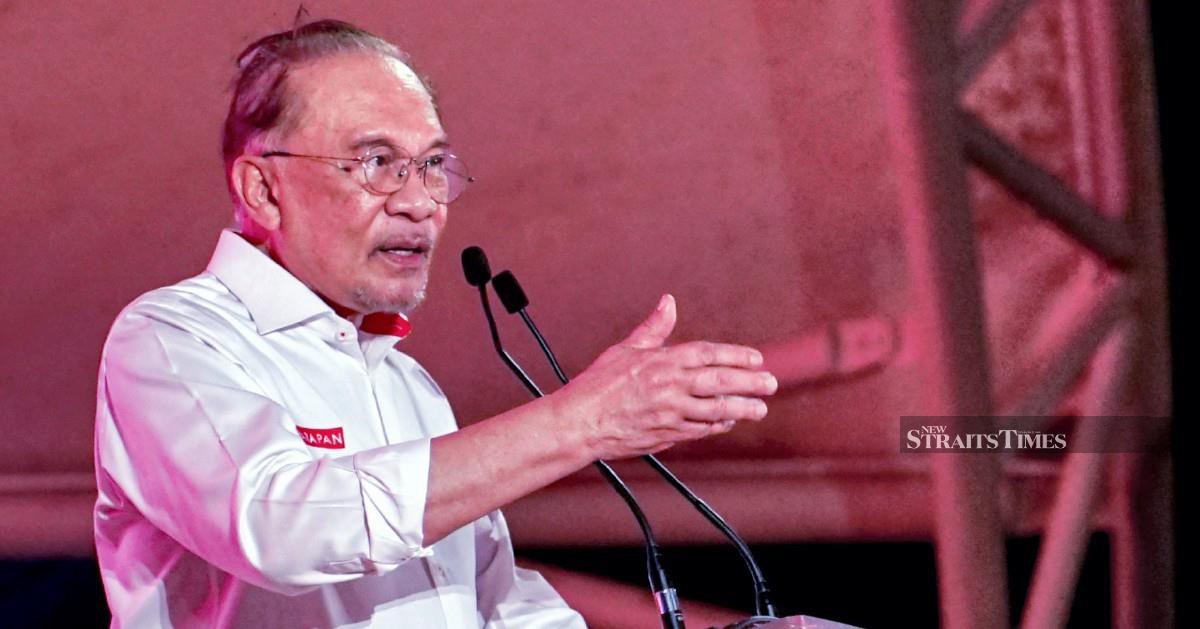
Malaysia's second-quarter economic performance has delivered an encouraging signal to policymakers and investors alike, with gross domestic product expanding at 5.8 per cent—a result that surpassed consensus expectations and demonstrated the underlying strength of Southeast Asia's third-largest economy. Prime Minister and Finance Minister Datuk Seri Anwar Ibrahim attributed this momentum to the government's Madani Economic Framework, a policy blueprint that has guided the nation's recovery and structural repositioning since its introduction.
The 5.8 per cent growth figure carries particular significance for a country navigating complex global uncertainties, from trade tensions to shifting commodity cycles. Malaysia's economy had faced headwinds in previous quarters as external demand softened and domestic consumption patterns shifted in response to policy adjustments and inflationary pressures. This latest expansion suggests that the diversification strategies embedded within the Madani framework are beginning to yield tangible results, particularly as the nation rebalances away from over-reliance on external trade and towards more sustainable internal drivers.
Datuk Seri Anwar's remarks underscore a critical recognition within government circles: while the second-quarter performance merits optimism, the trajectory cannot be taken for granted without continued commitment to deeper institutional and economic transformation. The Madani framework itself represents an evolution in Malaysia's policy thinking, emphasizing inclusive growth, digital infrastructure investment, and sectoral modernization alongside traditional macroeconomic stability. However, observers note that achieving consistent 5-6 per cent growth—let alone accelerating beyond that—requires reforms that often face resistance from entrenched interests and require sustained political capital.
The composition of this quarter's growth matters considerably for assessing underlying durability. Economists will scrutinize whether the expansion stemmed primarily from service-sector dynamism, manufacturing resilience, or consumption rebound, each carrying different implications for sustainability. If growth derived substantially from government spending or one-off factors, the case for maintaining current policy settings weakens. Conversely, if private-sector activity and investment drove the momentum, confidence in a self-reinforcing recovery cycle would strengthen.
For Malaysian businesses and investors, the 5.8 per cent result provides a template against which to benchmark performance and recalibrate expectations. Multinational corporations with regional headquarters in Malaysia, particularly in technology and financial services, have long sought clarity on the nation's medium-term growth prospects. A sustained acceleration would improve the investment case; persistent underperformance against potential would invite capital redeployment to faster-expanding markets like Vietnam or Indonesia.
The Prime Minister's cautionary emphasis on reform continuity reflects an understanding that Malaysia's competitive position in Southeast Asia remains fragile. The region's economic landscape has become significantly more dynamic over the past decade, with several neighbors implementing aggressive structural reforms and attracting substantial foreign direct investment flows. Indonesia's recent initiatives in industrial policy, Vietnam's manufacturing boom, and Thailand's financial services liberalization all represent benchmark achievements that Malaysia must match or exceed to maintain its relative standing.
Key reform areas identified within policy circles include civil service modernization, which remains sluggish despite pilot initiatives; digital infrastructure expansion beyond urban centers; talent retention and human capital development; and regulatory harmonization to reduce business friction. Each of these domains presents a substantial implementation challenge, requiring coordination across multiple agencies and, frequently, modifications to established practices that enjoy bureaucratic support.
The international context adds weight to Anwar's reform imperative. Regional central banks face ongoing monetary policy divergence, with some tightening cycles completed while others remain restrictive. Currency volatility—particularly movements in the ringgit against the US dollar—can rapidly alter Malaysia's export competitiveness and capital flow patterns. Domestic reforms that enhance productivity and cost efficiency become critical buffers against such external shocks.
Sector-specific growth patterns merit attention as well. Malaysia's continued strength in semiconductor manufacturing and electrical and electronics exports contrasts with softer traditional sectors like palm oil and rubber, which face structural demand headwinds and sustainability pressures. The government's push towards higher-value manufacturing and service exports represents a necessary pivot, though one requiring substantial workforce retraining and infrastructure repositioning. Digital adoption across small and medium enterprises remains uneven, particularly outside Klang Valley and other major urban centers, presenting both a challenge and an untapped source of additional productivity gains.
Foreign investors responding to the 5.8 per cent figure will also weigh political economy considerations. Malaysia's track record of policy continuity through electoral cycles has historically provided reassurance, though recent years have witnessed greater political fluidity. The durability of the Madani framework and the consistency with which it will be pursued across different political configurations remain live questions in the minds of long-term institutional investors.
Looking ahead, the government faces the dual challenge of maintaining growth momentum while deploying that momentum towards structural transformation. Simply sustaining 5.8 per cent expansion would represent acceptable performance by regional standards; accelerating to 6-7 per cent would require breakthrough improvements in total factor productivity, which ultimately hinges on implementation success of precisely the institutional and sectoral reforms that Anwar highlighted as essential. The coming quarters will reveal whether Malaysia possesses the political consensus and administrative capacity to translate economic performance into genuine transformation.

