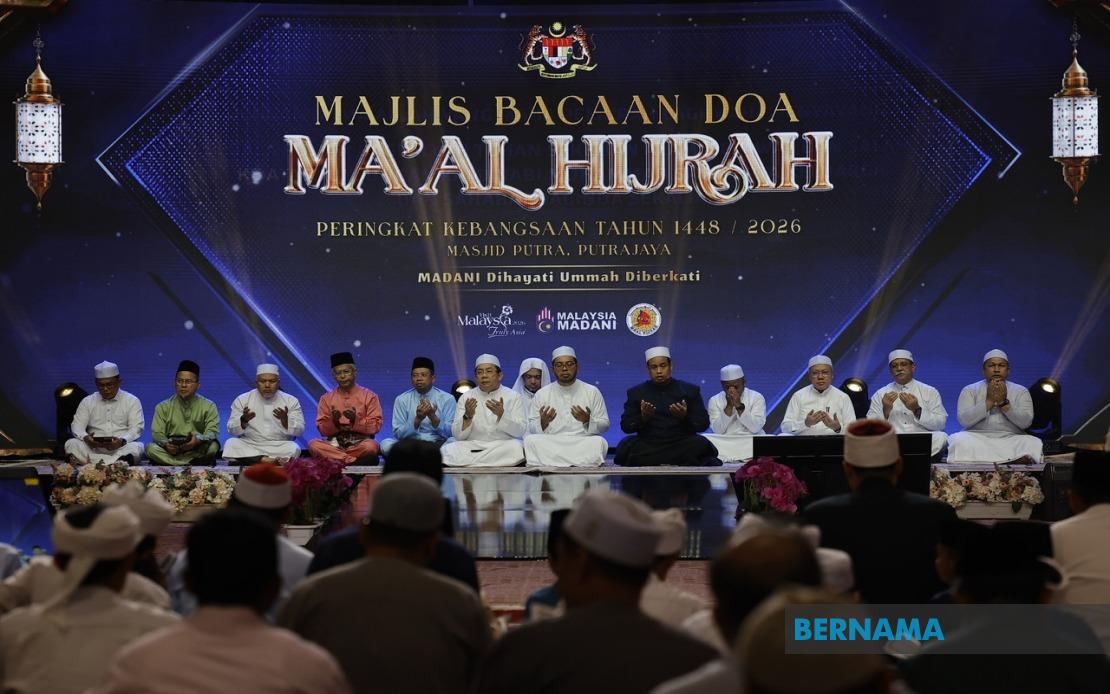
Minister in the Prime Minister's Department (Religious Affairs) Datuk Dr Zulkifli Hasan has urged the nation's young people to draw profound lessons from Prophet Muhammad's historical migration, using the principle of Hijrah as a framework for driving meaningful transformation in their own lives and communities. Speaking at the national-level Maal Hijrah 1448H/2026M celebration in Putrajaya on June 16, Zulkifli emphasised that Malaysia's youth possess tremendous untapped potential that can be activated through reflection on the spiritual and practical dimensions of this pivotal Islamic event.
The minister's call comes at a time when youth engagement with faith-based values remains a critical concern for policymakers across Southeast Asia. In the Malaysian context, where roughly 40 per cent of the population is under 30 years old, channelling youthful energy toward constructive social endeavours has become increasingly important. Zulkifli's message attempts to bridge the gap between religious observance and contemporary youth aspirations, suggesting that the lessons embedded in Hijrah—personal sacrifice, community building, and principled migration toward a better life—offer timeless guidance applicable to modern challenges facing young Malaysians.
The Maal Hijrah commemoration itself marks the Islamic calendar year 1448H, which corresponds to 2026 in the Gregorian system. This annual observance recalls the transformative journey undertaken by Prophet Muhammad and his followers as they fled religious persecution in Makkah and established a thriving community in Madinah. Beyond its historical significance, Hijrah has come to symbolise spiritual awakening and the courage required to pursue positive change despite obstacles—a resonance that religious leaders worldwide emphasise to inspire contemporary believers.
This year's national celebration has adopted a notably different structural approach, one that Zulkifli identified as intentionally meaningful. Rather than the conventional format, organisers selected Putra Mosque as the ceremonial starting point, viewing this choice as symbolic of the religious and civic importance of mosques in Islamic civilisation. The minister explained that mosques functioned historically as more than places of worship; they served as institutions around which education, governance, and community welfare systems developed. By anchoring this year's programme at Putra Mosque, officials sought to reinvigorate public consciousness about the mosque's foundational role in societal advancement.
The practical dimensions of the celebration also merit attention. Zulkifli noted that the event was deliberately scaled to a modest level, reflecting national concerns about energy conservation during a period of global supply-chain disruption. This restraint signals an alignment between religious commemoration and pragmatic governance—a positioning that acknowledges both spiritual requirements and fiscal responsibility. Such an approach may resonate with Malaysian audiences increasingly conscious of sustainability and resource management.
The main ceremonial highlight took place on June 17 at Putra Mosque, commencing at 7 am with the presentation of Maal Hijrah Figure awards honouring both national and international recipients. This recognition programme celebrates individuals judged to have embodied the transformative spirit that Hijrah represents. The ceremony received official patronage from Sultan Nazrin Shah, the Sultan of Perak, whose presence underscored the intersection between religious observance and constitutional monarchy in Malaysia's institutional framework.
A supplementary event, scheduled for June 18 at the JAKIM Auditorium, featured keynote lectures from prominent Maal Hijrah figures—both local and international speakers selected for their expertise and influence. This session anticipated approximately 1,000 participants and was designed to offer the assembled audience direct exposure to the personal narratives, theological perspectives, and practical wisdom of distinguished Islamic scholars and community leaders. By platforming diverse voices, organisers sought to demonstrate that the Hijrah principle transcends cultural boundaries and remains pertinent across varied Muslim-majority contexts.
For Malaysian youth specifically, the messaging embedded in these celebrations carries layered implications. The concept of Hijrah, properly understood, extends beyond literal physical migration. It encompasses intellectual migration—moving from ignorance toward knowledge; spiritual migration—transitioning from indifference toward devotion; and social migration—relocating from destructive toward constructive engagement with one's community. When framed in this expansive manner, Hijrah becomes accessible to young people navigating career transitions, educational pursuits, or personal development regardless of their immediate circumstances.
Zulkifli's emphasis on youth potential reflects broader governmental recognition that younger demographics will determine Malaysia's trajectory across coming decades. By connecting this demographic cohort to historical Islamic narratives of transformation and community-building, officials attempt to foster a sense of purpose and historical continuity. This approach differs from purely materialistic or technocratic appeals; instead, it grounds youth mobilisation within a spiritual and ethical framework drawn from Islamic tradition.
The regional context adds further significance to these celebrations. Across Southeast Asia, Muslim-majority nations including Indonesia, Brunei, and Malaysia share common observances of Maal Hijrah, creating opportunities for transnational youth connection and learning. Malaysia's approach—emphasising institutional renewal, community development, and youthful engagement—provides a model that resonates with similar initiatives undertaken by neighbouring countries grappling with comparable demographic and developmental challenges.
Looking forward, the success of such commemorative initiatives depends partly on whether their messages penetrate beyond ceremonial spaces into daily life and decision-making among young Malaysians. The bridge between inspirational messaging and tangible behavioural change remains the ultimate test of whether religious and civic leaders can effectively harness youthful idealism toward constructive outcomes. Zulkifli's call to embrace Hijrah spirit will ultimately be measured not merely through attendance figures or award ceremonies, but through observable transformation in how Malaysian youth approach personal challenges, community responsibilities, and national development.

%22%2F%3E%3C%2Fpattern%3E%3C%2Fdefs%3E%3Crect%20width%3D%22100%25%22%20height%3D%22100%25%22%20fill%3D%22url(%23ph21o2sg)%22%2F%3E%3Crect%20width%3D%22100%25%22%20height%3D%22100%25%22%20fill%3D%22url(%23ph21o2sp)%22%2F%3E%3Ctext%20x%3D%2250%25%22%20y%3D%2250%25%22%20text-anchor%3D%22middle%22%20dominant-baseline%3D%22central%22%20fill%3D%22rgba(255%2C255%2C255%2C0.95)%22%20font-family%3D%22Georgia%2C%20'Times%20New%20Roman'%2C%20serif%22%20font-weight%3D%22700%22%20font-size%3D%22170%22%20letter-spacing%3D%22-0.02em%22%3EGabungan%3C%2Ftext%3E%3C%2Fsvg%3E)