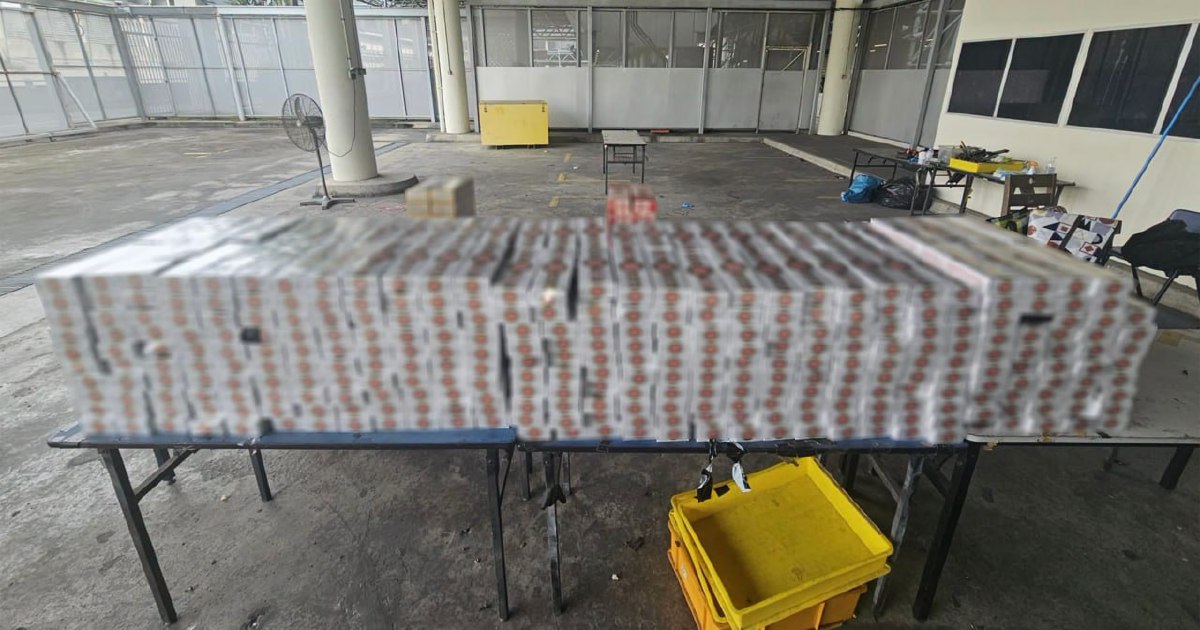
A 30-year-old Malaysian driver faced detention by Singapore authorities after customs officials uncovered a substantial cache of contraband cigarettes concealed within his vehicle at the Woodlands Checkpoint, one of the main land entry points between Malaysia and Singapore. The haul comprised more than 700 cartons alongside 100 individual packets of cigarettes bearing no duty tax stamps, suggesting a coordinated attempt to smuggle taxed products across the border.
The Woodlands Checkpoint, situated at the northern edge of Singapore's causeway connecting to Johor Bahru, experiences thousands of vehicle crossings daily and remains a focal point for customs enforcement operations. Routine inspections at this location have repeatedly uncovered attempts to move contraband goods, from tobacco products to electronics, highlighting the checkpoint's critical role in Singapore's border security infrastructure. The discovery of such a substantial quantity of untaxed cigarettes underscores the persistent challenges authorities face in combating organised smuggling networks that exploit cross-border trade routes for financial gain.
Cigarette smuggling between Malaysia and Singapore represents a longstanding enforcement challenge driven by significant tax differentials between the two nations. Singapore's excise duties on tobacco products rank among the highest in Southeast Asia, making the price premium for legally purchased cigarettes substantially higher than in neighbouring Malaysia. This pricing gap creates substantial profit margins for smugglers willing to risk penalties, motivating repeat offences and increasingly sophisticated concealment methods. The scale of this particular seizure—700 cartons—suggests professional involvement rather than personal consumption, indicating the operation likely supplied a distribution network within Singapore.
Under Singapore's customs legislation, possession of duty-unpaid cigarettes constitutes a serious offence with penalties escalating according to quantity. Individuals convicted of importing or possessing such goods face substantial fines, potential imprisonment, and vehicle confiscation. For a Malaysian national apprehended at a border checkpoint, the consequences extend beyond criminal liability in Singapore to potential complications for future entry into the city-state. Such incidents also strain cross-border relations, requiring cooperation between Malaysian and Singaporean enforcement agencies to dismantle smuggling operations that often involve participants from both nations.
The timing and scale of this seizure reflect Singapore's intensified customs vigilance, particularly during periods when authorities anticipate elevated smuggling activity. Officers stationed at Woodlands employ a combination of random inspections, intelligence-led targeting, and technology-enhanced screening to identify concealed contraband. The discovery of this shipment demonstrates that despite such measures, determined smugglers continue to attempt large-scale operations, indicating the persistent economic incentives driving this illicit trade remain formidable.
For Malaysian authorities, incidents of citizens arrested in Singapore for smuggling present diplomatic sensitivities while simultaneously highlighting the need for enhanced domestic enforcement along the supply chain. Malaysian law enforcement agencies have progressively targeted cigarette trafficking rings operating from Malaysian soil, recognising that supply-side disruption proves more effective than focusing solely on individual couriers apprehended at borders. However, the ready availability of untaxed cigarettes in Malaysia—whether through legitimate trade or illicit markets—continues facilitating smuggling attempts.
The economic dimensions of this case extend to legitimate stakeholders in both nations' tobacco industries. Singapore's tax policies aim partly to reduce consumption through price mechanisms, and significant smuggling undermines these public health objectives. Additionally, governments lose excise revenue to illicit trade, representing fiscal consequences beyond simple tariff evasion. Industry analysts estimate that contraband cigarettes captured at Singapore's borders represent only a fraction of successful smuggling operations, suggesting the actual volume of untaxed products reaching consumers significantly exceeds official seizure figures.
For Malaysian travellers and businesses, this incident serves as a reminder of Singapore's strict enforcement posture and the severe consequences of attempting to circumvent customs regulations. Even inadvertent violations or technical breaches of import regulations can trigger serious legal proceedings. The case also illustrates how individual criminal acts carry broader implications, potentially affecting diplomatic relations and bilateral cooperation on law enforcement matters affecting both nations' security and economic interests.
Going forward, addressing cigarette smuggling between Malaysia and Singapore requires multi-layered strategies encompassing enhanced checkpoint intelligence, cooperation between national revenue authorities, tackling supply-side distribution networks, and considering market-based interventions in pricing and taxation policies. The apprehension at Woodlands represents operational success in border interdiction, yet the persistence of such large-scale attempts indicates that strategic approaches must evolve to match smugglers' adaptive tactics. Intelligence sharing between Malaysian and Singaporean agencies, combined with targeting organised criminal networks rather than individual couriers, promises greater impact than checkpoint seizures alone.

