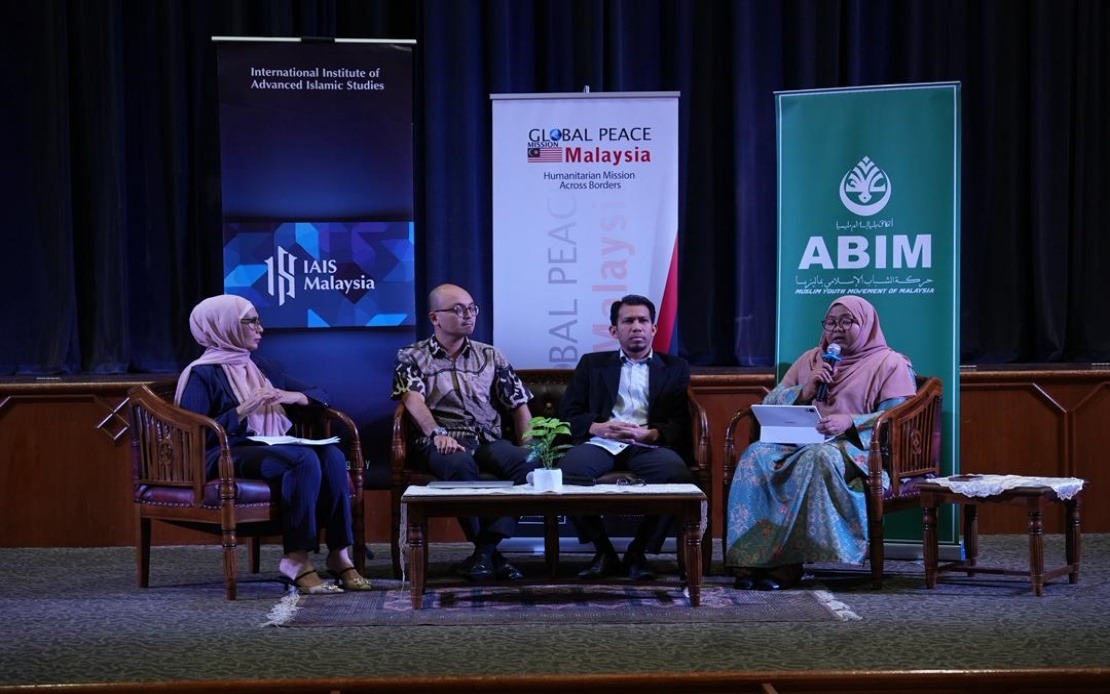
Civil society leaders and humanitarian organisations gathered in Kuala Lumpur on June 20 to chart a new course on refugee policy, adopting ten resolutions that seek to reframe how Malaysia approaches one of Southeast Asia's most contentious social issues. The conference, held at the International Institute of Advanced Islamic Studies and coinciding with World Refugee Day, brought together non-governmental organisations, academics, international bodies, and community representatives to address what organisers describe as a growing crisis of misunderstanding around refugee populations.
Angkatan Belia Islam Malaysia president Ahmad Fahmi Mohd Samsudin emerged from the Kuala Lumpur: Solidarity with Refugees Conference emphasising that the adopted resolutions and accompanying declaration will now be presented to Members of Parliament and key government bodies for consideration. The move signals an attempt by civil society to shift the conversation around refugee management from reactive responses to structured policy frameworks. Samsudin indicated that further negotiations are planned with the Home Ministry and the National Security Council, suggesting a recognition that durable solutions require sustained engagement with security and interior agencies rather than one-time gestures.
The conference itself was jointly convened by Global Peace Mission Malaysia, Angkatan Belia Islam Malaysia, and IAIS Malaysia, reflecting a coalition of religious, youth-focused, and academic institutions working to embed refugee concerns within mainstream Malaysian discourse. The selection of these organisers is significant, as it positions refugee advocacy within Islamic and community-welfare contexts rather than purely secular human rights frameworks, potentially broadening political receptivity to the message within conservative segments of Malaysian society.
Central to the conference's framing is an explicit acknowledgment that Malaysia faces legitimate public concerns regarding security, law enforcement, and social cohesion. Rather than dismissing these anxieties as xenophobia, the resolutions call for addressing such concerns through transparent, fact-based approaches. This rhetorical pivot is essential for Malaysia, where refugee issues have become flashpoints for broader anxieties about immigration, overpopulation, and resource allocation. By validating public concerns while simultaneously rejecting hate speech and dehumanisation, the conference attempts to reclaim middle-ground discourse that has largely disappeared from social media conversations and political rhetoric.
Ahmad Fahmi's warning that anti-refugee sentiment could metastasise into broader societal hatred reflects growing international evidence that dehumanising rhetoric targeting one vulnerable group often precedes similar campaigns against others. Malaysia's experience with waves of displacement—from Vietnamese boat people in the 1970s and 1980s, to more recent crises involving Syrians, Bosnians, and Palestinians—demonstrates that the country has developed substantial institutional knowledge in refugee management. Yet this history has not inoculated society against xenophobic framings. The conference organisers appear intent on excavating this historical experience to demonstrate that humanitarian responsibility and national interest need not be opposed propositions.
Notably, Malaysia's status as a non-signatory to the 1951 Refugee Convention gives the government considerable latitude in shaping refugee policy, yet also means the country operates without the international legal scaffolding that structures refugee management elsewhere. This ambiguity creates both danger and opportunity: danger that vulnerable populations lack formal protections, but opportunity that Malaysia could craft innovative policy frameworks incorporating local context, religious values, and security considerations without constraint from international treaty obligations. The conference appears to recognise this space, positioning proposed reforms as distinctly Malaysian solutions rather than externally imposed mandates.
Among the concrete resolutions adopted was a call for strengthened data collection, registration, and documentation systems in partnership with the United Nations High Commissioner for Refugees. This technical focus addresses a fundamental challenge: without reliable demographic data on refugee and asylum-seeker populations, evidence-based policymaking becomes impossible, and fear-driven narratives fill the information vacuum. Malaysia currently estimates around 180,000 UNHCR-registered refugees and asylum seekers, though precise numbers remain contested. More rigorous registration would ostensibly serve multiple constituencies—humanitarian organisations seeking to provide targeted assistance, security agencies attempting to identify genuine threats, and government planners allocating resources.
The conference also championed public education and media literacy initiatives to counter misinformation and xenophobic messaging. In the Malaysian context, where social media plays an outsized role in political mobilisation and where WhatsApp groups have become primary vectors for rumour spread, this focus on information ecosystems proves especially timely. The call for mechanisms to support NGOs facing online harassment and disinformation campaigns acknowledges the increasingly hostile digital environment where organisations working with refugees face coordinated hate campaigns, threatening their operational capacity and deterring potential supporters.
Establishment of formal communication channels between humanitarian organisations and government bodies also features prominently in the resolutions. This institutional innovation could prevent the present dynamic whereby civil society and state operate in separate spheres, each suspicious of the other's motives. Structured dialogue might surface practical implementation challenges that policy documents cannot anticipate, while simultaneously giving government agencies confidence that refugee advocates are not pursuing hidden agendas contrary to national interests.
The conference's timing, aligned with World Refugee Day's annual commemoration on June 20, underscores how humanitarian observances can serve as anchors for policy discussion. For Malaysian civil society, the strategic question now becomes whether these resolutions gain political traction or remain symbols of good intentions. The commitment to follow-up engagement with the Home Ministry and National Security Council will determine whether the conference catalyses genuine policy evolution or functions primarily as a symbolic gathering. The coming months will reveal whether government interlocutors prove receptive to balanced frameworks that simultaneously protect vulnerable populations and address legitimate public concerns—or whether entrenched positions on both sides render compromise impossible.
%22%2F%3E%3C%2Fpattern%3E%3C%2Fdefs%3E%3Crect%20width%3D%22100%25%22%20height%3D%22100%25%22%20fill%3D%22url(%23ph3e4fag)%22%2F%3E%3Crect%20width%3D%22100%25%22%20height%3D%22100%25%22%20fill%3D%22url(%23ph3e4fap)%22%2F%3E%3Ctext%20x%3D%2250%25%22%20y%3D%2250%25%22%20text-anchor%3D%22middle%22%20dominant-baseline%3D%22central%22%20fill%3D%22rgba(255%2C255%2C255%2C0.95)%22%20font-family%3D%22Georgia%2C%20'Times%20New%20Roman'%2C%20serif%22%20font-weight%3D%22700%22%20font-size%3D%22320%22%20letter-spacing%3D%22-0.02em%22%3ENew%3C%2Ftext%3E%3C%2Fsvg%3E)