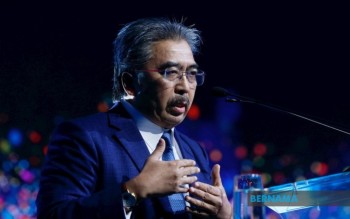
The Malaysian government is carefully deliberating the structure of a potential electric vehicle levy, seeking to balance the urgent need for charging infrastructure with concerns about affordability for consumers and manufacturers. Speaking during a Dewan Negara session, MITI Minister Datuk Seri Johari Abdul Ghani clarified that no final decision has been made on implementing such a levy, emphasising instead that officials are examining the most suitable approach to fund the expansion of Malaysia's public EV charging network without imposing undue hardship on the public.
At the heart of this policy conundrum lies a fundamental economic tension. Any levy imposed directly on vehicle manufacturers would likely be passed through to consumers in the form of higher EV prices, potentially dampening the very market adoption that the government seeks to encourage. Johari acknowledged this reality candidly, noting that the mechanism chosen would determine whether the financial burden falls on industry players or eventually reaches end-users. This represents a classic policy trade-off where the funding source inevitably shapes consumer impact, a reality that Malaysian policymakers cannot ignore as they chart the nation's energy transition pathway.
The government's fiscal position adds another layer of complexity to these deliberations. With Malaysia operating under a fiscal deficit, the state faces genuine constraints in financing large-scale public infrastructure projects independently. This budgetary reality underscores why officials are exploring alternative revenue streams rather than absorbing charging infrastructure costs entirely through the general budget. The minister highlighted that while the government has committed substantial resources to EV subsidies, it simultaneously must invest in the underlying infrastructure that makes vehicle ownership practical for consumers.
Malaysia's energy generation landscape further complicates the equation. Unlike countries that have transitioned to renewable or nuclear-based electricity systems, Malaysia remains dependent on gas and coal-fired power plants to meet demand. This reliance means that expanding EV charging networks requires not merely installing physical infrastructure but also ensuring adequate and affordable electricity supply to those facilities. The true cost of supporting Malaysia's EV ecosystem therefore encompasses electricity generation, transmission, distribution, and physical charging hardware—a multifaceted investment that extends far beyond simple vehicle considerations.
Johari articulated a pragmatic vision for Malaysia's automotive future, arguing that the economy must accommodate both electric and internal combustion engine vehicles for the foreseeable future. Rather than pursuing a rushed transition that mirrors developed nations' experiences, the minister suggested a more measured approach that acknowledges Malaysia's particular circumstances. This stance reflects awareness that Malaysia's diverse geography, varying income levels, and infrastructure realities differ substantially from those of wealthy Asian neighbours that have aggressively pursued EV adoption.
The specific proposal under consideration involves imposing a per-vehicle levy on every EV sold, with proceeds directed into a dedicated fund for constructing public charging stations. This targeted funding mechanism would circumvent the government's need to compete for general budget resources while creating a direct nexus between EV sales and charging infrastructure development. The logic is straightforward: as the EV market expands, the revenue base for infrastructure investment grows in tandem, theoretically creating a self-reinforcing cycle where market growth generates its own funding for supporting infrastructure.
However, this approach carries implicit assumptions that warrant scrutiny. A levy proportional to EV sales would theoretically scale investment with market adoption, yet the early stages of Malaysia's EV transition may generate insufficient levy revenue to build infrastructure at the pace required to satisfy growing demand. This chicken-and-egg problem is precisely why countries like China have relied on massive government investment at the outset—to create charging infrastructure that would then attract consumers to purchase EVs, rather than waiting for sufficient EV penetration to generate levy revenue.
The minister's candid acknowledgment that Malaysia cannot finance charging infrastructure on the scale evident in China reflects realistic assessment of national capabilities. China's aggressive EV infrastructure rollout benefitted from state resources unavailable to most Southeast Asian economies, combined with different regulatory structures and ownership models. Malaysia must instead devise solutions tailored to its own fiscal circumstances and institutional capacities, even if this means accepting a more gradual infrastructure expansion timeline.
The broader context for these discussions includes Malaysia's commitments under international climate frameworks and regional sustainability initiatives. The government has signalled ambitions to increase EV adoption as part of broader decarbonisation efforts, yet these aspirations must remain tethered to economic realities. Policymakers recognise that pricing EV ownership beyond reach of middle-income Malaysians would undermine adoption targets regardless of infrastructure availability, creating a paradox where environmental ambitions conflict with economic feasibility.
For consumers and industry stakeholders, the uncertainty surrounding levy implementation creates planning challenges. Vehicle manufacturers and distributors must anticipate potential cost structures when pricing products and investing in inventory, while potential EV buyers await clarity on total ownership costs before committing to purchase decisions. This extended period of ambiguity, while reflecting genuine policy complexity, nonetheless creates friction in the market.
The minister's insistence that policymakers must understand the complete picture reveals the multidimensional nature of energy transition planning. Charging infrastructure, electricity supply, manufacturing capacity, consumer affordability, government finances, and environmental objectives all interact in complex ways. No single lever solves the equation; instead, officials must calibrate multiple policy instruments simultaneously while managing inevitable trade-offs between competing priorities.
Moving forward, Malaysia's approach to EV financing will likely involve some combination of government investment, levy revenue, and private sector participation rather than reliance on any single mechanism. The key challenge lies in designing a structure that proves politically palatable, economically sustainable, and sufficient to meet infrastructure demands as EV adoption accelerates. For a middle-income Southeast Asian economy navigating the energy transition, finding this balance represents perhaps the central policy question of the coming decade.

