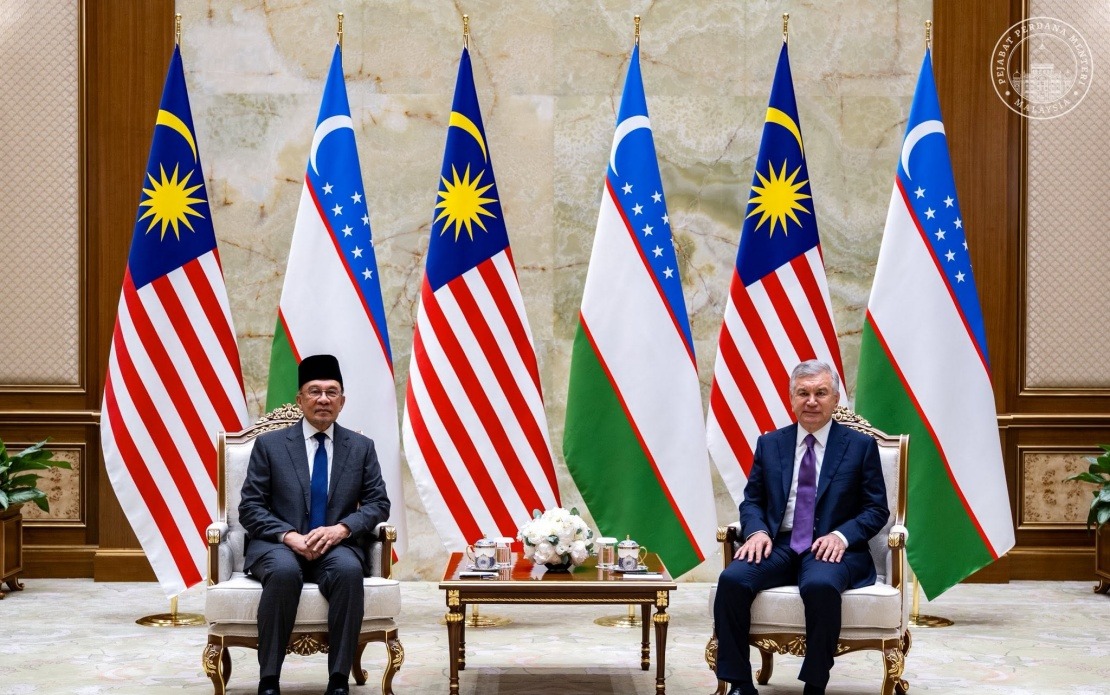
Prime Minister Datuk Seri Anwar Ibrahim has identified significant potential for Malaysia and Uzbekistan to deepen their strategic partnership across multiple economic and cultural sectors, following a meeting with Uzbekistan President Shavkat Mirziyoyev in Tashkent. The discussion took place during a transit stop as Anwar travelled to Kazan, Russia, to participate in the ASEAN-Russia Commemorative Summit scheduled for June 17-18, providing an unexpected opportunity for the two leaders to explore avenues of cooperation that could benefit both nations.
The range of sectors identified for enhanced collaboration reflects a comprehensive approach to bilateral relations that extends well beyond conventional trade channels. Energy emerged as a particularly promising area, with both leaders recognising the mutual benefits of strengthened cooperation in the gas and petroleum industries. For Malaysia, this represents an important diversification of energy partnerships, particularly given the nation's continued reliance on hydrocarbons and its strategic interest in securing stable energy supplies. Uzbekistan, as a major Central Asian energy producer with considerable reserves, stands to gain from accessing Malaysia's established infrastructure, market expertise and investment capital in the region.
Beyond the energy sector, the two countries identified opportunities in trade and investment that could unlock economic growth for both economies. Malaysia's established position as a regional financial and trading hub, coupled with its sophisticated business environment, offers Uzbekistan pathways to expand its commercial reach into Southeast Asia. Conversely, Uzbekistan's growing economic reforms and development initiatives create new market opportunities for Malaysian businesses seeking to establish footholds in Central Asia, a region increasingly recognised by Kuala Lumpur as strategically significant for economic expansion.
Education and human capital development formed another pillar of the proposed cooperation framework. The exchange of academic expertise, student mobility programmes and research collaborations could strengthen intellectual ties between the two nations while building long-term relationships rooted in shared learning. This dimension is particularly valuable for Malaysia, as it reinforces soft power and cultural influence in Central Asia, a region where Southeast Asian engagement has historically been limited.
The halal industry represents a distinctive area where Malaysia possesses considerable competitive advantage and technical expertise. As the world's largest halal certifier and a leader in halal product development, Malaysia can position itself as a knowledge partner for Uzbekistan, which is itself home to a significant Muslim population and increasingly recognises the commercial potential of the halal sector. This cooperation could enhance standards, facilitate market access and create bilateral business opportunities in a rapidly expanding global halal economy currently valued at hundreds of billions of dollars.
Tourism cooperation also featured prominently in the discussions, reflecting both countries' interest in attracting visitors and strengthening people-to-people exchanges. Malaysia's well-developed tourism infrastructure and Uzbekistan's rich historical and cultural heritage offer complementary advantages. Expanded tourism partnerships could include joint marketing initiatives, simplified visa procedures and cultural exchange programmes that would benefit airlines, hospitality sectors and service providers in both nations.
Anwar placed particular emphasis on the spiritual and civilisational dimensions of the partnership, highlighting the importance of preserving and promoting Islamic scholarly traditions and their contributions to human advancement. This framing elevates the relationship beyond transactional commercial interests, positioning Malaysia-Uzbekistan cooperation as part of a broader initiative to strengthen Islamic civilisation and knowledge systems. Such language resonates with Malaysia's positioning as a leader within the Muslim world and reflects Anwar's personal commitment to leveraging religious and cultural affinity as a foundation for diplomatic engagement.
The Prime Minister's recognition of Uzbekistan's increasing influence in Central Asia and its strengthening ties with ASEAN reflects Kuala Lumpur's strategic interest in maintaining balanced regional relationships. As Central Asia gains geopolitical importance amid shifting global power dynamics, Malaysia's engagement with major regional actors like Uzbekistan serves to diversify the nation's diplomatic portfolio and strengthen ASEAN's own connectivity with adjacent regions. Uzbekistan's reciprocal commitment to deepening relations with ASEAN members underscores the mutual recognition of shared interests.
Anwar's emphasis that bilateral cooperation must benefit human dignity, empower knowledge and promote equitable development indicates Malaysia's preference for sustainable, people-centred engagement rather than purely extractive economic relationships. This approach aligns with broader Malaysian development philosophy and positions the partnership as contributing to broader regional stability and shared prosperity rather than serving narrow national interests.
The timing of this meeting, occurring during a transit to attend an ASEAN-Russia summit, demonstrates how Malaysia leverages diplomatic opportunities to strengthen multiple relationships simultaneously. The modest yet substantive nature of the encounter exemplifies contemporary multilateral diplomacy, where leaders utilise brief encounters to establish frameworks for deeper engagement while maintaining focus on primary commitments.
For Malaysian businesses and policymakers, the discussion signals official encouragement for greater commercial and investment activity in Uzbekistan and Central Asia more broadly. The diversity of sectors identified for cooperation suggests that Malaysian companies across energy, finance, education, halal products and tourism could find expanding opportunities in the coming years. The joint identification of potential in these areas provides a foundation for follow-up discussions at governmental and commercial levels.
Looking ahead, the conversations suggest that bilateral relations will likely deepen through institutional mechanisms such as joint commissions, trade missions and technical working groups. Success will depend on translating the broad principles of cooperation into concrete agreements, regulatory frameworks and business opportunities that incentivise engagement from both public and private sector actors. The meeting has clearly positioned Malaysia-Uzbekistan relations as a priority for the current Malaysian administration.

%22%2F%3E%3C%2Fpattern%3E%3C%2Fdefs%3E%3Crect%20width%3D%22100%25%22%20height%3D%22100%25%22%20fill%3D%22url(%23ph21o2sg)%22%2F%3E%3Crect%20width%3D%22100%25%22%20height%3D%22100%25%22%20fill%3D%22url(%23ph21o2sp)%22%2F%3E%3Ctext%20x%3D%2250%25%22%20y%3D%2250%25%22%20text-anchor%3D%22middle%22%20dominant-baseline%3D%22central%22%20fill%3D%22rgba(255%2C255%2C255%2C0.95)%22%20font-family%3D%22Georgia%2C%20'Times%20New%20Roman'%2C%20serif%22%20font-weight%3D%22700%22%20font-size%3D%22170%22%20letter-spacing%3D%22-0.02em%22%3EGabungan%3C%2Ftext%3E%3C%2Fsvg%3E)