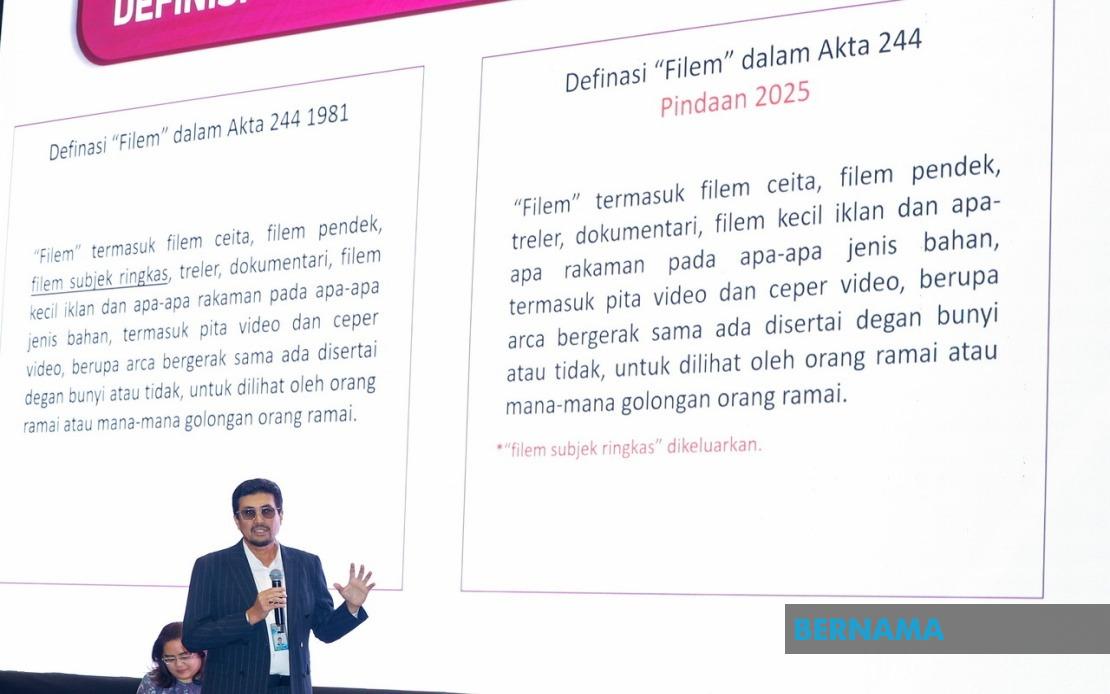
Malaysia's film industry stands on the verge of a significant transformation with the impending launch of the National Film Policy (DFN) 2026-2035, a comprehensive strategic blueprint designed to modernise and expand the country's cinema sector. The National Film Development Corporation Malaysia (FINAS) has signalled that Cabinet approval and formal launch are expected before year's end, marking the culmination of an intensive two-year consultation process involving industry leaders, government bodies, and cultural institutions across the nation.
Datuk Azmir Saifuddin Mutalib, chief executive officer of FINAS, revealed that the policy framework encompasses more than 70 distinct initiatives structured around five fundamental pillars. These foundational areas—Financing and Investment; Marketing and Promotion; Industry Collaboration and Technology; Human Capital Development and Management; and Governance and Legislation—represent a holistic approach to addressing longstanding challenges within Malaysia's creative ecosystem. This multi-layered architecture suggests policymakers have moved beyond piecemeal reforms toward systemic transformation of how the industry operates, funds projects, and competes globally.
Among the policy's key strategic thrusts is the development of alternative financing mechanisms, a critical priority given Malaysia's film industry has historically struggled to access adequate capital compared to regional competitors. The recognition that traditional funding models are insufficient reflects changing realities in global film finance, where production costs have escalated and investor risk appetite has become more cautious. By actively promoting diverse financing pathways—potentially including public-private partnerships, crowdfunding platforms, and strategic investment funds—Malaysian filmmakers may gain greater flexibility in bringing projects to fruition without compromising creative vision or commercial viability.
The integration of artificial intelligence and advanced technology represents perhaps the most forward-looking dimension of DFN 2026-2035. As AI reshapes content creation, distribution, and audience analytics worldwide, Malaysia's explicit commitment to adopting these tools positions local producers to remain internationally competitive. However, this modernisation agenda must be balanced carefully with concerns about job displacement in traditional roles and the need to preserve distinctly Malaysian storytelling traditions. The policy's emphasis on technology suggests policymakers recognise that remaining technologically current is non-negotiable for attracting international co-productions and talent.
Market expansion initiatives outlined in the policy framework address another persistent constraint on Malaysian cinema: limited distribution channels and audience reach. Domestically, Malaysian films often compete against better-resourced Hollywood productions for cinema screen time. Regionally and internationally, Malaysian content lacks the institutional support and marketing infrastructure that enables South Korean, Thai, or Indonesian films to achieve breakthrough success. Enhanced market access provisions could involve streamlining licensing processes, establishing export promotion mechanisms, or negotiating preferential distribution arrangements with regional broadcasters and streaming platforms—avenues that would materially improve the commercial trajectory of local productions.
Workforce development and certification programmes embedded within the policy demonstrate recognition that Malaysia's film industry requires talent across multiple disciplines, from technical cinematography specialists to digital content strategists. By establishing formal training pathways and recognised qualifications through partnership with Universiti Teknologi MARA (UiTM) and the National Academy of Arts, Culture and Heritage (ASWARA), the policy aims to build a skilled labour base capable of managing sophisticated modern productions. This institutional investment in human capital is particularly significant for a sector where skill gaps often deter international collaborators from choosing Malaysia as a production location.
Stronger intellectual property protections form an essential foundation for the policy's ambitions. Content creators and production companies require confidence that their creative works and proprietary processes remain legally secured against piracy and unauthorised exploitation. Enhanced IP frameworks protect not only individual films but also the broader commercial incentives that encourage risk-taking and investment in original storytelling. For Malaysia, where digital piracy remains a persistent challenge, legislative reforms accompanying DFN 2026-2035 could meaningfully improve the commercial viability of local productions.
The National Film Policy 2026-2035 represents Malaysia's third major strategic intervention in cinema development, following foundational work in the 1980s and the previous National Film Policy established in 2005. This evolution reflects how Malaysia's policy environment has matured in response to technological disruption, changing consumer behaviour, and intensifying regional competition for screen time and audience attention. Unlike previous iterations that emphasised cultural preservation or modest industry support, this latest framework explicitly positions film as an economic engine capable of generating jobs, attracting foreign investment, and generating export revenues—a reframing that should elevate film's standing within broader government development priorities.
The consultation process underlying the policy has been unusually extensive, involving feedback sessions that revealed stakeholders' desire for greater clarity on specific cooperation frameworks between FINAS and industry associations. This attention to implementation details suggests policymakers understand that policy documents alone create no outcomes; success depends on transparent operational guidelines and genuine partnership with the practitioners who must execute these initiatives daily. Current refinements being incorporated address such concerns, with formal publication anticipated following editorial finalisation and ministerial approvals.
For Malaysian audiences and creative professionals, this policy framework promises tangible benefits. Greater funding diversity could enable more diverse stories reflecting Malaysia's multicultural identity to reach screens. Technological adoption might lower production barriers for emerging filmmakers. Enhanced international market positioning could increase global visibility for Malaysian talent and narratives. Yet realising these benefits requires consistent government commitment, adequate budgetary allocation, and genuine industry buy-in—challenges that have historically constrained Malaysian cultural policy implementation despite strong rhetorical intentions.
The policy's explicit vision—establishing Malaysia's film sector as simultaneously accessible to the public, economically productive, culturally representative of national identity, and internationally recognised—reflects ambitious but not impossible goals. Regional comparisons suggest such objectives are achievable: Thai cinema achieved international prominence through targeted support mechanisms; Indonesian platforms have captured substantial regional audience share; South Korean films dominate cinemas across Asia. Malaysia possesses equivalent creative talent and demographic advantages; the question is whether DFN 2026-2035 will provide sufficient structural support, sustained funding, and institutional commitment to translate policy aspiration into demonstrable industry transformation by 2035.

