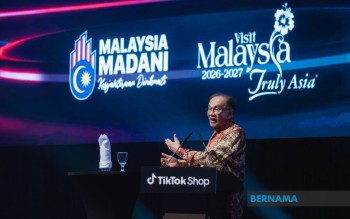
Prime Minister Datuk Seri Anwar Ibrahim has signalled Malaysia's determination to implement stricter vetting procedures for investment applicants, ensuring that foreign enterprises contribute meaningfully to the nation's economic growth and workforce development. Speaking after inaugurating the TikTok Shop Summit 2026 in Kuala Lumpur, Anwar outlined concerns about a growing cohort of businesses that exploit Malaysia's openness to foreign commerce while providing minimal tangible benefit to local communities or employment markets.
The Ministry of Investment, Trade and Industry (MITI) has flagged to the government an emerging pattern of companies establishing warehousing and transit operations within Malaysian territory that generate neither job creation nor substantive economic contribution. Anwar emphasised that authorities have already halted several such activities, yet the proliferation of applications from similar enterprises necessitates a comprehensive review mechanism to filter out ventures that do not align with Malaysia's economic development objectives. This reflects a broadening debate within Southeast Asia about balancing the benefits of globalised trade with protections for local business ecosystems.
The Prime Minister's comments arose in response to a question from a TikTok Shop participant concerning the surge of budget-priced goods flooding Malaysia's domestic market through cross-border e-commerce platforms such as Temu and Pinduoduo. Anwar acknowledged Malaysia's position as an open, free-trade economy that traditionally welcomes international business participation, yet he noted that digitalisation and online commerce have fundamentally altered market entry dynamics, allowing overseas sellers to penetrate domestic markets with unprecedented speed and scale.
While Anwar recognised that Malaysia's openness creates significant commercial opportunities, he drew attention to predatory pricing strategies that have become increasingly prevalent. These tactics, which he characterised as "dumping," enable overseas enterprises to undercut local retailers aggressively, capturing market share through artificial price suppression rather than genuine competitive advantage. This dynamic places local businesses—particularly small and medium enterprises that form the backbone of Malaysia's retail and manufacturing sectors—under mounting pressure to either match unsustainable pricing or cede customers entirely.
A particularly troubling pattern identified by Anwar involves foreign entities registering ostensibly local companies under the names of coffee shops or traditional businesses, masking the fact that all merchandise is imported. By adopting local nomenclature and business structures, these operations create a false impression of supporting domestic commerce while actually channelling consumer expenditure away from genuine local producers. Anwar stressed that such arrangements yield no tangible benefit to communities or authentic local enterprises, instead functioning as mere conduits for foreign merchandise distribution.
The Prime Minister illustrated the problem with a concrete example drawn from Malaysia's major logistics hub. Large international investors are renting warehouse facilities at Port Klang, yet these operations generate no meaningful demand for local workers or domestically-produced goods. The warehouses function essentially as transit points—goods arrive from overseas suppliers, are temporarily stored, then shipped onward without any value-addition or job creation within Malaysia. This model epitomises what Anwar characterises as parasitic foreign investment, where international capital exploits Malaysia's geographic position and infrastructure without reciprocating through employment or procurement from local sources.
The government has begun implementing enforcement actions to address these practices, with officers actively monitoring suspect business activities. However, Anwar indicated that the current reactive approach requires supplementation with more rigorous upstream screening. By reviewing investment applications before they proceed, Malaysia can prevent problematic ventures from establishing themselves in the first place, rather than engaging in costly enforcement efforts post-establishment. This preventive strategy aligns with best practices adopted by other developed economies seeking to balance openness with domestic protection.
Anwar's position reflects a nuanced understanding of Malaysia's economic needs. The country remains dependent on foreign investment to fund infrastructure development, technology transfer, and international market access. Simultaneously, Malaysia must protect its domestic industrial base and ensure that foreign participation generates net positive externalities for the local population. Small retailers, manufacturers, and service providers cannot compete fairly against multinational enterprises deploying global scale advantages if the regulatory framework remains indifferent to their survival.
The emphasis on employment and economic contribution as criteria for investment approval carries particular resonance in Malaysia's current context. Youth unemployment remains a policy concern, and many communities seek manufacturing or service sector jobs that provide stable income and career pathways. Investment applications that create zero jobs—such as automated warehouse operations or pure trans-shipment hubs—may generate corporate profits and government tax revenues, yet they fail to address Malaysia's actual economic development priorities.
This heightened scrutiny also signals Malaysia's broader recalibration of trade policy as digital commerce transforms traditional retail. Southeast Asia has become a frontier market for aggressive international e-commerce platforms, which often employ practices that would face regulatory barriers in developed economies. By announcing that Malaysia will implement stricter investment reviews, Anwar positions the country to establish standards that other regional economies may eventually emulate, potentially shaping how cross-border digital commerce operates throughout Southeast Asia.
The government's approach nonetheless faces inherent tensions. Overly restrictive investment screening risks deterring legitimate foreign investors or provoking retaliatory measures from trading partners. The challenge lies in crafting criteria that effectively distinguish between genuine contributors to Malaysia's development and sophisticated schemes designed to extract value while minimising local contribution. MITI's expanded mandate to provide detailed assessment of investment applications suggests the ministry will require enhanced analytical capacity and clearer policy guidelines to make consistent, defensible decisions.
Moving forward, Malaysia's investment framework will increasingly emphasise measurable outcomes: how many jobs an enterprise creates, what proportion of its supply chain involves local suppliers, whether it transfers technology or expertise to Malaysian workers, and how its operations integrate into the domestic economy rather than merely using Malaysia as a logistics or market-entry corridor. This represents a meaningful departure from earlier decades when foreign investment was welcomed primarily for capital inflows and export-generating capacity, regardless of domestic spillover effects. For Malaysian businesses and workers, Anwar's declaration signals that policymakers recognise their vulnerability to unfettered foreign competition and intend to implement protective measures.

