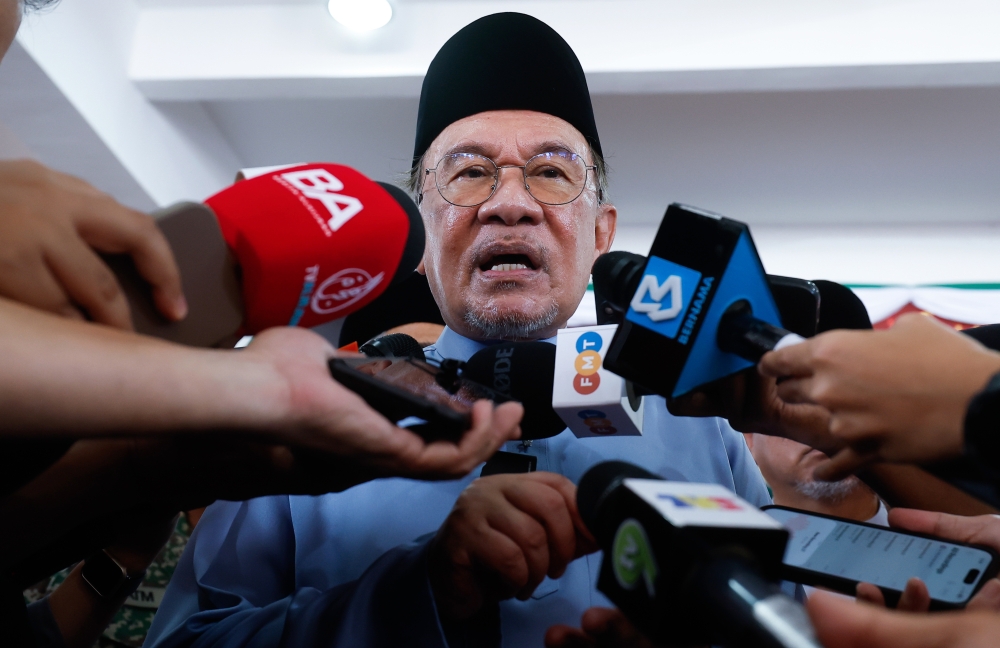
Malaysia's government is committed to sustaining diplomatic efforts with the United States on tariff-related disputes, Prime Minister Datuk Seri Anwar Ibrahim announced at a gathering in Port Dickson on July 24. The commitment reflects Kuala Lumpur's determination to maintain constructive dialogue with Washington despite trade tensions that have affected the region, signalling a measured approach to addressing bilateral commercial concerns that could otherwise escalate into broader economic friction.
Anwar's remarks conveyed a degree of reassurance regarding the specific tariff terms currently under discussion, characterising the rate structure as comparatively moderate when evaluated against a range of possible outcomes. This framing suggests the Malaysian government views the existing framework as preferable to more punitive alternatives that might have emerged during negotiations, indicating that behind-the-scenes talks have progressed sufficiently to provide some confidence in the trajectory of discussions. The nuance in his position underscores the delicate balance Kuala Lumpur must maintain between protecting domestic interests and preserving its crucial economic relationship with the United States.
The Malaysian position reflects broader regional concerns about rising protectionism and trade fragmentation affecting Southeast Asia. As a nation deeply integrated into global value chains, particularly in semiconductors, electronics, and petroleum products, Malaysia faces inherent vulnerability to tariff regimes that could disrupt supply networks and increase costs for exporters. The willingness to continue negotiations rather than adopt a confrontational stance suggests strategic pragmatism, acknowledging that sustained engagement remains preferable to the uncertainty and potential retaliation that would accompany trade escalation.
Tariff negotiations between nations typically involve complex considerations that extend beyond headline rates. For Malaysia, the implications touch on multiple sectors of the economy and could affect employment in manufacturing hubs across the Klang Valley, Penang, and Johor. The government's apparent satisfaction with the current rate trajectory implies that negotiators have secured either exemptions for key sectors, phase-in periods that allow industries to adjust, or other concessions that mitigate immediate impact on Malaysia's export competitiveness. Such details, though often invisible to the public, frequently determine whether trade agreements benefit or burden economic participants.
The timing of Anwar's statements carries significance within the broader context of US-Malaysia relations. The two countries maintain extensive defence, security, and intelligence partnerships alongside their commercial ties, creating multiple dimensions through which trade matters are assessed. Malaysia's willingness to frame ongoing discussions in cautiously optimistic terms suggests confidence that the United States views the bilateral relationship as strategically important enough to warrant reasonable accommodation of Malaysian concerns. This diplomatic tone also serves to reassure Malaysian investors, both domestic and foreign, that business conditions remain relatively stable despite external trade pressures.
For Malaysian businesses operating in export-dependent sectors, continued negotiation provides time to plan adjustment strategies if additional tariffs become unavoidable. Many multinational corporations operating manufacturing facilities in Malaysia serve global markets and could alter production locations if tariff structures become sufficiently disadvantageous. The government's active engagement in discussions signals to these companies that Kuala Lumpur is actively working to preserve the competitive advantages that make Malaysia an attractive investment destination. This backstage diplomatic work is crucial for maintaining the inflows of foreign direct investment that support millions of jobs across the country.
Regional implications of US-Malaysia tariff discussions extend beyond bilateral considerations. Other Southeast Asian nations watch closely how Kuala Lumpur negotiates with Washington, potentially using Malaysian outcomes as reference points for their own discussions with American trade officials. A settlement perceived as relatively favourable to Malaysia could influence how neighbouring countries approach similar negotiations, while a punitive outcome might harden regional positions on broader US trade initiatives. ASEAN unity on economic matters, already challenged by divergent national interests, could be further tested if tariff treatments create significant disparities among member states.
The Malaysian government's emphasis on continuing negotiations rather than accepting final terms reflects understanding that tariff discussions rarely conclude decisively but instead evolve through phases of adjustment and refinement. This ongoing process allows both negotiating parties to calibrate positions based on changing economic conditions, emerging technologies, and shifting geopolitical priorities. For Malaysia, maintaining an active seat at the negotiation table ensures the country can respond to emerging circumstances rather than accepting predetermined arrangements that may become obsolete or disadvantageous.
Anwar's public messaging on the tariff question serves multiple domestic audiences simultaneously. For the business community, it conveys government engagement and competence in protecting commercial interests. For the general public, it demonstrates that leadership is actively managing challenges posed by a shifting global trade environment. Within government circles, it signals to ministry officials and negotiating teams that high-level political support backs their efforts, potentially providing negotiators with greater flexibility and authority to explore creative solutions.
Looking forward, Malaysia's ability to navigate these tariff negotiations will significantly influence its economic trajectory over the coming years. The country's transition toward higher-value manufacturing and digital economy development depends partly on maintaining access to global markets, particularly in developed economies like the United States where consumer demand and advanced technology absorption rates are highest. Trade agreements that allow Malaysian companies to remain competitive while protecting sensitive domestic industries will prove crucial for sustaining the growth rates that have historically funded public services and employment creation.
The broader lesson from Malaysia's approach to US tariff negotiations is that sustained dialogue, even amid disagreement, creates better outcomes than confrontation. While the specific rate remains important, the willingness to continue talking preserves optionality and allows for incremental adjustments that can accommodate multiple interests. For a relatively small open economy like Malaysia, this pragmatic engagement with larger trading partners represents not weakness but strategic wisdom, acknowledging that long-term prosperity depends on maintaining relationships and networks that extend across borders and span decades.

