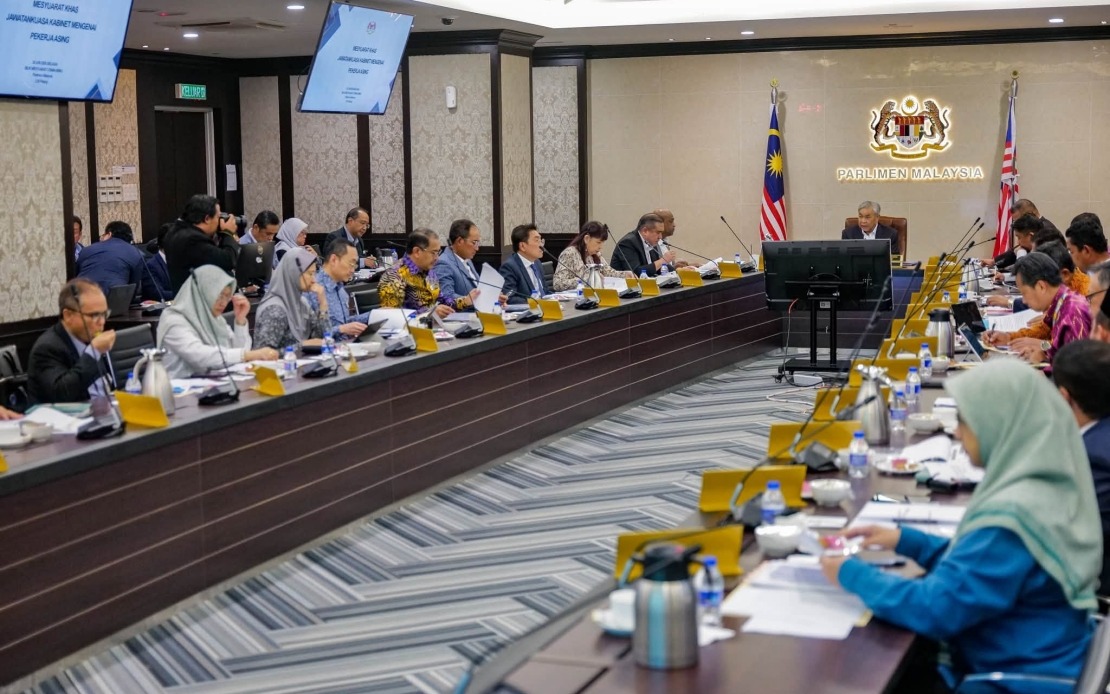
Malaysia's government has announced a comprehensive restructuring of its foreign worker management apparatus, signalling a shift towards more streamlined operations and better alignment with sectoral demands. Deputy Prime Minister Datuk Seri Dr Ahmad Zahid Hamidi disclosed the decision following a special meeting of the Cabinet Committee on Foreign Workers held at Parliament, underscoring the administration's commitment to overhauling systems that have long faced criticism for fragmentation and inefficiency.
The restructuring initiative addresses longstanding concerns about the coordination of Malaysia's foreign worker programmes, which have expanded substantially over the past two decades. With an estimated 1.8 million documented foreign workers across construction, manufacturing, agriculture, and domestic service sectors, the current management framework has struggled to balance competing interests: employers seeking labour, enforcement agencies monitoring compliance, and policymakers aiming to protect local employment prospects. The reorganisation reflects recognition that the existing institutional arrangement requires modernisation to function effectively in an increasingly complex labour market.
A pivotal component of the announced changes involves consolidating the One Stop Centre for Foreign Worker Management under the purview of the Ministry of Human Resources. This institutional realignment is intended to create clearer accountability and reduce the administrative fragmentation that has characterised foreign worker oversight. Currently, responsibility for migrant labour is dispersed across multiple agencies including the Immigration Department, the Human Resources Ministry, and sector-specific regulators, creating overlapping jurisdictions and inconsistent enforcement. Centralising coordination through a single ministry may streamline processing, reduce bureaucratic delays, and establish more uniform standards across industries.
Ahmad Zahid articulated the government's overarching objective as creating a system that is simultaneously more efficient and more rigorous in maintaining integrity. This framing acknowledges the inherent tension between facilitating employer access to foreign labour and preventing exploitation and irregular practices. By emphasising efficiency alongside integrity, the administration signals that it will not simply expand migrant worker intake but rather ensure that those employed operate within transparent, rule-governed frameworks. This approach carries implications for Malaysia's reputation in international labour standards discussions and for worker protection initiatives championed by non-governmental organisations.
The restructuring also encompasses a commitment to review foreign labour requirements on a strategic, demand-driven basis rather than through ad-hoc approvals. The government plans to conduct more rigorous assessments of actual sectoral needs, moving away from blanket allocations or politically-driven quotas that have sometimes characterised past policy. This recalibration could mean that certain industries face tighter restrictions on new foreign worker recruitment while others experiencing genuine skill shortages receive faster processing. The approach recognises that indiscriminate foreign worker expansion can suppress local wages, reduce incentives for domestic workforce development, and create dependency on migrant labour that impedes structural economic transformation.
Parallel to restructuring management mechanisms, the government has reiterated its strategic objective of reducing reliance on foreign workers through multiple complementary initiatives. These include expanding local workforce participation through improved job matching and training programmes, investing in skills development to prepare Malaysians for middle and higher-skilled positions, and accelerating industrial automation to reduce labour-intensive production. This multi-pronged approach acknowledges that foreign worker management cannot be addressed in isolation but must be part of a broader human capital and industrial policy. For manufacturing exporters and construction firms that have become accustomed to abundant, cost-effective migrant labour, such policies may necessitate operational adjustments and investment in technology.
The Cabinet Committee on Foreign Workers, which Ahmad Zahid chairs, has also reviewed its own membership and terms of reference as part of the restructuring. This internal governance adjustment suggests that the committee's composition may be modified to ensure better representation from relevant ministries and agencies, potentially including labour unions or industry bodies. Clearer terms of reference would establish decision-making procedures and escalation mechanisms, reducing scope for bureaucratic ambiguity that has sometimes delayed policy implementation or created inconsistencies between ministerial pronouncements and on-the-ground practice.
For Malaysia's business community, particularly labour-intensive sectors such as palm oil, rubber processing, construction, and domestic services, the restructuring carries both opportunities and constraints. More efficient coordination could accelerate worker visa approvals and reduce compliance burdens, potentially lowering operational costs. Conversely, stricter integrity measures and strategic labour assessments may limit access to foreign workers and require employers to invest more heavily in mechanisation or local workforce training. Sectors depending predominantly on migrant labour will need to adapt business models and engage proactively with the government to demonstrate genuine labour shortages in planning discussions.
The timing of this restructuring reflects wider Southeast Asian trends in foreign worker management. Regional neighbours including Singapore, Thailand, and Vietnam have similarly undertaken reforms aimed at ensuring migrant labour programmes support rather than undermine economic development objectives. Malaysia's move positions it within this regional trajectory while addressing domestic pressures concerning wage suppression in certain sectors, remittance outflows, and concerns about irregular migration and trafficking. The restructuring also carries implications for workers themselves, who may experience more consistent enforcement of protections and working conditions once a single coordinating body assumes clearer responsibility.
Looking forward, the success of this restructuring will depend significantly on implementation capacity and inter-agency coordination. Moving from policy announcement to operational reality requires sufficient funding, trained personnel, and political commitment sustained across multiple administrations. Monitoring mechanisms must be established to assess whether the restructured system achieves stated objectives of improved efficiency, reduced irregular migration, and better protection of both migrant and local workers. The government's emphasis on balancing industry needs with national security and employment prospects for Malaysians suggests awareness that foreign worker policy sits at the intersection of economic and social concerns requiring careful calibration.

