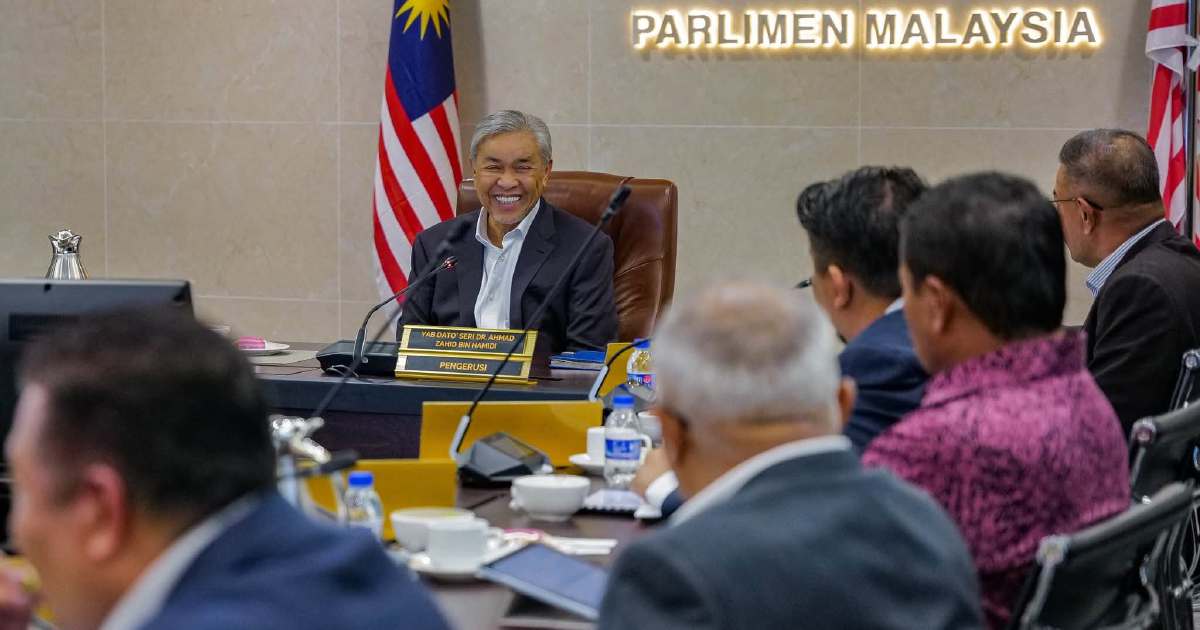
Malaysia's government is embarking on a comprehensive restructuring of its foreign worker management apparatus to create a more integrated and responsive system, Deputy Prime Minister Datuk Seri Dr Ahmad Zahid Hamidi announced. The overhaul represents an acknowledgment that the country's current mechanisms for managing migrant labour require modernisation to keep pace with evolving economic demands and administrative complexities.
The proposed reforms aim to eliminate fragmentation across multiple agencies responsible for foreign workforce oversight. Currently, different departments handle aspects such as employment permits, labour standards enforcement, skills verification, and deportation procedures, often with limited coordination. A unified approach would streamline processes for employers, reduce bureaucratic delays, and create clearer accountability structures within the government.
Industry-aligned hiring remains central to the restructuring agenda. Malaysia's reliance on migrant workers spans construction, manufacturing, hospitality, healthcare, and domestic services—sectors with distinct labour profiles and skill requirements. The new system should enable employers to access certified foreign workers matched to specific job specifications more rapidly, reducing the current wait times that sometimes push businesses toward irregular hiring arrangements.
The restructuring carries particular weight for Malaysia's economic positioning in Southeast Asia. Neighbouring countries including Thailand, Singapore, and the Philippines have implemented modernised foreign worker frameworks that facilitate smoother labour flows. By contrast, Malaysia's bureaucratic complexity sometimes deters legitimate employers and skilled migrant workers, potentially disadvantaging competitiveness in attracting talent for high-value sectors. Efficiency improvements could reverse this trend.
Coordination deficits have long complicated enforcement of labour standards. Different agencies investigating workplace violations, wage theft, or hazardous conditions often operate independently, hampering systematic monitoring. A unified structure could enable better data-sharing, targeted inspections, and swifter intervention to protect migrant workers—addressing longstanding criticism from human rights organisations regarding exploitation and abuse in the informal economy.
The government's emphasis on alignment with industry needs suggests consultation with employer groups and sector associations will shape implementation. Construction firms, electronics manufacturers, and other major employers of foreign labour have repeatedly requested predictability and flexibility in hiring procedures. However, balancing employer convenience with worker protections and public interest will require careful calibration during the reform process.
Regional migration patterns add context to Malaysia's restructuring. The country receives workers primarily from Bangladesh, Indonesia, Myanmar, and Nepal, alongside smaller flows from other countries. These labour corridors function within geopolitical frameworks influenced by bilateral relations, exchange rates, and employment conditions in origin countries. Transparent, equitable management systems strengthen Malaysia's reputation as a destination for migrant labour, indirectly supporting both economic productivity and diplomatic ties.
The announcement suggests broader acknowledgment that managing foreign workers involves security, social cohesion, and public health considerations alongside employment matters. Coordination among interior ministry, health, labour, and immigration agencies could improve identity verification, disease surveillance, and crime prevention—concerns intensified post-pandemic. A centralised information system might detect irregular workers more effectively while reducing opportunities for document fraud.
Implementation timelines and specific structural changes remain to be detailed. Successful restructuring will depend on adequate funding, technological investment in management systems, staff training, and potentially legislative amendments. International examples—from Singapore's targeted schemes to Thailand's recent reforms—offer models for designing efficient frameworks. Malaysia's system must balance these external examples with local institutional capacities and legal traditions.
For businesses, particularly small and medium enterprises reliant on foreign labour, the restructuring presents both opportunity and uncertainty. Simplified procedures could reduce compliance costs and hiring timelines, yet implementation during transition phases sometimes creates temporary complications. Clear communication and phased rollout will prove essential to minimising disruption.
Worker welfare dimensions merit close attention. Migrants sometimes encounter exploitation because fragmented systems prevent effective complaint mechanisms and enforcement. Restructuring offers an opportunity to embed worker protections—contract transparency, wage security mechanisms, dispute resolution pathways—into core management functions rather than treating them as afterthoughts.
Malaysia's foreign worker population exceeds 1.8 million according to official counts, though unofficial estimates run higher. Their contributions to economic output, productivity, and tax revenue justify the government's investment in systematic improvements. Conversely, population pressures, concerns about wage competition for Malaysian citizens, and social integration challenges require that restructuring address public anxieties through transparent policies and measurable outcomes.

