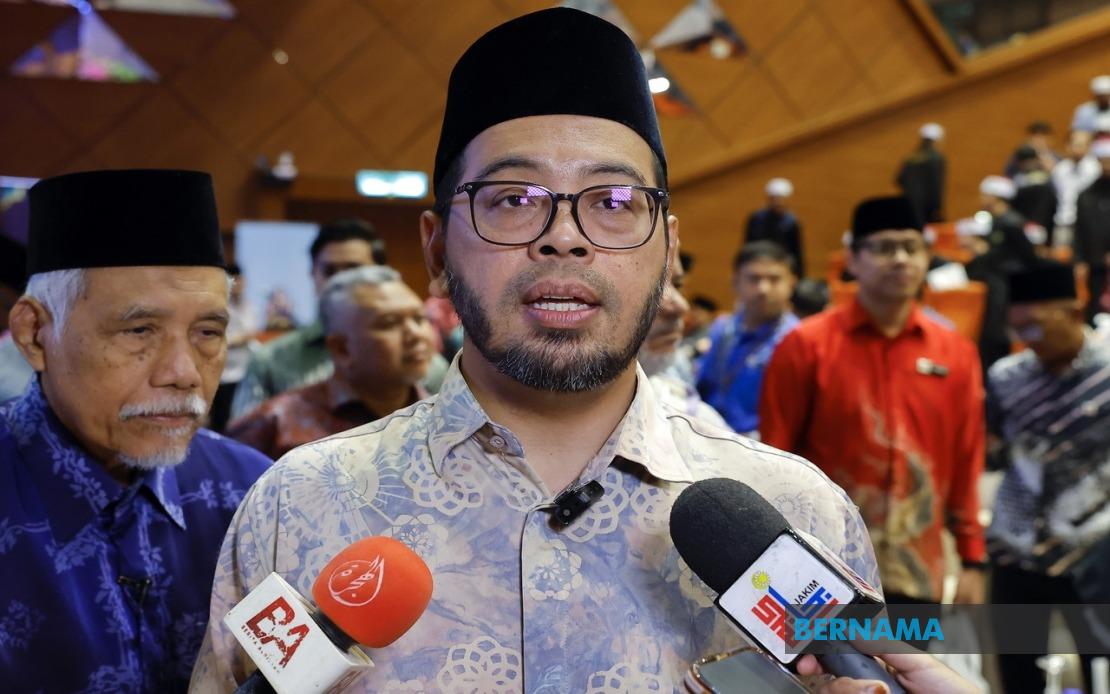
Malaysia's Prime Minister's Department (Religious Affairs) has committed to amplifying its youth engagement strategy in response to Sultan Nazrin Shah's recent address highlighting the urgent need for religious leaders to actively counter extremism and false information spreading through digital channels. The renewed focus reflects official acknowledgement that young Malaysians represent both a critical audience and a vulnerable demographic in the current information landscape.
Dr Zulkifli Hasan, the Minister in the Prime Minister's Department (Religious Affairs), made the commitment while speaking in Putrajaya following his address at the National and International Tokoh Ma'al Hijrah Premier Lecture 1448/2026. He framed the Sultan's message as a strategic directive that will guide the department's programming and institutional priorities moving forward. This ministerial response signals that the royal pronouncement carries substantial policy weight and will translate into concrete action rather than symbolic acknowledgement.
The Sultan of Perak articulated a comprehensive vision of the challenges confronting Malaysia's youth during his address last Friday. Beyond the immediate concerns of extremism and misinformation, Sultan Nazrin Shah identified a constellation of interconnected pressures that shape young people's worldviews and vulnerabilities. These include mounting anxiety around climate change, the destabilising effects of ongoing global conflicts, economic precarity that undermines future prospects, the polarising dynamics amplified by digital platforms, and a troubling erosion of confidence in established institutions.
This multifaceted diagnosis matters considerably for Malaysian policymakers because it moves beyond treating extremism and misinformation as isolated problems. Instead, the Sultan's framing suggests these phenomena emerge from a broader crisis of meaning and institutional legitimacy. Young people increasingly question the relevance and trustworthiness of traditional authorities, creating a vacuum that opportunistic actors and algorithmic echo chambers readily exploit. Religious leaders, positioned within trusted community structures, potentially occupy unique vantage points to rebuild these bridges.
The Sultan's specific call for enhanced religious leadership engagement represents a strategic choice with significant implications. Rather than relying primarily on security-focused counterterrorism approaches or top-down government messaging, the initiative emphasises the moral and spiritual authority wielded by religious figures. This reflects regional and global best practices in countering violent extremism, which increasingly recognise that community-embedded religious voices carry greater persuasive power with young audiences than distant bureaucratic institutions.
Dr Zulkifli Hasan's commitment to mainstreaming the Sultan's messages across departmental programmes suggests a systematic approach rather than ad-hoc responses. This could encompass curriculum development for Islamic education institutions, community engagement frameworks for mosque-based youth activities, digital literacy initiatives specifically designed to inoculate young people against misinformation, and interfaith dialogue programmes that model constructive engagement across religious lines. The department's implementation strategy will likely determine whether this initiative achieves meaningful impact.
The timing of this initiative carries contextual significance for Malaysia's broader governance landscape. Southeast Asia as a region has witnessed concerning trends of youth radicalisation, with recruitment networks exploiting economic grievance, identity confusion, and digital connectivity. Malaysia, possessing a relatively sophisticated digital infrastructure and ethnically diverse population, remains vigilant against both ideological extremism and communal polarisation. The government's explicit acknowledgement of these challenges through royal endorsement elevates public awareness and departmental accountability.
The digital dimension of these threats warrants particular emphasis. Social media platforms have fundamentally transformed how misinformation spreads and how extremist messaging reaches target audiences. Young people in Malaysia navigate an information ecosystem where credible news, propaganda, conspiracy theories, and algorithmic personalisation exist in constant competition for attention. Religious leaders operating in this context require not merely traditional theological training but also contemporary digital literacy and strategic communication skills to remain relevant and persuasive.
The Sultan's reference to declining institutional trust extends beyond religious domains to encompass governance institutions more broadly. Young Malaysians demonstrating scepticism toward government, media, and educational establishments create challenges for any top-down awareness campaign. This reality underscores why decentralised, community-based approaches anchored in local religious leadership may prove more effective than centralised messaging, though coordination and resourcing through the Prime Minister's Department will remain essential infrastructure.
The government's response pattern here—elevating a royal address into departmental policy direction—reflects Malaysia's particular constitutional architecture where the monarchy retains significant symbolic and advisory authority. This mechanism allows the Sultan to champion important causes without direct political controversy while giving the executive clear mandate to respond. For religious affairs, this partnership between palace and bureaucracy creates operational legitimacy that purely ministerial initiatives might lack.
Implementation challenges will inevitably emerge. Training programmes must reach grassroots religious figures across Malaysia's diverse Muslim communities and relevant non-Muslim religious leaders. Resources allocated must match the ambition of the initiative. Measurement frameworks must assess whether engagement efforts actually reduce youth susceptibility to extremism and misinformation rather than simply counting programme participants. The department will also need to navigate sensitivities around religious messaging, particularly ensuring approaches respect doctrinal diversity within Islam and maintain inclusive community relations.
The regional dimension merits consideration as well. Malaysia's experience in developing these programmes could inform approaches across Southeast Asia, where similar youth vulnerabilities exist. ASEAN nations increasingly recognise that effective counterextremism requires coordinated international engagement rather than purely national responses, given the transnational character of digital networks and radicalisation pathways. Malaysian initiatives may establish models relevant for regional partners facing comparable challenges.
Ultimately, the Sultan's address and the government's commitment represent recognition that addressing youth extremism and misinformation demands sustained engagement with young people themselves rather than merely treating symptoms through enforcement action. The coming months will reveal whether this policy commitment translates into resourced programmes reaching substantial youth populations and whether religious leaders receive sufficient preparation to fulfil the expanded role envisioned in this initiative.

%22%2F%3E%3C%2Fpattern%3E%3C%2Fdefs%3E%3Crect%20width%3D%22100%25%22%20height%3D%22100%25%22%20fill%3D%22url(%23ph21o2sg)%22%2F%3E%3Crect%20width%3D%22100%25%22%20height%3D%22100%25%22%20fill%3D%22url(%23ph21o2sp)%22%2F%3E%3Ctext%20x%3D%2250%25%22%20y%3D%2250%25%22%20text-anchor%3D%22middle%22%20dominant-baseline%3D%22central%22%20fill%3D%22rgba(255%2C255%2C255%2C0.95)%22%20font-family%3D%22Georgia%2C%20'Times%20New%20Roman'%2C%20serif%22%20font-weight%3D%22700%22%20font-size%3D%22170%22%20letter-spacing%3D%22-0.02em%22%3EGabungan%3C%2Ftext%3E%3C%2Fsvg%3E)