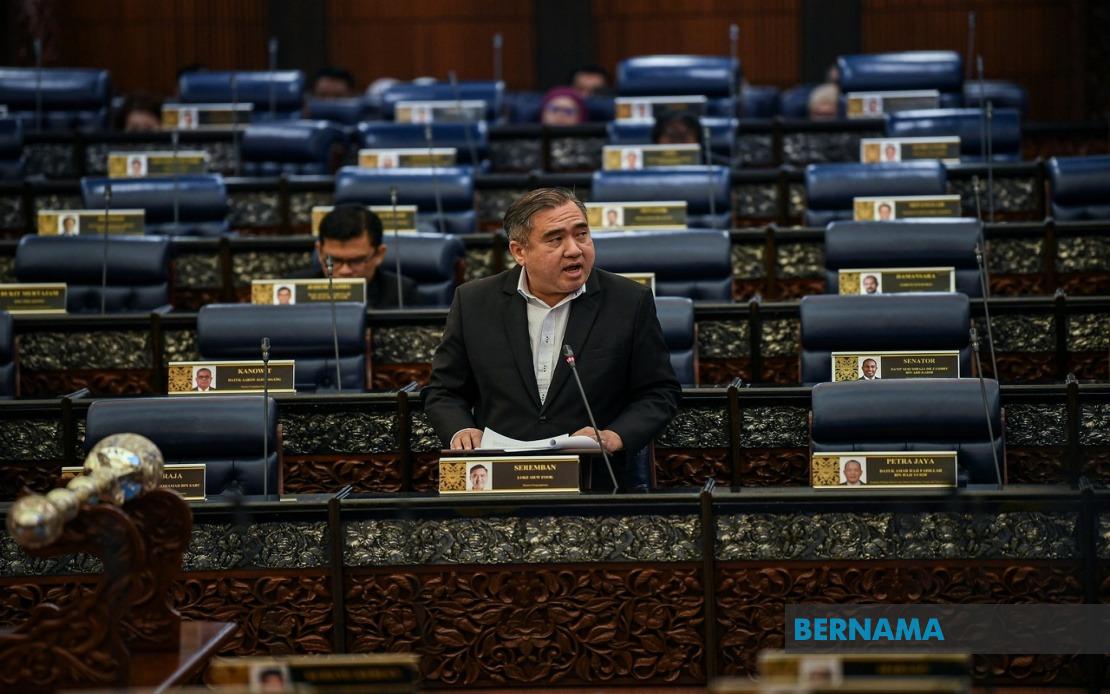
Transport Minister Anthony Loke has introduced sweeping legislative changes aimed at curbing dangerous street racing in Malaysia, tabling the Road Transport (Amendment) Bill 2025 in Parliament on June 23. The centrepiece of these reforms is the creation of a dedicated legal offence for illegal racing and speed trials, a move designed to address what authorities view as a persistent public safety challenge that has long existed in a regulatory grey zone.
Currently, enforcement agencies must rely on dangerous driving provisions to pursue street racers, a legal framework that creates significant hurdles for prosecution. Under existing legislation, authorities essentially must wait for an accident or injury to occur before taking decisive action, effectively making it difficult to prevent dangerous behaviour before it results in tragedy. The new Section 42A would fundamentally alter this enforcement landscape by establishing racing and speed testing as standalone crimes, enabling police to intervene at the moment illegal activity is detected rather than retrospectively after harm occurs.
For first-time offenders, the penalties are substantial: fines ranging from RM2,000 to RM10,000, imprisonment for up to two years, or both convictions. The escalation becomes more severe for repeat offenders, who face fines between RM5,000 and RM20,000, imprisonment stretching up to five years, or both penalties imposed simultaneously. This graduated sentencing structure reflects the government's recognition that persistent offenders require stronger deterrence than first-time participants in illegal street racing.
The practical implications of this amendment extend beyond simple enforcement mechanics. Consider a scenario where multiple motorcyclists engage in speed competitions on city streets—under current law, officers struggle to prosecute without documented evidence of dangerous driving causing specific harm. Under the proposed legislation, authorities can take action immediately upon observing such behaviour, preventing potential collisions and injuries before they materialise. The same principle applies to drivers illegally using public thoroughfares to test vehicle performance, a common practice in urban areas across Malaysia.
Parallel to these racing provisions, the Bill introduces Section 110B, which targets obstruction of enforcement officers. This provision recognises that street racing networks often operate with organised support systems, including lookouts who alert drivers to police presence or share real-time intelligence about enforcement operations. Under the amendment, individuals engaged in such conduct face fines between RM10,000 and RM50,000, imprisonment from one to five years, or both, with the offence classified as arrestable without warrant.
The breadth of Section 110B extends beyond simple warning systems. The provision encompasses individuals who physically obstruct, interfere with, assault, or threaten enforcement officers conducting road operations. It also captures those who follow enforcement vehicles, conduct counter-surveillance, or deliberately disseminate information designed to help suspected offenders evade legal consequences. This comprehensive approach acknowledges that illegal street racing often operates as an organised activity with coordinated support networks rather than isolated individual actions.
Beyond racing-specific offences, the Bill modernises the compound system for road traffic violations. Current minimum fines of RM300 are proposed to increase to RM500, with this escalation effective January 1, 2029. However, this represents a baseline rather than automatic assessment—actual compound amounts will vary based on offence severity, circumstances, settlement timing, and prescribed procedures. This flexibility allows enforcement officers to calibrate penalties proportionally while ensuring meaningful financial consequences for violations.
For Malaysia's road safety ecosystem, these amendments address a recognisable frustration among transport authorities and the public alike. Street racing events, particularly in urban centres and during late-night hours, have generated persistent community complaints about noise, danger, and reckless behaviour. The phenomenon extends across Southeast Asia, where illegal racing culture intersects with modified vehicle communities, social media documentation, and organised spectator gatherings. By establishing specific legal offences, Malaysia positions itself more aggressively against this conduct than many neighbouring jurisdictions.
The timing of this legislative initiative reflects broader regional trends toward stricter traffic enforcement. Countries throughout Southeast Asia have progressively implemented harsher penalties for dangerous driving behaviours as vehicle ownership increases and traffic fatality rates prompt policy responses. Malaysia's approach—combining specific offence creation with enhanced penalties for obstruction and supporting infrastructure—represents a comprehensive strategy targeting both perpetrators and enablers of illegal racing activities.
Transport authorities view the amendment as essential infrastructure protection. Beyond human safety, illegal street racing accelerates wear on public road networks and creates liability exposure for government agencies. By establishing clear legal deterrents, the ministry aims to reduce frequency of such events and associated infrastructure degradation. The legislative approach also provides clarity to courts regarding sentencing expectations, potentially reducing disparities in how various magistrates and judges handle racing-related cases.
For vehicle owners and driving enthusiasts, the amendments create clearer boundaries around legal automotive pursuits. Organised track days, circuit racing, and legitimate speed testing at designated facilities remain unaffected, while public road participation in such activities becomes unmistakably criminal. This distinction supports the legitimate automotive community while distinguishing their activities from dangerous public behaviour.
Implementation success will depend substantially on enforcement capability and coordination between traffic police units, Road Transport Department personnel, and local authorities. The increased maximum penalties provide tools for serious sanctions, but only if consistent application and prosecution occur. Training enforcement officers to recognise racing behaviour and document evidence will prove critical to translating legislative intent into practical results.
The Bill's passage through Parliament would represent a significant hardening of Malaysia's legal stance against street racing, moving from reactive accident-based prosecution toward proactive behaviour prevention. For Malaysian motorists and residents, particularly in urban areas where such activities concentrate, the amendments promise more aggressive official intervention against dangerous driving practices that compromise public safety.