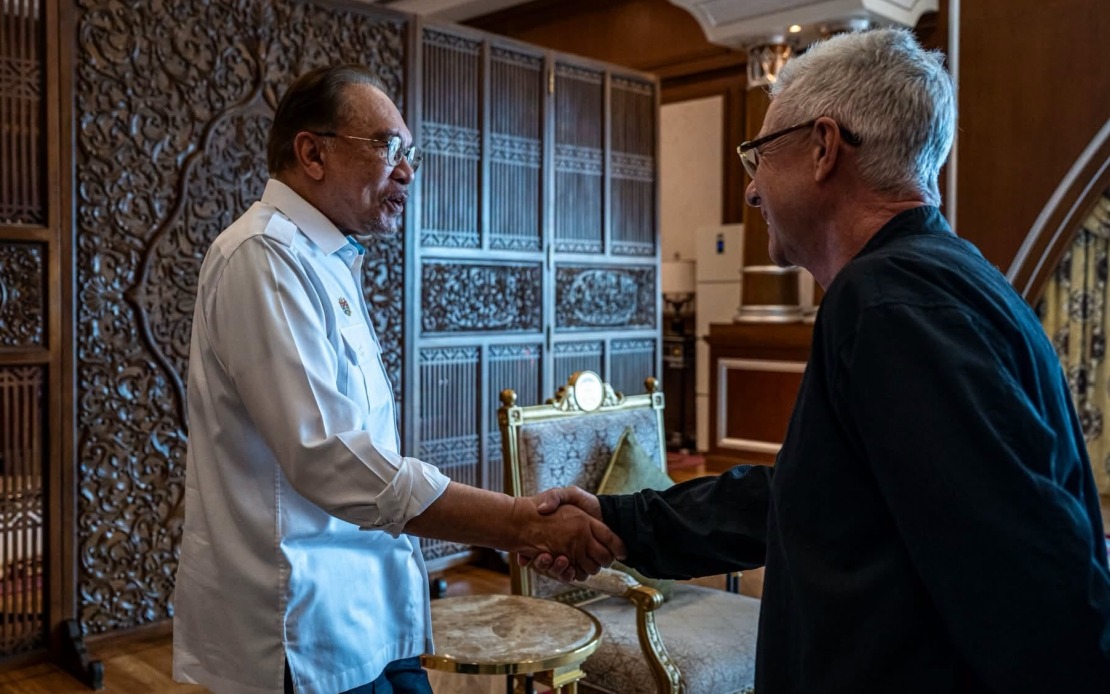
Prime Minister Datuk Seri Anwar Ibrahim held discussions with Singapore Grand Prix Executive Director Michael Roche on Tuesday, seeking to leverage the city-state's proven expertise in hosting one of motorsport's most prestigious events. The meeting, confirmed through a Facebook statement, underscores Malaysia's determination to successfully stage the 2026 Formula 1 Gulf Air Bahrain Grand Prix at Sepang International Circuit from October 2 to 4, marking a significant return for the country to the Formula 1 calendar after a nine-year absence.
The consultation reflects a pragmatic approach by Malaysia's leadership to draw upon regional success stories. Singapore has established itself as a premier Formula 1 host since first staging its night race in 2008, building a reputation for seamless logistics, world-class venue management, and substantial economic returns. By engaging directly with the expertise behind this operation, Anwar's administration is signalling a commitment to avoiding the pitfalls that previously derailed Malaysia's long tenure as a Grand Prix host.
Sepang hosted the Malaysian Grand Prix annually from 1999 until its discontinuation in 2017, a span that saw the circuit become an integral part of global motorsports. However, the race's removal from the calendar stemmed from escalating operational expenses and prohibitive licensing fees imposed by Formula 1's commercial rights holders. The financial burden, combined with evolving host priorities within the sport's calendar, made the economics of continuation untenable. Today's renewed engagement with a Grand Prix represents not merely nostalgia but a recalibrated strategy to hosting major sporting spectacles.
The Bahrain Grand Prix itself carries unusual logistical circumstances. Originally scheduled for April at the Bahrain International Circuit, the race was postponed to October and relocated to Malaysia following geopolitical tensions affecting the Middle East. This arrangement, forged through a formal collaboration between Malaysian and Bahraini authorities, required flexibility and creative problem-solving from all parties. The October timing at Sepang presents distinct advantages for Malaysia, notably positioning the event within the crucial tourism window preceding the Visit Malaysia 2026 campaign, a multi-year initiative aimed at solidifying the country's appeal as a regional travel destination.
Anwar framed the Grand Prix within a broader economic development narrative. A successful October event, he contended, promises tangible multiplier effects throughout the national economy. International motorsport gatherings of this magnitude historically generate sustained activity across hospitality, retail, transportation, and ancillary services. The influx of global media coverage, team personnel, corporate sponsors, and international spectators creates temporary but substantial demand for accommodation, dining, and entertainment. Beyond the immediate spending, hosting fees, broadcast licensing, and sponsorship arrangements provide direct revenue to organizers.
The Prime Minister's emphasis on strengthening Malaysia's position as a regional motorsports hub reflects longer-term strategic thinking. Asia-Pacific motorsport competition has grown exponentially, with rising wealth in the region fuelling demand for premium sporting experiences. Should Sepang successfully execute the October race, the circuit gains enhanced credibility for attracting additional marquee events, from international touring car championships to specialized racing festivals. This positions Malaysia as more than a one-off host, but rather as a serious contender within the increasingly competitive landscape for major sporting events across Southeast Asia.
Job creation represents another dimension of Anwar's economic case. Formula 1 races require extensive temporary staffing across security, hospitality, technical services, and operations. Additionally, preparatory work—venue upgrades, infrastructure improvements, and ancillary facility development—generates employment during the preceding months. For Malaysia, a country navigating post-pandemic economic recovery, these employment opportunities carry political and social significance beyond mere statistical indicators.
The consultation with Michael Roche specifically targets operational excellence and regulatory compliance. Singapore's night race, held on the Marina Bay circuit, navigates the challenges of urban hosting—managing traffic flow, ensuring public safety amid elevated security requirements, coordinating with local authorities, and maintaining public order during three intense days of racing. The lessons learned from Singapore's experience, accumulated across more than a decade of successful events, provide a valuable reference framework for Malaysian planners.
Anwar's stated commitment to ensuring the event meets international standards carries implicit recognition that Formula 1 operates within exacting technical and organizational parameters. The FIA and Formula 1 establishment maintain rigorous requirements governing circuit certification, safety protocols, crowd management, and broadcast facilities. Failure to satisfy these standards could jeopardize not only the immediate event but Malaysia's standing within international motorsport governance for years to come. The consultation therefore addresses not merely aspirational benchmarks but minimum regulatory requirements.
The Visit Malaysia 2026 connection demonstrates integrated thinking about major events as platforms for broader national objectives. Tourism authorities and sporting administrators increasingly view flagship events as catalysts for destination marketing and economic diversification. The Grand Prix provides concentrated media coverage across global platforms, offering Malaysia exposure to an international audience of hundreds of millions. This visibility extends beyond racing enthusiasts to capture business investors, potential tourists, and policymakers considering regional partnerships.
Sepang International Circuit itself requires consideration within this revival narrative. The venue has undergone periodic upgrades and remains technically capable of hosting Formula 1 at contemporary standards. However, the circuit's infrastructure, paddock facilities, and surrounding hospitality capacity reflect its last usage in 2017. Determining what renovations and enhancements are necessary—and ensuring they align with Formula 1's evolving technical requirements—forms a critical component of pre-October planning. The consultation with Singapore's Michael Roche likely addresses this dimension, as the Marina Bay circuit has invested substantially in ongoing improvements to maintain competitive positioning.
The timing of Anwar's engagement with Singapore's leadership carries diplomatic nuance as well. It demonstrates Malaysia's openness to regional cooperation on major infrastructure and sporting projects, contrasting with any perception of zero-sum competition within ASEAN. Singapore's willingness to share operational knowledge reinforces the regional partnership ethic, though both nations simultaneously compete for hosting opportunities. This balance between collaboration and competition characterizes increasingly sophisticated regional dynamics.
Looking forward, the October event's success or failure will significantly influence Malaysia's ability to attract subsequent Formula 1 races or other premium sporting spectacles. The lessons drawn from this specific engagement with Singapore's expertise will prove decisive in determining whether Sepang reclaims its historical prominence within global motorsport or remains a historic venue rather than an active competitor for marquee events.

