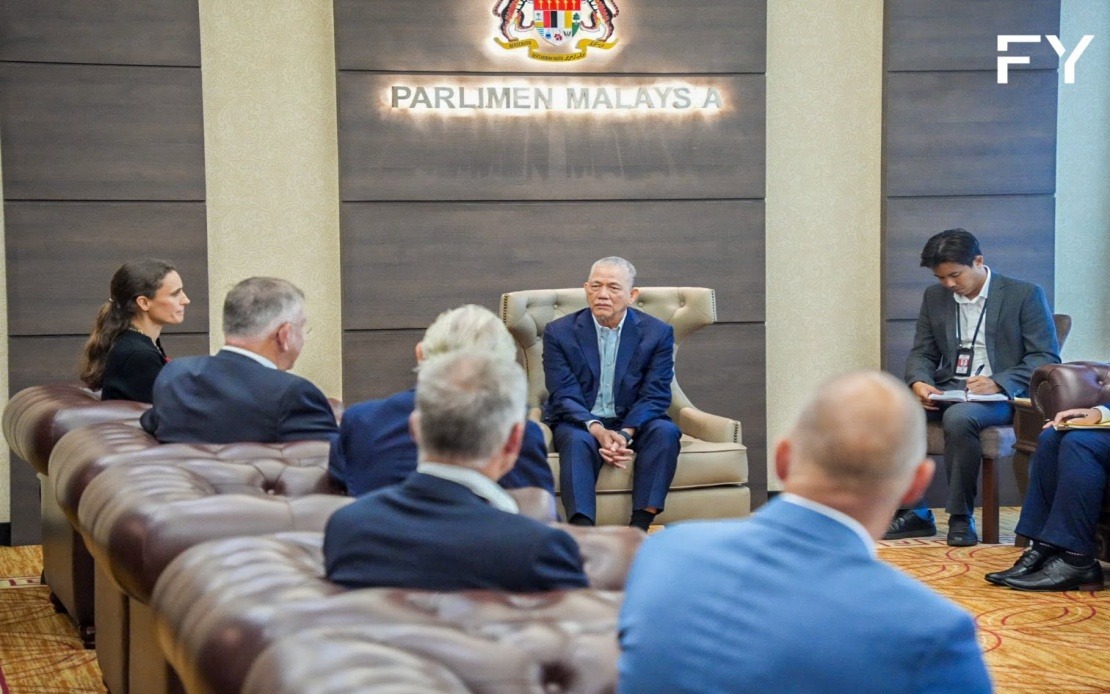
Malaysia is stepping up efforts to attract investment from German small and medium-sized enterprises, with Deputy Prime Minister Datuk Seri Fadillah Yusof signalling that the country is particularly keen to develop partnerships in green technology, renewable energy and water management sectors. The statement came during a parliamentary meeting with German Ambassador to Malaysia Silke Riecken-Daerr and representatives from the German SME Business Association, underscoring the strategic importance Kuala Lumpur places on deepening economic ties with Berlin.
The thrust towards attracting German SMEs aligns with Malaysia's broader commitment to sustainable development and its pivot towards cleaner, more environmentally responsible industries. By specifically targeting these three sectors, the government is signalling that future economic growth will be anchored to environmental stewardship, a positioning that increasingly matters to multinational investors and reflects global capital flows favouring green initiatives. For German businesses, many of which operate under stringent European environmental standards and sustainability requirements, Malaysia's explicit embrace of green development creates a naturally aligned opportunity.
The relationship between Malaysia and Germany already carries substantial weight in regional economic architecture. Over 800 German companies are currently established across Malaysia, operating in diverse industries and generating significant employment and technology transfer. This existing footprint demonstrates that German enterprises have found Malaysia sufficiently attractive for operations, though the deputy prime minister's remarks suggest the government believes there remains considerable untapped potential, particularly among smaller firms that may lack the resources to independently scout Southeast Asian markets.
Germany's prominence in mechanical engineering and manufacturing technology has long been recognised as a core strength, and Fadillah's reference to these sectors indicates that Malaysia continues to value opportunities for upgrading its own industrial base through German expertise and partnership. The existing 800-company ecosystem likely comprises a mix of large multinationals and established medium-sized operators, but German SMEs—which represent the backbone of Germany's famous Mittelstand economy—represent a different category with specific competitive advantages in niche technologies and specialised solutions.
Beyond investment, the bilateral discussions ventured into workforce development, highlighting Germany's world-renowned Technical and Vocational Education and Training system as a potential model for Malaysia. TVET capacity-building has become an increasingly central concern for Southeast Asian governments grappling with skills mismatches in rapidly evolving industries. Germany's approach, which successfully bridges academic learning with practical apprenticeship, has produced generations of highly skilled workers capable of operating in precision-driven sectors. For Malaysia, which is competing with regional peers for foreign direct investment and manufacturing leadership, adopting or adapting German TVET methodologies could represent a competitive differentiator that makes the country more attractive to technology-intensive enterprises.
The timing of this diplomatic outreach carries particular significance. As global supply chains continue to rebalance following pandemic-era disruptions, countries across Southeast Asia are competing intensely for manufacturing relocation and reinvestment from developed economies. Malaysia's historical advantages in electronics, semiconductors and advanced manufacturing face growing competition from Vietnam, Thailand and Indonesia. By actively cultivating relationships with German business associations and explicitly inviting SME participation, Malaysia is positioning itself as a deliberate, strategically focused destination rather than a passive recipient of opportunistic investment.
Fadillah's confidence that bilateral relations will deepen through strategic cooperation reflects official optimism about the receptiveness of German enterprises to Malaysian opportunities. However, such investment requires more than diplomatic courtesy; it demands clarity on regulatory frameworks, ease of doing business, infrastructure quality and supply chain ecosystem maturity. German SMEs, operating in one of the world's most competitive economies, will evaluate Malaysia against rigorous benchmarks and alternative locations. The government's emphasis on green technology and water management suggests awareness that these sectors may offer regulatory clarity and growth trajectory advantages that appeal to disciplined German investors.
Water management and treatment technology deserve particular attention in the Malaysian context, where rapid urbanisation, industrial expansion and climate variability have created genuine infrastructure challenges. German expertise in treating complex water quality problems and developing efficient water systems could address genuine domestic needs while creating demonstration effects that justify premium valuations for local operations. Similarly, renewable energy technologies benefit from Malaysia's equatorial climate and government targets for expanding solar and other clean energy capacity.
The invitation to German SMEs also reflects implicit recognition that Malaysia's growth will increasingly depend on high-value-added activities rather than low-cost manufacturing competition. German small enterprises typically operate in precisely those segments where technical sophistication, innovation and quality command market premiums. By explicitly welcoming such investors, Malaysia is signalling a national pivot towards deeper value chains and more complex economic positioning.
For Southeast Asian observers and competing regional economies, Malaysia's German outreach demonstrates how bilateral relationships increasingly centre on sectoral specificity and skills alignment rather than generic investment promotion. Thailand, Vietnam and Indonesia may well be pursuing parallel strategies with different European partners, creating a complex landscape where investment decisions hinge on granular assessments of regulatory environments, supply chain ecosystems and workforce capabilities rather than broad regional comparisons.
The parliamentary setting of this meeting—rather than a purely commercial forum—underscores that government backing and legislative clarity matter to German decision-makers accustomed to stable, transparent policy environments. The involvement of Malaysia's deputy prime minister signals top-tier commitment, though ultimately converting diplomatic goodwill into actual greenfield projects or significant expansion by German SMEs will require sustained follow-through on infrastructure, regulatory predictability and genuine competitive advantages in the targeted sectors.