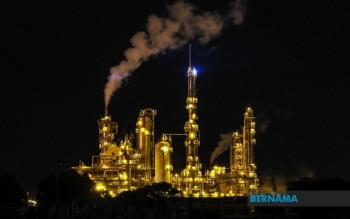
Malaysia should carefully balance energy security concerns with fiscal responsibility when establishing a national petroleum reserve, according to investment strategy specialists who caution against simply mimicking the large-scale reserve systems maintained by wealthy industrialised economies. The recommendation comes as Prime Minister Datuk Seri Anwar Ibrahim signalled the government's intention to investigate whether such reserves would strengthen the country's resilience against potential supply disruptions in an increasingly volatile geopolitical environment.
Mohd Sedek Jantan, director of investment strategy at IPPFA Sdn Bhd, argues that Malaysia's unique financial circumstances and energy vulnerabilities demand a fundamentally different approach than that taken by the United States and Japan, nations with substantially greater budgetary latitude and different energy consumption patterns. Rather than pursuing the largest possible reserve capacity, policymakers should focus on identifying the reserve size that genuinely serves Malaysia's needs while remaining affordable within existing government constraints. This distinction matters significantly because state resources perpetually face competing demands from essential services including healthcare delivery, educational infrastructure and food security programmes.
The central challenge facing policymakers involves determining an appropriate balance between preparedness and financial prudence. Sedek emphasises that the true cost calculation extends beyond the initial outlay required to construct storage facilities and acquire petroleum stocks. The economic disruption triggered by an actual supply crisis—whether stemming from regional conflict, shipping disruptions or market manipulation—could potentially dwarf the upfront investment needed to establish sensible reserve levels. This reality argues for moving forward with strategic reserves, but through a carefully calibrated process rather than ambitious overextension.
The proposed strategy prioritises analysis before action. Sedek advocates for a comprehensive examination of Malaysia's specific vulnerability profile, considering factors such as import dependency, refining capacity, transportation routes and historical disruption patterns. This assessment should inform decisions about optimal reserve volume, establish transparent funding mechanisms and clarify the operational framework governing reserve management. Only following completion of this diagnostic work should the government commit to building physical infrastructure and acquiring stockpiles.
Financing represents another critical consideration that demands creative thinking and private sector engagement. Rather than burdening the federal budget entirely with petroleum acquisition and storage costs, policymakers should explore collaborative arrangements with commercial entities that possess expertise in commodity trading, logistics and risk management. Such partnerships could enhance efficiency while distributing financial responsibility across multiple stakeholders with direct interests in energy security. Any reserve structure must remain adaptable as energy markets evolve and Malaysia's economic needs shift over time.
The fiscal dimension distinguishes this approach from the massive reserves maintained by wealthy nations with energy export revenues funding their strategic stockpiles. The United States Strategic Petroleum Reserve, for instance, benefits from a long history of budget allocations within a much larger economy, while Japan's reserves reflect island vulnerabilities and energy import patterns quite different from Malaysia's situation. Developing nations face fundamentally constrained fiscal positions requiring that every major investment demonstrate clear returns relative to alternative uses of equivalent resources.
Sedek's framework emphasises what he terms "smart and cost-effective" reserve development rather than pursuing reserve supremacy. This language reflects recognition that strategic reserves serve a functional purpose rather than representing a prestige project. The value lies in maintaining sufficient capacity to bridge genuine supply gaps without creating unnecessary carrying costs or warehousing burdens. Some analysts suggest that smaller reserves combined with strategic partnerships and demand management protocols might prove more efficient than attempting to match the reserve volumes of major economies with vastly different fiscal positions.
The government's investigation should encompass scenarios testing how various reserve levels would address plausible disruption scenarios, whether lasting weeks, months or longer. These analyses would illuminate the relationship between reserve size and resilience gains, revealing the point at which additional stockpiling produces diminishing security benefits relative to mounting expenses. They would also clarify whether alternative strategies—such as diversifying import sources, developing regional storage arrangements with neighbours, or enhancing refining flexibility—might complement or partially substitute for large domestic reserves.
Implementation timing matters considerably within this measured approach. Rather than attempting to establish a fully stocked reserve immediately, a phased acquisition strategy allows the government to distribute costs across multiple fiscal years while maintaining flexibility to adjust reserve levels based on evolving geopolitical conditions and domestic circumstances. Gradual accumulation also provides opportunity to refine operating procedures and management systems before managing significantly larger inventories.
For Southeast Asian observers, Malaysia's reserve decisions carry broader implications for regional energy security frameworks. As smaller nations throughout the region contemplate similar strategic initiatives, Malaysia's approach could establish a template for developing countries seeking resilience without unsustainable fiscal commitments. Collaborative mechanisms involving multiple countries might prove more cost-effective than individual national reserves, offering economies of scale while distributing infrastructure development expenses.
The government's stated commitment to studying this issue acknowledges growing recognition that energy security requires explicit policy attention in an era of supply chain vulnerabilities and geopolitical tension. However, Sedek's counsel against hasty implementation reflects understanding that strategic reserves represent significant long-term commitments of public resources requiring rigorous justification. The coming investigation should generate the analytical foundation needed to determine whether and how Malaysia can prudently strengthen its energy position through petroleum reserves.

