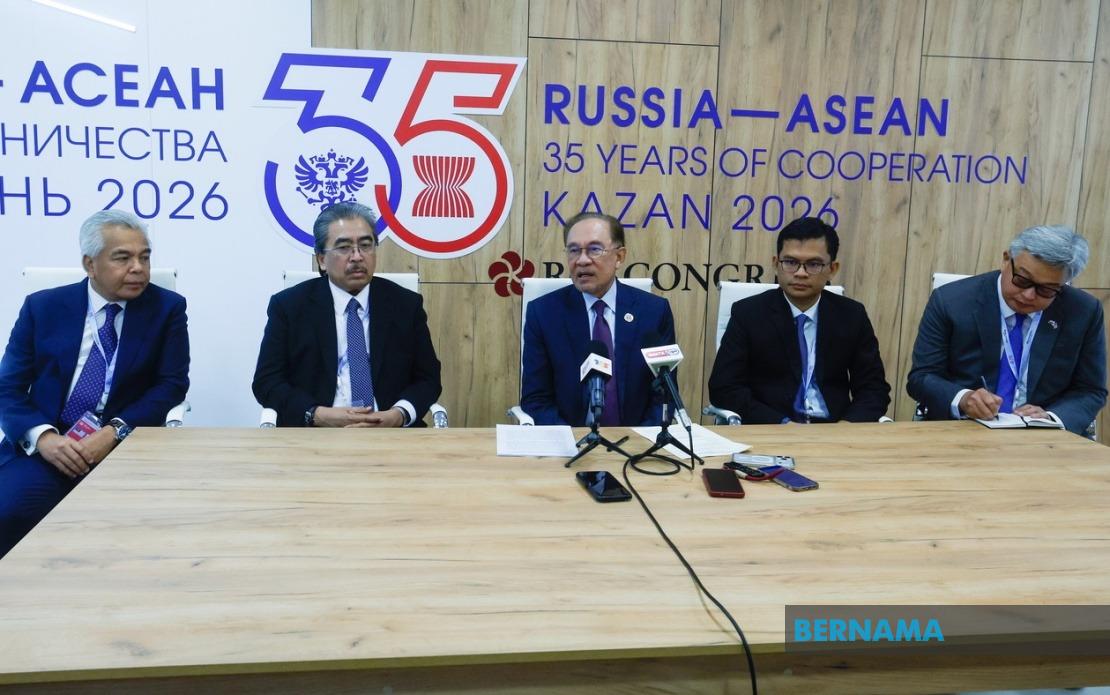
Prime Minister Datuk Seri Anwar Ibrahim has made a forceful call for Malaysia to expedite visa-free travel arrangements and establish direct flight connections with Russia, citing the nation's significantly lower share of Russian tourist arrivals compared to regional competitors. Speaking to journalists in Kazan following his participation in the ASEAN-Russia Commemorative Summit, Anwar outlined the tourism imbalance as a strategic concern requiring urgent policy intervention at both the ministerial and diplomatic levels.
The disparity in Russian visitor numbers presents a striking case for reform. While Turkey attracts approximately five million Russian tourists annually and Thailand welcomes around two million, Malaysia receives merely 100,000—a figure Anwar characterised as inadequate given the diplomatic and economic partnership Malaysia has cultivated with Moscow. This substantial gap cannot be attributed to lack of interest but rather to structural barriers embedded within Malaysia's current travel and financial systems, according to the Prime Minister's assessment.
Anwar pinpointed two interconnected obstacles impeding stronger tourism flows. The absence of visa-free entry provisions forces Russian nationals to navigate Malaysia's consular processes, a requirement that many competing destinations have eliminated. Simultaneously, payment infrastructure and transaction mechanisms remain cumbersome, creating friction for visitors attempting to conduct financial operations during their stay. The Prime Minister characterised these restrictions as remnants of outdated administrative thinking that prioritises procedural adherence over practical modernisation.
Critically, Anwar challenged the prevailing mindset within Malaysian officialdom that privileges caution over opportunity. He argued that excessive concern regarding potential negative reactions from unspecified third parties has become a self-imposed constraint on Malaysia's diplomatic and economic flexibility. This defensive posture, he suggested, represents an unnecessary limitation on bilateral relationship-building and regional competitiveness in attracting high-value tourism expenditure.
The Prime Minister drew parallels with Malaysia's engagement with other nations facing similar international sensitivities, explicitly referencing Iran as an example. He contended that countries should not allow external pressure—real or perceived—to dictate internal policy decisions regarding commerce and tourism facilitation. This framing reflects a broader assertion of Malaysian agency in determining its own foreign policy priorities independent of presumed international constraints.
The timing of these remarks carries particular significance within Malaysia's strategic positioning. As ASEAN navigates its relationship with Russia amid broader geopolitical tensions, Malaysia's diplomatic engagement remains constructive while maintaining its established partnerships. Anwar's emphasis on practical tourism cooperation suggests a calculated approach: deepening economic ties through accessible, low-friction mechanisms that benefit ordinary citizens and businesses rather than pursuing high-stakes political alignments.
Direct flight connectivity represents the complementary piece of this tourism strategy. Without scheduled air services, even visa-free travel delivers limited value to potential visitors. The operational costs of transiting through intermediate hubs render Malaysia less attractive compared to destinations offering nonstop connectivity. Establishing direct flights would require coordination between Malaysian and Russian carriers, government approvals, and potentially subsidisation during the route development phase—commitments that demand political will and budgetary allocation.
The financial dimensions merit examination. Russian tourists to Thailand and Turkey represent billions in annual spending, stimulating hotel occupancy, restaurant revenues, retail sales, and transportation services. Malaysia's vastly smaller Russian visitor base suggests untapped commercial potential across multiple sectors. Airlines, hospitality providers, and tourism operators would benefit materially from expanded market access, creating domestic constituency support for policy changes currently stalled within bureaucratic processes.
Anwar's critique extends beyond specific bilateral issues to encompass Malaysia's broader institutional culture. His reference to "archaic" procedures and excessive procedural conservatism suggests frustration with entrenched administrative resistance to innovation. This tension between modernising reformers and institutional gatekeepers represents a persistent challenge in emerging market governance, where legacy systems persist despite recognition that they hinder competitiveness.
The diplomatic angle warrants consideration as well. By publicly advocating for closer travel ties with Russia during an ASEAN-Russia summit, Anwar signals Malaysia's commitment to constructive engagement with Moscow while framing the issue in purely economic terms rather than geopolitical ones. This rhetorical positioning allows Malaysia to maintain its diplomatic flexibility and ASEAN consensus while advancing specific bilateral interests.
Implementing Anwar's proposed measures would require coordinated action across multiple government agencies—foreign affairs, immigration, civil aviation, financial regulation, and tourism promotion. Institutional coordination of this complexity often moves slowly, suggesting that converting the Prime Minister's public advocacy into concrete policy implementation may encounter bureaucratic friction despite his executive authority.
The broader regional context suggests that Malaysia's approach could influence other Southeast Asian nations' policies toward Russia. If Malaysia successfully removes travel barriers and establishes direct connectivity, it potentially sets precedent for Thailand, Indonesia, and Vietnam to undertake similar assessments of their own visa and flight policies. This demonstration effect could gradually reshape regional tourism patterns and commercial relationships with Moscow.

%22%2F%3E%3C%2Fpattern%3E%3C%2Fdefs%3E%3Crect%20width%3D%22100%25%22%20height%3D%22100%25%22%20fill%3D%22url(%23ph21o2sg)%22%2F%3E%3Crect%20width%3D%22100%25%22%20height%3D%22100%25%22%20fill%3D%22url(%23ph21o2sp)%22%2F%3E%3Ctext%20x%3D%2250%25%22%20y%3D%2250%25%22%20text-anchor%3D%22middle%22%20dominant-baseline%3D%22central%22%20fill%3D%22rgba(255%2C255%2C255%2C0.95)%22%20font-family%3D%22Georgia%2C%20'Times%20New%20Roman'%2C%20serif%22%20font-weight%3D%22700%22%20font-size%3D%22170%22%20letter-spacing%3D%22-0.02em%22%3EGabungan%3C%2Ftext%3E%3C%2Fsvg%3E)