Global tensions between the United States and Iran have triggered widespread concerns about food security across Asia, with disruptions to shipping through the Strait of Hormuz threatening supplies of oil—a critical input for fertiliser production—and plastics essential for food packaging. Malaysia, however, has largely insulated its consumers from these external shocks through decisive policy intervention, keeping food inflation subdued at 1.4 per cent year-on-year in May 2026 despite the economic headwinds battering regional markets.
The stability of Malaysia's food sector during this period of global uncertainty represents a deliberate government strategy rather than fortunate circumstance. When Middle East tensions escalated early this year, policymakers recognised that local farmers faced mounting pressures from rising fuel costs and production expenses. Rather than allowing market forces to drive up consumer prices, the government implemented a suite of targeted interventions designed to absorb cost pressures at source, supporting agricultural producers while protecting household budgets.
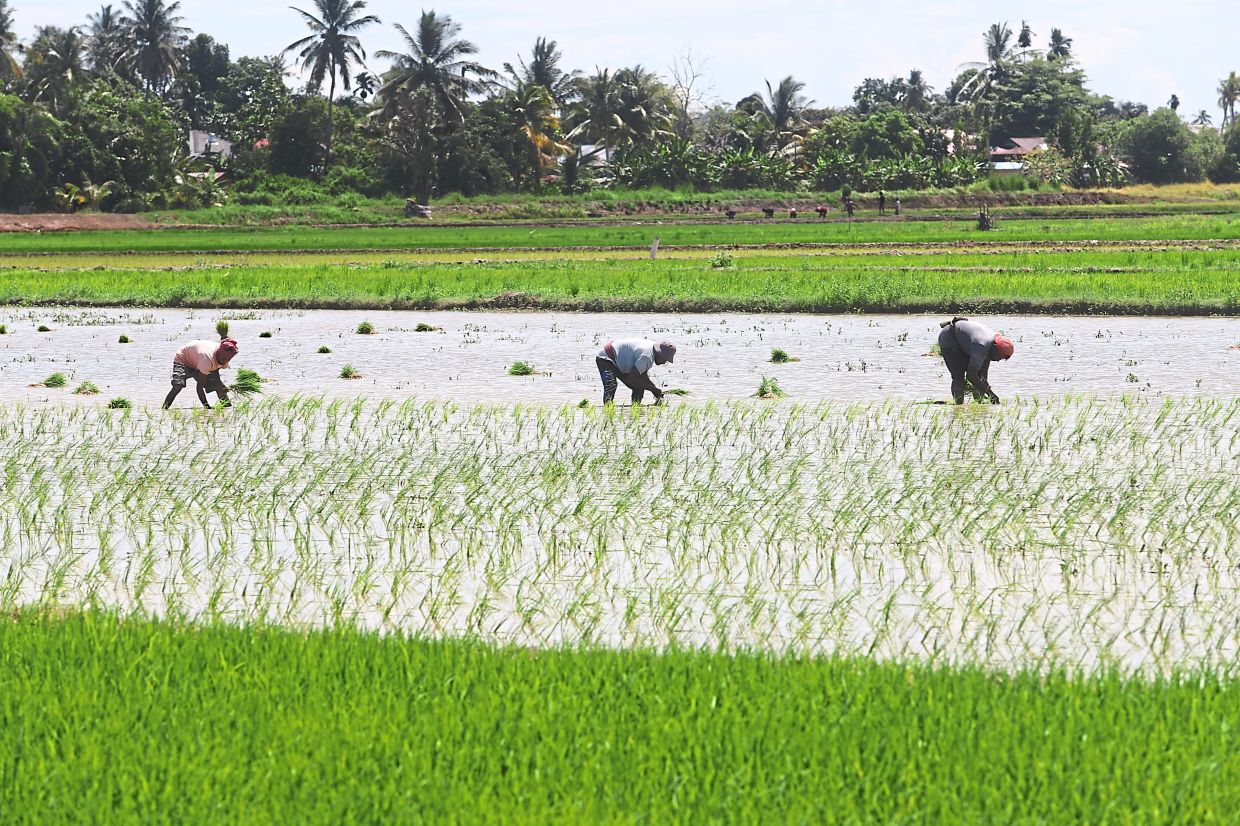
The centrepiece of this approach involves substantially enhanced diesel subsidies for farming operations. In April, the Ministry of Finance announced a significant expansion of Budi Agri-Komoditi, the diesel subsidy programme for agricultural machinery, increasing the monthly allowance from RM300 to RM400—a boost of one-third that directly addresses the fuel cost burden on farmers across the country. Simultaneously, the government nearly doubled the ploughing incentive scheme, known as Insentif Pembajakan kepada Pesawah (IPKP), raising support from RM160 to RM300 per hectare for the 2026 planting season. Farmers in Peninsular Malaysia received an additional RM200 per hectare advance payment to help them mobilise resources before the critical planting phase.
These measures reflect sophisticated understanding of agricultural economics and supply chain dynamics. Prof Datuk Dr Nasir Shamsudin, an agricultural economist at Putra Business School and emeritus professor at Universiti Putra Malaysia, explains that the Budi Agri-Komoditi subsidy provides crucial short-term relief by offsetting diesel and transportation cost escalations, while the enhanced IPKP incentive improves farmers' working capital position precisely when they need liquidity to prepare land for cultivation. By reducing production cost burdens before they cascade through the supply chain, these interventions prevent price increases from reaching consumers—a preventive approach far more efficient than managing inflation after the fact.
The effectiveness of this strategy is evident in Malaysia's remarkably low food inflation rate, which remains among the most restrained in the Southeast Asian region during a period of elevated global commodity prices and supply chain turbulence. This achievement is not temporary or accidental; rather, it reflects the government's commitment to sustained agricultural support. Under Budget 2026, the authorities allocated RM2.62 billion across various subsidy and assistance programmes targeting paddy prices, crop cultivation, fertiliser supplies, seeds, and production incentives. The fishing community received RM160 million to provide monthly living allowances of up to RM300 and catch incentives, while local fruit growers benefited from RM55 million earmarked for incentives and infrastructure supporting pineapple, soursop, water apple, and pomelo production.
Beyond immediate price stabilisation, the government has built strategic buffers to protect against prolonged supply disruptions. Official assurances confirm that Malaysia maintains sufficient stocks of essential proteins—chicken, eggs, fish and milk—to sustain a month of consumption despite ongoing global logistics complications. Rice supplies, augmented by the national buffer stock, can cover between five and six months of domestic demand, while fertiliser inventories provide approximately nine months of supply. This combination of price support and strategic stockpiling creates a robust dual defence against the types of shocks that have destabilised food systems elsewhere in the region.
However, agricultural economists caution that subsidies represent a necessary but ultimately insufficient long-term solution. Prof Nasir emphasises that the full benefits of government assistance depend critically on efficient transmission of cost savings throughout the entire food supply chain, reinforced by sustained productivity improvements and logistics optimisation. He argues that genuine food security requires moving beyond subsidy dependency towards structural transformation of the agricultural sector through mechanisation investments, precision agriculture technologies, climate-smart farming methods, improved seed varieties, efficient irrigation systems, modern post-harvest facilities, and integrated supply chain logistics. These productivity-enhancing measures can permanently reduce unit production costs, enhance international competitiveness, and diminish reliance on continuous government assistance.
Recognising this imperative, the government has begun promoting a strategic shift towards organic fertilisers, biofertilisers, and Effective Microorganisms (EM) products to reduce vulnerability to price fluctuations in chemical fertiliser markets. A RM5.5 million project under the 13th Malaysia Plan has received approval to strengthen the circular economy by converting agri-food waste into compost and organic fertilisers, simultaneously addressing waste management challenges and fertiliser supply resilience.
Yet Malaysia faces a structural challenge that no amount of short-term policy intervention can fully resolve: the country remains a substantial net food importer dependent on global markets for basic commodities including rice, wheat, dairy products, and meat. In 2024, the agri-food trade deficit reached RM39.34 billion, reflecting profound reliance on international supply sources that inevitably transmit external price shocks into domestic markets. This dependency extends beyond commodities that appear self-sufficient in domestic production; agricultural sectors that seem resilient actually depend heavily on imported inputs, creating hidden vulnerability throughout the food system.
The Malaysian experience during recent Middle East tensions therefore offers a cautionary tale for Southeast Asian policymakers. While intelligent subsidy deployment and strategic stockpiling can temporarily buffer consumers from global shocks, they cannot substitute for fundamental improvements in domestic agricultural productivity and self-sufficiency. The current government has demonstrated sophisticated crisis management, keeping food prices stable during a period when regional neighbours faced significant inflation pressures. However, the sustainability of this achievement depends on whether the authorities can translate short-term stabilisation measures into longer-term structural transformation that reduces the economy's dependence on imported food and vulnerable global supply chains—a challenge requiring sustained investment, technological innovation, and political commitment extending well beyond the current budget cycle.

