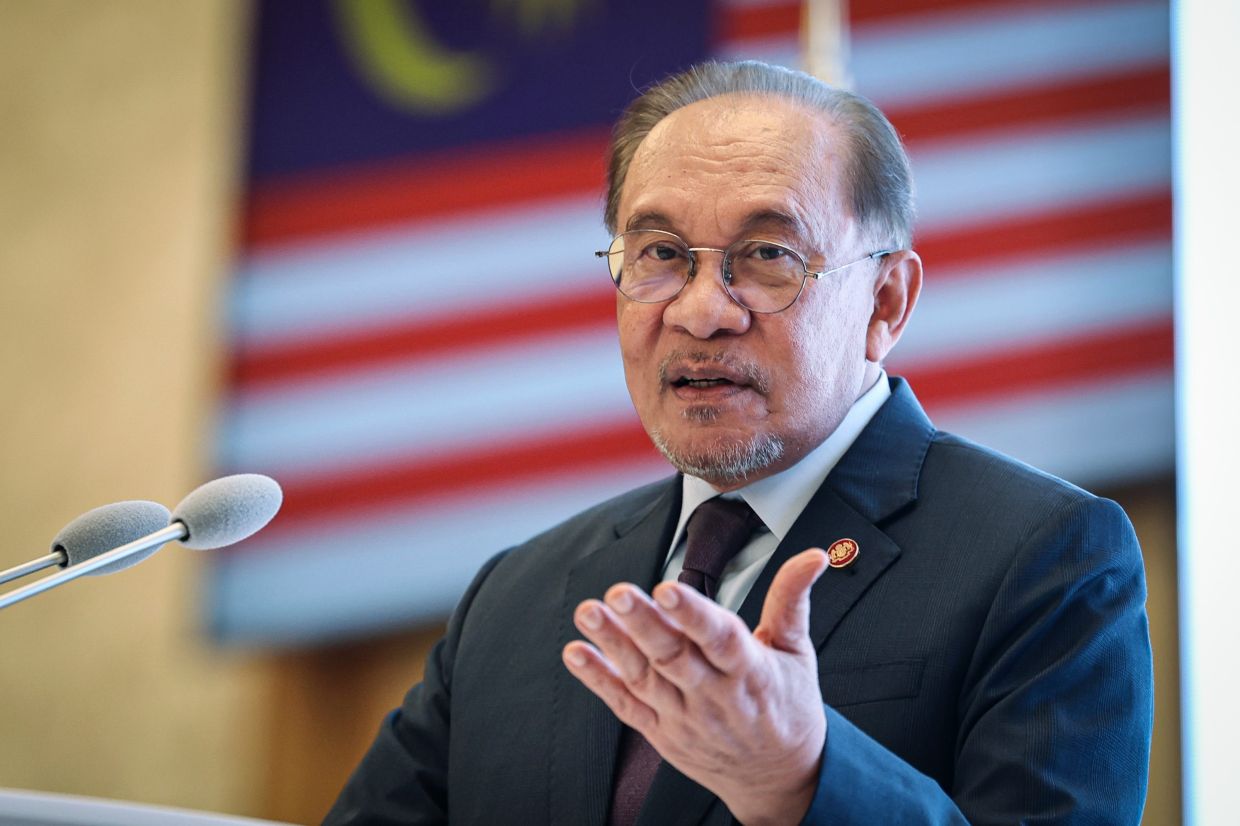
Malaysia's standing as a pivotal trading nation positioned astride major international commerce routes has become central to the country's approach to economic diplomacy, according to Prime Minister Datuk Seri Anwar Ibrahim. Speaking at a regional forum, Anwar articulated how Malaysia's geographic advantage and deep integration into global supply chains serve as fundamental instruments through which the nation pursues both economic prosperity and strategic influence in an increasingly multipolar world.
The prime minister, who concurrently holds the Finance portfolio, outlined how successive Malaysian administrations have methodically cultivated and strengthened economic relationships with established trading partners and investment sources. This foundational work has created the conditions for Malaysia to negotiate from a position of relative strength in contemporary trade negotiations and economic partnerships, allowing the nation to shape terms rather than simply accept them.
Central to Malaysia's trade liberalisation efforts has been active participation in major regional and multilateral trade frameworks. Through mechanisms including the ASEAN Free Trade Area, the Regional Comprehensive Economic Partnership (RCEP), and the Comprehensive and Progressive Agreement for Trans-Pacific Partnership (CPTPP), Malaysia has worked systematically to reduce tariff barriers, expand market openness, and create conditions conducive to more balanced investment relationships. These agreements represent years of negotiation aimed at benefiting Malaysian businesses and consumers whilst maintaining competitiveness in manufacturing, services, and agriculture.
Anwar's remarks, delivered during the 39th Asia-Pacific Roundtable organised by the Institute of Strategic and International Studies (ISIS) Malaysia, reinforced an enduring principle of Malaysian foreign policy: that the nation's prosperity and regional stability are inseparable from ASEAN's collective strength and unity. Despite acknowledging reservations that occasionally surface within the bloc, he characterised ASEAN centrality as non-negotiable for Malaysia's strategic orientation. This positioning reflects recognition that Southeast Asia's emerging economies collectively wield greater negotiating power than individual nations would separately, particularly when engaging with major global powers.
Beyond traditional partnerships, Malaysia has identified significant economic opportunity in less-developed markets across West Asia, Central Asia, Latin America, and Africa. This geographical diversification strategy reflects sophisticated understanding of geopolitical realities and emerging economic dynamism in regions often overlooked by established powers. Rather than viewing diversification as a defensive measure against external dependencies, Anwar framed it as an expression of Malaysia's proactive economic statecraft, where commercial relationships serve mutual development rather than subordination.
The approach emphasises genuine collaboration in sectors where Malaysia possesses competitive advantages or strategic interest. The halal industry represents a distinctive Malaysian strength, given the nation's Islamic credentials and established certification frameworks. The digital economy offers opportunities for technology transfer and joint innovation, whilst agriculture remains fundamental to food security across the region. Green technology cooperation addresses the urgent imperative of climate transition that will define economic competitiveness over coming decades.
Energy security emerged as particularly significant in Anwar's exposition of Malaysia's external economic engagement. A recent official visit to Turkmenistan resulted in agreements wherein Petronas, Malaysia's state petroleum company, committed to exploration and development of two substantial gas fields. Simultaneously, Malaysia and Turkmenistan formalised a comprehensive hydrocarbon framework encompassing not merely resource extraction but also knowledge-sharing regarding technical expertise and workforce development. Such arrangements exemplify how Malaysia constructs partnerships that extend beyond transactional commodity exchanges to encompass capacity-building and long-term institutional cooperation.
The strategic calculus underlying these initiatives reflects recognition that energy will remain central to global economic organisation for decades despite renewable transition. By securing long-term hydrocarbon supplies from politically stable Central Asian partners, Malaysia mitigates exposure to Middle Eastern supply disruptions whilst strengthening ties with a geographically distant region capable of contributing to regional stability.
Anwar stressed that Malaysia's overarching objective involves strengthening contemporary partnerships whilst simultaneously establishing new relationships that insulate the economy against shocks emanating from concentrated dependencies. Economic diversification, he contended, transcends conventional corporate strategy to become imperative national policy in an era characterised by geopolitical tension, climate uncertainty, and unpredictable disruptions to globalised supply chains. This perspective suggests that Malaysian policymakers view economic resilience not as a luxury but as foundational to national survival and prosperity.
The emphasis on forward-looking partnerships reflects pragmatic acknowledgment that Malaysia's future prosperity depends on maintaining flexible, resilient economic relationships rather than gravitating toward single-partner dependencies or ideologically rigid alignment. This approach allows Malaysia to engage productively with diverse partners—from established developed economies to dynamic emerging markets—without sacrificing strategic autonomy or essential interests.
As Malaysia navigates an international environment increasingly characterised by great power competition and fragmentation of previously unified global trading systems, the nation's positioning as a reliable, strategically located economic partner becomes ever more valuable. By articulating a vision of economic diplomacy rooted in genuine collaboration rather than zero-sum competition, Anwar signalled Malaysia's commitment to maintaining the open, rules-based international order from which Southeast Asian nations have historically benefited substantially.

