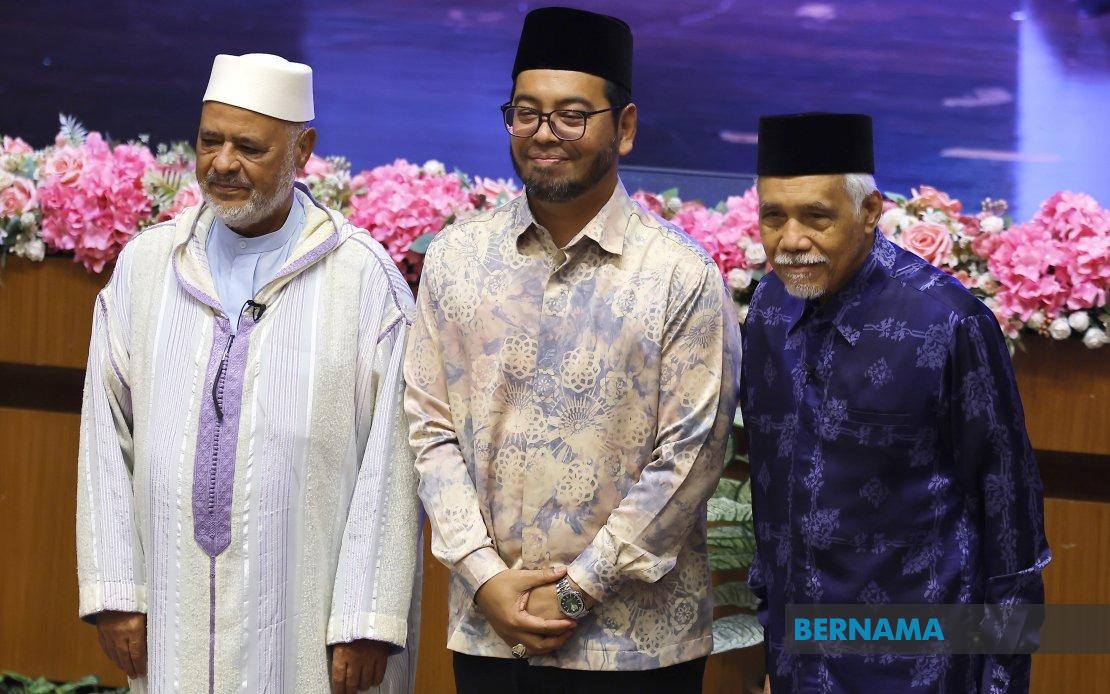
The Prime Minister's Department (Religious Affairs) has unveiled an ambitious new programme designed to break down barriers between elite Islamic scholarship and public discourse. The Maal Hijrah Lecture Series represents a deliberate strategy to ensure that the intellectual contributions of recognised Islamic figures reach beyond university lecture halls and specialised forums, extending instead to ordinary Malaysians across all social strata. This initiative underscores a broader governmental philosophy that religious scholarship should be accessible and relevant to everyday life rather than confined to academic gatekeepers or specific communities of experts.
Minister in the Prime Minister's Department (Religious Affairs) Dr Zulkifli Hasan articulated the core motivation during the official launch of the Maal Hijrah 1448H/2026 Lecture Series in Putrajaya. He expressed concern that valuable intellectual traditions were being inadvertently isolated within narrow institutional settings, preventing their broader societal influence. By initiating this platform, the ministry aims to dissolve these artificial boundaries and create pathways through which rigorous religious thinking can inform public consciousness at large. The aspiration extends beyond Muslim audiences, with Dr Zulkifli hoping the series might contribute to interfaith understanding by making sophisticated Islamic thought intelligible to non-Muslim Malaysians seeking to comprehend contemporary Islamic perspectives.
The response from Malaysia's higher education sector has been encouraging. Both Universiti Sains Islam Malaysia (USIM) and International Islamic University Malaysia (IIUM) have endorsed the concept and signalled their participation in what is envisioned as an expanding collaborative ecosystem. These institutions bring substantial credibility and logistical capacity to amplify the lecture series' reach. Rather than remaining a static initiative, the programme is explicitly designed to scale beyond these initial partners, with plans to engage additional universities and educational institutions across the country. This expansion model suggests the ministry views this as a foundational effort that will deepen as more stakeholders recognise its value.
Two distinguished scholars were recognised for their contributions at the inaugural event. Emeritus Professor Osman Bakar, rector of IIUM, received the national Maal Hijrah figure award, while Prof Sheikh Dr Ahmad Al-Raysuni, a prominent Islamic jurisprudence specialist based in Morocco, secured the international recognition. These awards, presented by Sultan of Perak Sultan Nazrin Shah at the national Maal Hijrah 1448H/2026 celebration held at Masjid Putra, carry symbolic weight beyond the cash prizes and certificates involved. They validate specific intellectual traditions and position these individuals as exemplars whose work merits systematic dissemination. The involvement of royal patronage elevates the initiative's status and signals state commitment to elevating religious scholarship as a matter of national importance.
The timing of this programme reflects evolving thinking about how societies engage with complex religious and philosophical questions. Malaysia, as a Muslim-majority nation navigating modernisation pressures, globalisation, and internal religious diversity, faces mounting demand for accessible interpretations of Islamic tradition that speak to contemporary challenges. Too often, such discussions occur either in inaccessible academic journals or through populist channels that lack nuance. The Maal Hijrah Lecture Series proposes a middle path, leveraging the legitimacy of established scholars and the reach of coordinated public programming to create a more sophisticated public square for Islamic discourse.
The choice to focus on Maal Hijrah figures specifically carries additional significance. Maal Hijrah represents individuals whose lives and work exemplify Islamic intellectual and spiritual advancement. By elevating these figures, the ministry signals that Malaysia intends to celebrate and promote a particular vision of Islam—one rooted in serious scholarship, ethical rigour, and contemporary relevance. This stands in contrast to approaches that might emphasise ritualism over reflection or tradition over engagement with modernity. The lecture series thus functions as a soft-power instrument through which the government articulates its preferred narrative about what Islam means in a Malaysian context.
For Southeast Asian readers, this initiative merits attention as a case study in how governments can harness educational and cultural institutions to shape religious discourse. Malaysia's multicultural, multi-religious composition means any religious initiative potentially touches broader societal dynamics. By explicitly welcoming non-Muslim engagement with the lecture series, the ministry acknowledges that Islamic thought increasingly concerns all residents of plural societies, regardless of personal faith. This inclusionary framing could serve as a model for how other countries approach religious scholarship in globalised, diverse contexts.
The practical implications for institutions like USIM and IIUM are significant. These universities gain platforms to demonstrate their intellectual leadership and contribute directly to national conversations. Faculty members associated with the lecture series will find expanded audiences for their research and ideas. Students at these institutions will witness their teachers elevated as public intellectuals rather than confined to campus roles. This recognition potentially influences recruitment, prestige, and institutional positioning within Malaysian higher education hierarchies. Competition to host lectures or participate in the series could emerge, driving quality improvements as institutions vie for visibility.
Implementing this vision successfully will require sustained coordination and resources. Simply scheduling lectures by distinguished scholars does not guarantee their ideas will permeate public consciousness. Promotion, accessibility, translation into local languages where necessary, and engagement with diverse media formats will prove essential. The series must account for varying levels of Islamic education among audience members and avoid language that alienates those seeking to learn. Success will be measured not merely by attendance figures but by whether the ideas articulated actually influence how Malaysians think about religious questions and contemporary challenges.
Looking forward, the Maal Hijrah Lecture Series represents an institutional bet that Malaysian society benefits when rigorous Islamic scholarship reaches broad audiences. By partnering with established universities, securing royal endorsement, and planning deliberate expansion, the Religious Affairs Ministry has created conditions for meaningful impact. Whether the initiative achieves its ambitions of mainstreaming Islamic thought beyond academic circles will depend on implementation quality and sustained commitment. The foundation, however, appears solid, and the underlying principle—that religious wisdom should inform rather than withdraw from public life—commands considerable appeal across diverse Malaysian communities.

%22%2F%3E%3C%2Fpattern%3E%3C%2Fdefs%3E%3Crect%20width%3D%22100%25%22%20height%3D%22100%25%22%20fill%3D%22url(%23ph21o2sg)%22%2F%3E%3Crect%20width%3D%22100%25%22%20height%3D%22100%25%22%20fill%3D%22url(%23ph21o2sp)%22%2F%3E%3Ctext%20x%3D%2250%25%22%20y%3D%2250%25%22%20text-anchor%3D%22middle%22%20dominant-baseline%3D%22central%22%20fill%3D%22rgba(255%2C255%2C255%2C0.95)%22%20font-family%3D%22Georgia%2C%20'Times%20New%20Roman'%2C%20serif%22%20font-weight%3D%22700%22%20font-size%3D%22170%22%20letter-spacing%3D%22-0.02em%22%3EGabungan%3C%2Ftext%3E%3C%2Fsvg%3E)