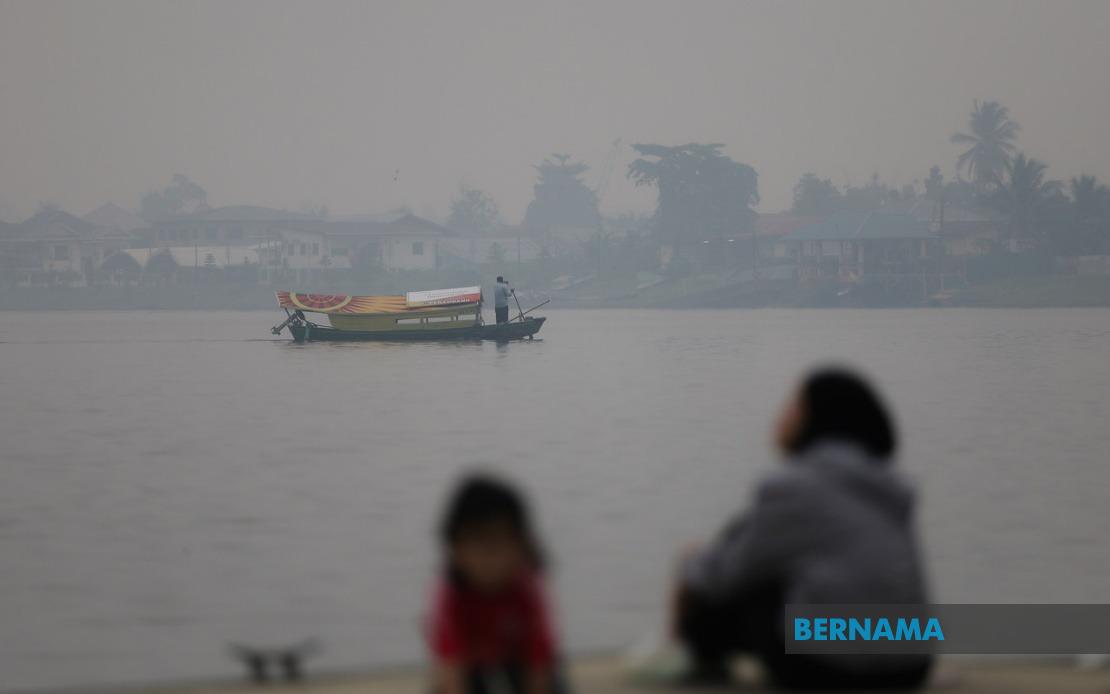
The Malaysian government has initiated cloud seeding operations targeting areas experiencing hazardous air pollution levels and declining water resources, marking an escalation in efforts to combat the dual crisis of air quality deterioration and water scarcity gripping parts of the country. Deputy Prime Minister Datuk Seri Dr Ahmad Zahid Hamidi announced the coordinated initiative, which prioritizes zones recording Air Pollutant Index readings exceeding 150, a classification considered unhealthy for the general population. The operation represents a comprehensive response to environmental pressures building across multiple regions, with operations scheduled across several states through early September.
The cloud seeding programme is being executed through collaborative arrangements involving the Malaysian Meteorological Department and the Royal Malaysian Air Force, pooling expertise and resources to maximize effectiveness. This inter-agency coordination underscores the seriousness with which federal authorities are treating the convergence of air pollution and water stress. Putrajaya served as the initial deployment location, with subsequent operations planned for Sarawak, Kedah, and Perlis commencing from September 3 through September 5. The staggered geographical approach reflects both the spatial distribution of critical conditions and the logistical constraints of weather-dependent intervention.
Water security emerged as a central justification for the accelerated intervention schedule. Dam levels across the nation have been declining noticeably, creating concerns that prolonged hot weather could exacerbate supply disruptions to households and businesses. The cloud seeding initiative targets precipitation generation in areas where hydrological stress poses immediate risks to water availability. This dual-purpose strategy effectively addresses two interconnected environmental challenges simultaneously, with improved rainfall potentially reducing both particulate matter in the atmosphere and replenishing depleted reservoirs.
Sarawak experienced particularly acute air quality degradation on the day of the announcement, with three monitoring locations recording hazardous pollution levels by midday. The Serian Police headquarters station registered an API reading of 412, representing severely hazardous conditions that posed immediate health risks to residents. Samarahan followed with a reading of 332, whilst Kuching recorded 304, both exceeding the threshold for hazardous air quality. Sri Aman, though somewhat lower at 228, still registered in the very unhealthy category. These measurements indicated that northern Sarawak bore the brunt of airborne pollutant concentration, likely influenced by regional weather patterns and transboundary pollution sources.
Cloud seeding operations function with inherent weather dependencies that complicate their deployment and effectiveness. Even when visible cloud formations exist in targeted regions, meteorological specialists must continuously assess whether cloud systems are drifting toward intended areas or moving away from zones requiring intervention. This requirement for real-time monitoring and adaptive strategy adjustment means that operational success depends not merely on availability of precipitation-bearing clouds but on their spatial trajectory. The Malaysian Meteorological Department's involvement reflects the specialized knowledge required to identify and exploit fleeting opportunities for beneficial cloud seeding.
The timing of the announcement coincided with Malaysia's 2026 Malaysia Agriculture, Horticulture and Agrotourism Show at MAHA in Serdang, where Deputy Prime Minister Zahid also launched the Laman Usahawan Desa KKDW initiative. This convergence of environmental policy announcement and agricultural sector engagement highlighted government recognition of interconnected vulnerabilities across multiple industries. Agricultural productivity depends critically on both air quality and water availability, making the twin focus of cloud seeding operations particularly relevant to rural and farming communities throughout affected regions.
The API threshold of 150 employed as an operational trigger point represents a significant escalation beyond normal air quality conditions. At this level, members of the vulnerable population including children, elderly persons, and individuals with respiratory or cardiovascular conditions face elevated health risks. General populations also begin experiencing symptoms such as throat irritation and coughing during physical exertion. By establishing this specific threshold, authorities created an objective, measurable criterion for deployment rather than relying on discretionary judgment, potentially enabling faster response activation across multiple jurisdictions simultaneously.
The cloud seeding initiative reflects broader Southeast Asian environmental challenges that have periodically affected Malaysia in conjunction with regional haze episodes. These episodes, often linked to agricultural burning practices in neighboring countries during certain seasons, create transboundary air quality crises that individual national interventions cannot entirely resolve. However, domestic cloud seeding represents a visible government response demonstrating commitment to mitigating effects on Malaysian residents whilst longer-term regional cooperation initiatives address underlying causes. The operation thus serves both practical environmental functions and political signaling purposes.
Water resource management has assumed increasing prominence in Malaysia's environmental agenda as climate variability produces more pronounced dry periods punctuating the traditional monsoon cycles. Several dam systems across the peninsula and Sarawak have experienced stress during recent years, raising questions about adequacy of existing water infrastructure to support growing demand amid changing precipitation patterns. Cloud seeding represents a technological intervention to artificially enhance rainfall during critical shortage periods, though scientific evidence regarding its efficacy remains contested among meteorological researchers. Nonetheless, the Malaysian government has evidently determined that attempting enhancement through cloud seeding justifies resource allocation even amid uncertainty regarding success rates.
The involvement of the Royal Malaysian Air Force in cloud seeding operations highlighted the technical sophistication required for modern weather modification efforts. Aircraft equipped with specialized seeding apparatus must operate with precision, releasing nucleating agents at exact altitudes and times to interact with cloud microphysics and enhance precipitation formation. This requirement necessitated military aviation assets given the specialized equipment and piloting expertise involved. The RMAF's participation also reflected broader security sector contributions to civilian environmental management that have become increasingly common globally.
Regional implications for Southeast Asia warrant consideration given Malaysia's positioning within a broader climate zone affected by monsoonal patterns and atmospheric phenomena crossing national boundaries. Successful demonstration of cloud seeding applications in Malaysian contexts could influence policy adoption across neighboring jurisdictions facing similar challenges. Conversely, limitations encountered in operational deployment might inform regional discussions regarding realistic expectations for weather modification technologies. Malaysian experience would contribute valuable empirical evidence to scientific understanding of cloud seeding efficacy in tropical and subtropical environments.
Looking forward, the effectiveness of cloud seeding operations during this deployment period would likely influence future government investment in such programmes. Measurable improvements in air quality and precipitation following operations would strengthen the case for continued funding and expanded geographic application. Conversely, minimal effects would prompt reconsideration of resource allocation toward alternative approaches to water security and air quality management. The outcomes would therefore carry significance extending beyond immediate environmental benefits to shape long-term environmental policy direction.

