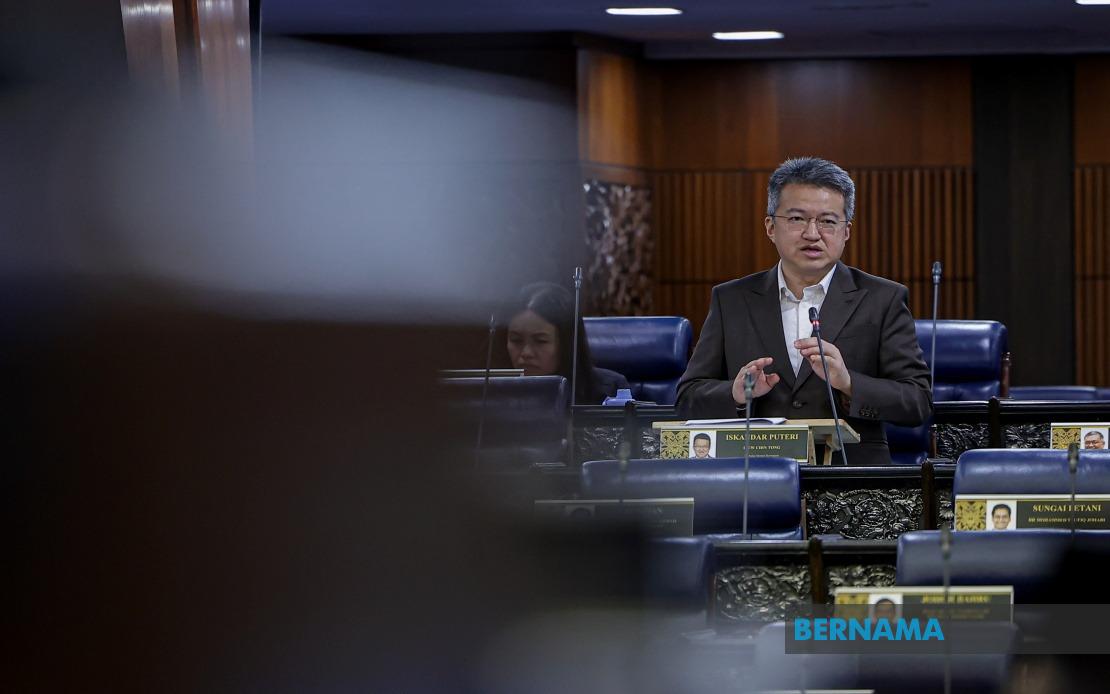
Malaysia's government is pressing ahead with comprehensive institutional reforms designed to prevent a recurrence of the 1Malaysia Development Berhad scandal and restore the nation's tarnished international reputation. Speaking during Parliamentary Question Time, Deputy Finance Minister Liew Chin Tong emphasised that the administration under Prime Minister Datuk Seri Anwar Ibrahim has introduced a suite of structural changes to strengthen public administration and rebuild confidence among foreign investors and global markets.
The 1MDB debacle, which unfolded over several years, left deep scars on Malaysia's global standing. Beyond the enormous financial toll, the scandal triggered intensive scrutiny from international enforcement agencies, widespread negative media coverage, and protracted legal proceedings that extended across borders. These consequences fundamentally undermined perceptions of Malaysia's institutional integrity and the competence of its financial management systems. For a nation seeking to position itself as a reliable investment destination, such reputational damage posed severe obstacles to attracting capital and maintaining the trust of international markets in both national policies and institutional frameworks.
According to Liew, who was responding to a question from Chong Chieng Jen of the Stampin parliamentary constituency, the government's track record since implementing these reforms speaks volumes. Malaysia has achieved its highest-ever levels of approved foreign investment alongside exceptional trade performance, whilst simultaneously improving its standing in global competitiveness indices. These tangible outcomes suggest that the governance overhaul is beginning to reverse the negative perceptions that crystallised during the 1MDB era.
Central to the reform agenda is the Public Finance and Fiscal Responsibility Act 2023, legislation specifically designed to tighten fiscal discipline and curtail the concentration of unchecked power in public finance management. This statute establishes guardrails intended to prevent the type of financial mismanagement and opacity that characterised 1MDB's operations. By embedding accountability mechanisms into the legal framework governing public money, the legislation represents a fundamental shift toward institutional restraint.
Complementing this measure, the government has substantially expanded the Auditor-General's investigative powers through amendments to the Audit Act. The newly adopted "follow the public money" methodology enables auditors to trace the flow of government funds through entire chains of expenditure, providing far greater visibility over how taxpayers' resources are deployed. This enhanced oversight capacity addresses a critical vulnerability that previous financial scandals had exposed: the ability of unscrupulous actors to obscure the movement of public funds through complex institutional arrangements.
The reform programme extends further still. The government is currently drafting a comprehensive Government Procurement Bill, recognising that procurement processes represent a particularly vulnerable arena for financial misconduct and corrupt practices. Simultaneously, officials are overhauling the legal and regulatory frameworks governing state-owned enterprises, institutions that have historically presented opportunities for financial abuse when oversight mechanisms prove inadequate. Together, these initiatives target the structural weaknesses that 1MDB's architects had exploited.
The financial toll of the 1MDB scandal has proven staggering. Since 2017, the government has expended RM18.7 billion from both operating and development budgets simply to discharge obligations incurred by the defunct development company. When the MADANI administration assumed office in March 2023, it faced an immediate obligation to allocate RM13 billion from development expenditure to redeem government-guaranteed bonds worth USD3 billion that 1MDB had issued. This allocation consumed approximately 13.1 per cent of the entire year's development budget, diverting resources that otherwise could have been directed toward infrastructure, education, healthcare, or other productive investments. The magnitude of this burden underscores how comprehensively 1MDB compromised Malaysia's fiscal position.
For Malaysian observers and regional analysts, these governance initiatives carry significant implications. They signal that the current administration recognises the gravity of the reputational damage and is committed to substantive rather than cosmetic change. The reforms extend beyond isolated legislative amendments; they represent a systemic recalibration of how public institutions operate and how public money flows through bureaucratic channels. Such institutional reorganisation typically proceeds slowly and requires consistent implementation over years to alter deeply embedded practices.
The regional dimension merits attention as well. Other Southeast Asian nations monitor Malaysia's experience closely, particularly regarding how effectively governance reforms can restore investor confidence following high-profile scandals. The success or failure of Malaysia's reform programme may influence how neighbouring countries approach similar challenges. Moreover, the measures being implemented address governance vulnerabilities that potentially exist across the region, suggesting that Malaysia's institutional innovations could offer lessons for other governments seeking to strengthen financial oversight and public accountability.
International financial markets and investor communities also watch Malaysia's progress carefully. Trust in a nation's governance systems directly influences the cost of capital, the willingness of foreign firms to establish operations, and the stability of international capital flows. By demonstrating sustained commitment to institutional reform and transparent public finance management, Malaysia incrementally rebuilds the confidence that the 1MDB scandal had shattered. The timing of these initiatives—substantially implemented or still in development—reflects recognition that the window for demonstrating serious reform is finite, and hesitation could signal that Malaysia lacks commitment to genuine change.
The government's emphasis on preventive institutional architecture rather than reactive punishment reveals a sophisticated understanding of how to restore confidence. Rather than simply prosecuting wrongdoers—necessary though that is—the administration is reshaping the systems themselves to make future abuses substantially harder to execute. This approach addresses not merely the symptoms of financial misconduct but the underlying structural conditions that permit it to flourish. Whether these reforms achieve their intended objectives will become clearer as implementation proceeds and as international markets assess whether Malaysia's governance metrics have genuinely improved.

