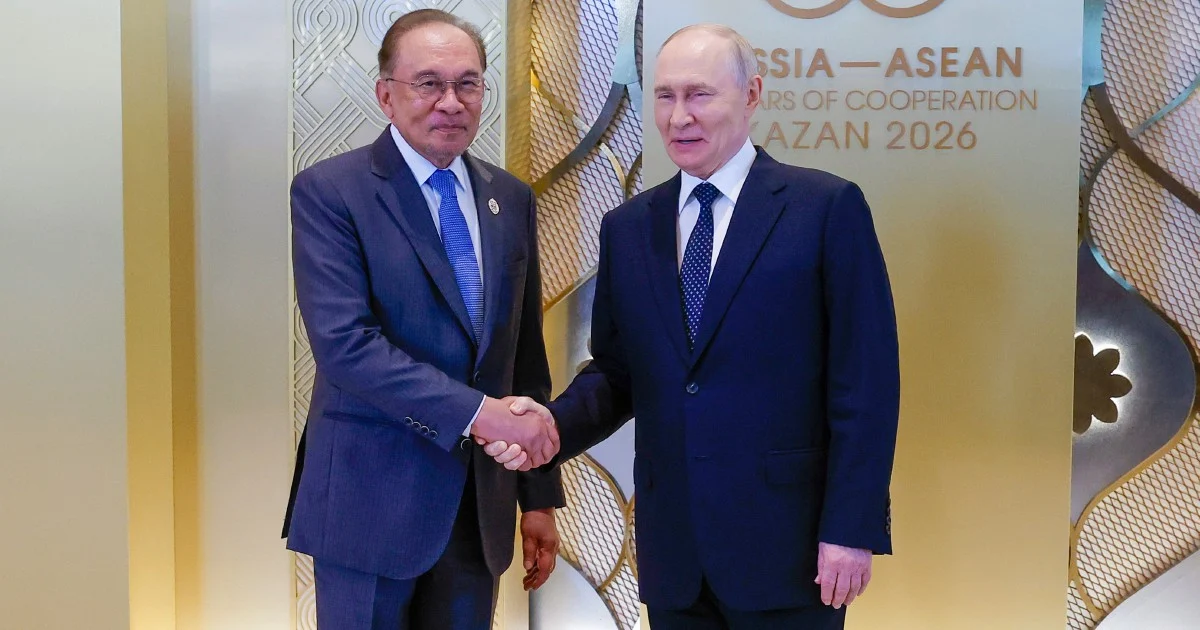
Prime Minister Datuk Seri Anwar Ibrahim's recent diplomatic missions to Russia and Turkmenistan represent a strategic pivot in Malaysia's approach to long-term energy security, addressing the nation's growing demand for reliable fuel supplies amid global market volatility. The visits, endorsed by regional observers including BRICS International Malaysia, mark a deliberate effort to diversify Malaysia's energy sources beyond traditional suppliers and establish direct partnerships with major producers who can offer stable, competitive pricing in an increasingly uncertain geopolitical landscape.
Turkmenistan's significance to Malaysia's energy calculus cannot be overstated. The Central Asian nation sits atop vast natural gas reserves, ranking among the world's largest deposits, making it an attractive partner for a fuel-dependent nation like Malaysia. For Turkmenistan, engagement with Southeast Asia opens new market opportunities beyond its traditional Russian and Chinese buyers, potentially reducing its dependence on single-market arrangements that have historically constrained its negotiating position. The prospect of Malaysian investment and long-term purchasing agreements could reshape the energy dynamics of both regions.
Russia's role in this diplomatic framework extends beyond simple energy transactions. As a major global energy producer with established supply networks spanning continents, Russian cooperation offers Malaysia opportunities to strengthen its position within emerging economic architectures. The timing of these visits coincides with Malaysia's increasing integration with alternative financial and trade mechanisms, particularly through BRICS expansion and regional partnerships that emphasise non-Western-centric economic arrangements. Energy cooperation serves as both a practical necessity and a symbol of Malaysia's willingness to engage with diverse geopolitical actors.
The oil and gas sector remains foundational to Malaysia's economic strategy despite the nation's renewable energy ambitions. While domestic production from the Peninsular and Sabah fields has declined over recent years, demand continues rising with industrial expansion and population growth. Strategic partnerships with external suppliers provide insurance against supply shocks while domestic reserves deplete. The visits signal recognition that Malaysia cannot achieve energy independence solely through renewables in the near term, requiring instead a pragmatic mix of sources that balances immediate needs with longer-term sustainability objectives.
Beyond immediate energy supply considerations, these missions carry broader strategic implications for Malaysia's positioning within the region. Russia and Turkmenistan represent alternative diplomatic partners who operate outside conventional Western-dominated frameworks. For Malaysia, cultivating relationships with such actors enhances its negotiating leverage with traditional partners while demonstrating genuine non-aligned credentials. This balancing act has become increasingly important as geopolitical competition intensifies between different global power centres vying for influence in Southeast Asia.
The economic dimensions of strengthened partnerships extend across multiple sectors beyond hydrocarbons. Turkmenistan possesses significant mineral wealth and agricultural capacity, while Russia offers technological expertise, manufacturing capabilities, and investment potential. Malaysian companies operating in construction, finance, and telecommunications could find expanded opportunities within these markets. Conversely, Russian and Turkmen investors increasingly seek access to Southeast Asian markets, making Malaysia a natural entry point and regional hub for their commercial activities.
For regional observers, Malaysia's energetic diplomacy towards Central Asia represents a significant development. Most Southeast Asian nations remain geographically and psychologically oriented towards the Indian Ocean and Pacific corridors, with Central Asia perceived as distant or secondary. Malaysia's engagement there could catalyse broader ASEAN interest in the region, potentially opening new trade routes, investment channels, and security cooperation frameworks. The Shanghai Cooperation Organisation, which both Russia and Turkmenistan influence, already includes several regional nations, and deepened Malaysian involvement could strengthen these institutional linkages.
The sustainability of these partnerships will depend on several factors. Price competitiveness matters enormously; energy suppliers must offer terms that justify the infrastructure investment required to reach Southeast Asian markets. Geopolitical stability is equally critical, as conflicts or international sanctions could disrupt agreements. Malaysia must carefully navigate these risks while maintaining its reputation for reliable partnership and transparent dealing. The country's long experience managing complex relationships with diverse partners positions it well for this challenge, though execution remains paramount.
Domestic energy policy considerations also intersect with international partnerships. Malaysia's commitment to reducing carbon emissions and transitioning towards cleaner energy sources creates tension with increased fossil fuel imports. Government communications will need addressing this contradiction, perhaps emphasising that external energy partnerships provide economic stability while domestic renewable capacity gradually expands. Importing gas and oil from established producers outside the Middle East also reduces Malaysia's exposure to shipping risks through congested choke points.
The institutional framework underpinning these partnerships requires careful development. Formal agreements governing pricing, supply volumes, payment terms, and dispute resolution mechanisms will determine whether these initiatives translate into sustained cooperation or remain aspirational statements. Malaysia's negotiators must balance competitive pricing against long-term security, understanding that lowest-cost suppliers may prove unreliable during crises when their product becomes scarce or diverted to higher-bidding customers.
Regional energy diplomacy increasingly influences broader geopolitical alignment. Countries that secure reliable energy partnerships gain economic stability and thus greater policy flexibility in other domains. Malaysia's successful engagement with Russia and Turkmenistan enhances its standing as a serious economic player capable of executing complex negotiations with major global actors. This reputation serves Malaysian interests across multiple spheres, from trade to security cooperation to cultural exchange.
Looking forward, the success of these diplomatic initiatives will be measured not in rhetoric or ceremonial outcomes but in actual supply agreements, confirmed investment commitments, and steady energy flows. Malaysia's strategic planners understand that energy security underpins economic resilience, which in turn enables political stability and social progress. The visits to Russia and Turkmenistan reflect this sophisticated understanding, positioning Malaysia to navigate an energy-constrained world with greater confidence and options.
%22%2F%3E%3C%2Fpattern%3E%3C%2Fdefs%3E%3Crect%20width%3D%22100%25%22%20height%3D%22100%25%22%20fill%3D%22url(%23ph29y08g)%22%2F%3E%3Crect%20width%3D%22100%25%22%20height%3D%22100%25%22%20fill%3D%22url(%23ph29y08p)%22%2F%3E%3Ctext%20x%3D%2250%25%22%20y%3D%2250%25%22%20text-anchor%3D%22middle%22%20dominant-baseline%3D%22central%22%20fill%3D%22rgba(255%2C255%2C255%2C0.95)%22%20font-family%3D%22Georgia%2C%20'Times%20New%20Roman'%2C%20serif%22%20font-weight%3D%22700%22%20font-size%3D%22151%22%20letter-spacing%3D%22-0.02em%22%3EMalaysian%3C%2Ftext%3E%3C%2Fsvg%3E)
%22%2F%3E%3C%2Fpattern%3E%3C%2Fdefs%3E%3Crect%20width%3D%22100%25%22%20height%3D%22100%25%22%20fill%3D%22url(%23ph4nq77g)%22%2F%3E%3Crect%20width%3D%22100%25%22%20height%3D%22100%25%22%20fill%3D%22url(%23ph4nq77p)%22%2F%3E%3Ctext%20x%3D%2250%25%22%20y%3D%2250%25%22%20text-anchor%3D%22middle%22%20dominant-baseline%3D%22central%22%20fill%3D%22rgba(255%2C255%2C255%2C0.95)%22%20font-family%3D%22Georgia%2C%20'Times%20New%20Roman'%2C%20serif%22%20font-weight%3D%22700%22%20font-size%3D%22320%22%20letter-spacing%3D%22-0.02em%22%3EKPKT%3C%2Ftext%3E%3C%2Fsvg%3E)