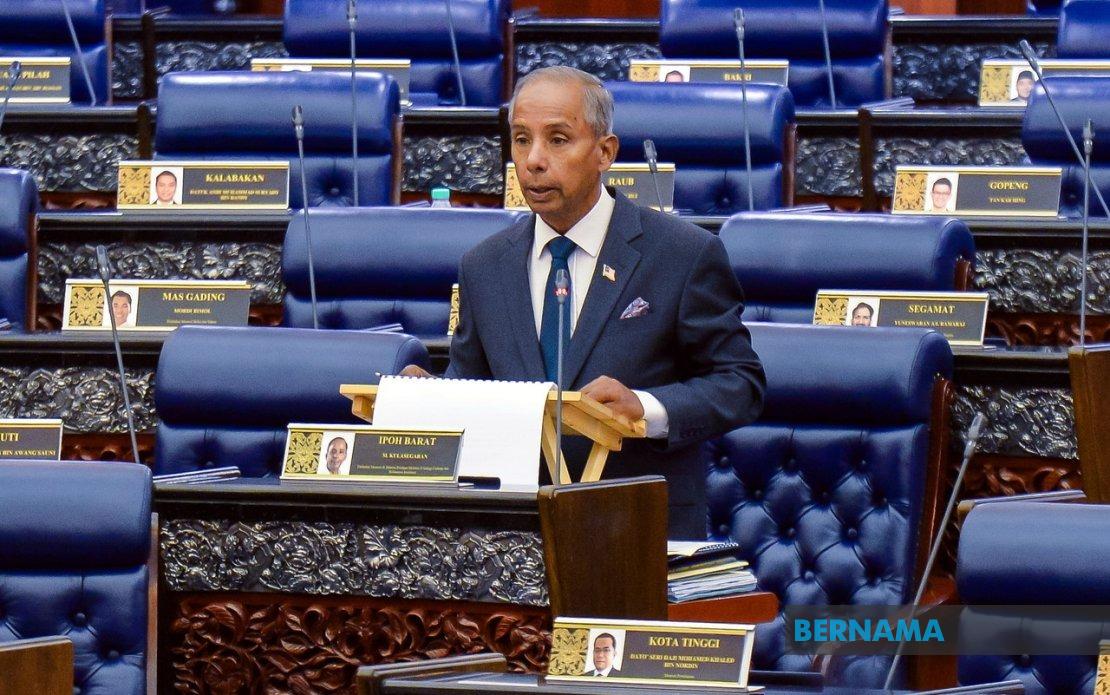
Malaysia has moved to strengthen its legal defences against child sexual exploitation by passing the Sexual Offences Against Children (Amendment) Bill 2026 in the Dewan Rakyat on June 30, a significant step toward protecting vulnerable children from predators operating across international borders. The amendment grants Malaysian authorities jurisdiction to pursue cases involving offences committed outside the country's territorial waters, fundamentally reshaping how the nation approaches transnational crimes against minors. The passage followed comprehensive debate with participation from 25 Members of Parliament representing both government and opposition benches, reflecting rare parliamentary consensus on child protection matters.
The legislative change addresses a troubling gap in Malaysia's previous framework, where individuals with Malaysian citizenship or residency could evade accountability for crimes perpetrated in foreign jurisdictions. Under the original legislation, Malaysia's reach was limited to offences occurring within its borders, meaning nationals who travelled abroad to exploit children faced minimal risk of prosecution upon return. This extraterritorial extension represents a fundamental shift in approach, recognizing that modern criminal networks operate without regard to geographical boundaries and that many Malaysian-linked offenders have historically exploited this jurisdictional vacuum.
Deputy Minister in the Prime Minister's Department (Law and Institutional Reform) M. Kulasegaran explained that the amendment strategically closes this enforcement loophole while maintaining careful balance with international legal principles. He emphasized that Malaysia is not unilaterally claiming authority over all foreign crimes; rather, the amendment establishes a legal foundation for prosecution when Malaysian nationals or residents commit offences abroad, particularly when those individuals have connections that justify Malaysian intervention. The clarification was necessary to dispel concerns that the country was overreaching into disputes where primary responsibility rests elsewhere.
The mechanism outlined by Kulasegaran reflects sophisticated international cooperation frameworks increasingly common among nations tackling transnational crime. When multiple jurisdictions are involved—such as when a Malaysian national commits an offence in Thailand but maintains ties to Malaysia—authorities from both countries will now consult through formal channels to determine which nation is best positioned to investigate and prosecute. This approach prioritizes practical effectiveness rather than claiming blanket authority, recognizing that the country where the crime occurred often possesses superior access to witnesses, physical evidence, and local knowledge essential for building strong cases.
For Malaysia's law enforcement community, the amendment significantly expands investigative capacity and provides crucial leverage in international negotiations with partner agencies. Malaysian police and prosecutors can now pursue cases that previously would have required relying entirely on foreign authorities' initiative and resources. This is particularly valuable in Southeast Asia, where child trafficking networks frequently move victims across multiple borders, and where Malaysian-linked perpetrators have historically used neighbouring countries as operational bases with impunity. The amendment essentially weaponizes Malaysia's diplomatic relationships and law enforcement credibility in combating regional child exploitation.
The bill's passage carries implications well beyond Malaysia's borders, signalling to the broader Southeast Asian community that countries are tightening coordination against child sexual abuse material production and trafficking networks. Regional analysts note that such extraterritorial legislation becomes increasingly effective when adopted by multiple nations simultaneously, as it eliminates jurisdictional arbitrage where predators shop for the most lenient legal environment. The amendment positions Malaysia as a regional leader in modernizing child protection laws, complementing efforts by neighbouring countries and strengthening collective capacity.
The legislative process itself demonstrated strong political consensus on child welfare issues, with opposition parties supporting the government's framing during debate. This unity reflects public concern about child exploitation and recognition that protecting minors transcends partisan politics. The involvement of 25 MPs in substantive debate ensured that implementation details and international cooperation protocols received scrutiny from multiple perspectives, strengthening the eventual legislation.
For Malaysian citizens and residents, the amendment carries practical significance regarding responsibilities and accountability. Nationals travelling or working abroad now face expanded legal exposure for conduct toward minors that would constitute offences in Malaysia, even if the foreign jurisdiction has looser standards. This extends Malaysia's protective ethical and legal framework into global space, establishing consistency in standards regardless of where Malaysian nationals operate. Parents and child welfare advocates have long advocated for such protections, and the amendment responds to decades of campaign pressure.
Implementation will depend substantially on cooperation frameworks with other nations, particularly neighbouring countries and common destinations for Malaysian travellers. Malaysian authorities will need to establish protocols with law enforcement counterparts in countries like Thailand, Indonesia, Philippines, and Singapore for information-sharing and coordinated investigations. The amendment's effectiveness will ultimately be measured not by legislative text but by the number of successful prosecutions resulting from international collaboration and by demonstrable disruption of networks that previously operated with impunity.
The amendment also reflects Malaysia's commitment to international child protection conventions and standards, strengthening its position in regional and global forums addressing human trafficking and exploitation. Many developed nations have implemented similar extraterritorial provisions, and Malaysia's adoption aligns the country with best practices while acknowledging that modern criminality requires legal tools matching criminal sophistication.
Going forward, civil society organisations working on child protection expect the amendment to require accompanying investments in training for prosecutors unfamiliar with extraterritorial cases, enhancement of international liaison capacity, and public awareness campaigns explaining the new legal landscape. The real-world effectiveness will depend on sustained political commitment to prosecuting cases that may require significant diplomatic coordination and protracted international investigations, priorities that can be tested when other government interests compete for resources.

