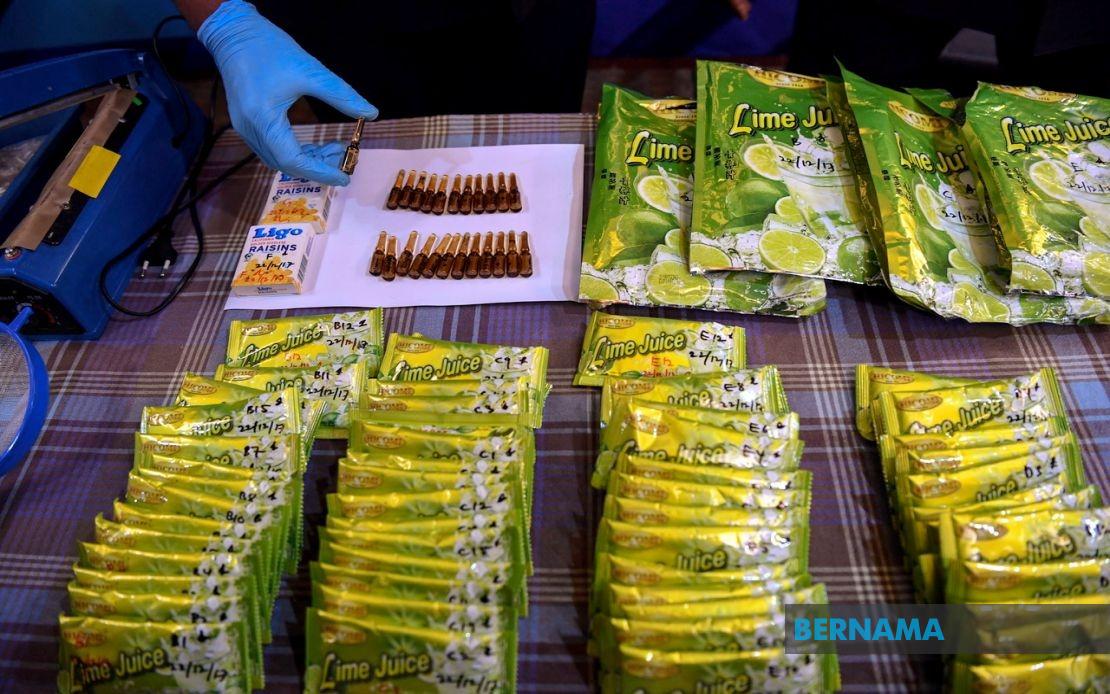
Malaysia is mounting a sweeping campaign against the proliferation of synthetic drugs that have become increasingly entrenched in the nation's urban and rural communities. Home Minister Datuk Seri Saifuddin Nasution Ismail declared the emerging drugs crisis a top priority for law enforcement, citing the particular dangers posed by methamphetamine, fentanyl, and locally prevalent designer pills known as "piu-piu," which have recently surfaced in domestic markets and are fuelling addiction, fatal overdoses, and associated criminal behaviour.
The scale of the synthetic drug problem is underscored by enforcement statistics that paint a sobering picture of the challenge facing Malaysian authorities. Between 2023 and June 2026, the Royal Malaysia Police recorded 238,704 arrests connected to synthetic drug offences across the country, representing an intensive policing effort that spans urban centres, rural villages, and remote settlements. This volume of arrests demonstrates both the depth of drug trafficking networks and the commitment of law enforcement to dismantle them, though it also signals the persistence of supply chains that continue to introduce new substances into circulation faster than traditional regulatory frameworks can contain them.
The home ministry has adopted a multi-agency enforcement strategy designed to maximise detection and disrupt trafficking corridors at multiple points. Operation Tapis and Operation Tapis Khas represent coordinated campaigns that leverage resources from the Royal Malaysia Police, the National Anti-Drugs Agency (AADK), and the Royal Malaysian Customs Department (JKDM), creating a coordinated front that extends across geographical boundaries and jurisdictional lines. Modern surveillance infrastructure including drone technology and closed-circuit camera networks has been deployed to identify trafficking hotspots and monitor known distribution zones, allowing authorities to respond with greater precision than conventional patrols alone would permit.
The regulatory framework underpinning enforcement is also being updated to address a fundamental challenge: synthetic drugs evolve faster than legislation can classify them. The government is pursuing amendments to the Dangerous Drugs Act 1952 to bring newly emerging synthetic drugs and New Psychoactive Substances (NPS) into the Act's controlled schedules, a process that requires identifying and documenting novel compounds before they become entrenched in user networks. This legislative gap has historically allowed manufacturers to exploit regulatory lag by introducing minor chemical modifications that circumvent existing prohibitions, and closing this loophole is essential to maintaining enforcement effectiveness.
Witness to the intensity of enforcement efforts in a specific jurisdiction, Sarawak reported 7,097 arrests in the first half of 2026 alone, a six-month period that yielded the detention of 342 traffickers and 1,314 individuals found in possession of drugs. The state also recorded 5,441 drug users apprehended during enforcement operations, demonstrating that supply-side policing extends to demand reduction through the apprehension of end-users. These figures are particularly significant because Sarawak encompasses vast rural and remote territories where law enforcement presence is traditionally sparse, yet authorities have achieved substantial enforcement outcomes even in areas with geographical barriers to policing.
The material impact of enforcement extends beyond arrests to asset confiscation and direct drug seizure. In the same six-month period in Sarawak, authorities seized 418.01 kilogrammes of drugs valued at RM53.73 million, effectively disrupting supply chains and degrading the economic viability of trafficking operations. The confiscation of syndicate assets worth RM1.95 million simultaneously targets the financial infrastructure that sustains organised drug networks, a complementary strategy that weakens criminal organisations by depriving them of reinvestment capital. Additionally, 13 individuals were detained under the Dangerous Drugs (Special Preventive Measures) Act 1985, a preventive detention framework intended for high-risk offenders, while 131 hardcore drug addicts faced enforcement action under Section 39C of the Dangerous Drugs Act, targeting the most entrenched users.
Beyond enforcement, prevention and demand reduction have been elevated as critical pillars of the anti-drug strategy. Between 2023 and June 2026, authorities conducted 1,144 community-based drug prevention programmes nationwide, a figure that underscores the recognition that sustained public awareness campaigns and educational initiatives are essential complements to police operations. Community policing approaches that build social trust and encourage reporting of drug activity create a more permissive environment for law enforcement while also addressing root causes including social disconnection and lack of economic opportunity that often correlate with drug involvement.
The sophistication of drug chemistry now demands equally advanced detection capabilities, prompting continued investment in forensic laboratory infrastructure. The enhancement of laboratory profiling capabilities enables authorities to identify emerging trends involving fentanyl analogues and synthetic opioids before these substances proliferate widely, facilitating faster detection cycles and enabling enforcement action directed at producers and traffickers before user populations expand. This technological dimension represents recognition that conventional methods alone cannot match the innovation pace of illicit pharmaceutical chemistry, where minor molecular adjustments can create new substances with enhanced potency or altered legal status.
The synthetic drug landscape presents particular challenges for a middle-income country seeking to balance enforcement, prevention, and public health. Fentanyl and similar synthetic opioids carry overdose risks exponentially higher than traditional heroin, meaning that even small increases in prevalence correlate with sharply rising mortality. Designer pills marketed to youth as safer alternatives to traditional drugs often contain unknown substances in uncontrolled dosages, creating unpredictable health consequences that strain emergency medical services and overwhelm addiction treatment capacity. The speed of innovation in illicit drug markets ensures that any enforcement approach must be agile and adaptive rather than static, requiring sustained investment in intelligence gathering, laboratory capabilities, and inter-agency coordination that transcends traditional bureaucratic silos.

