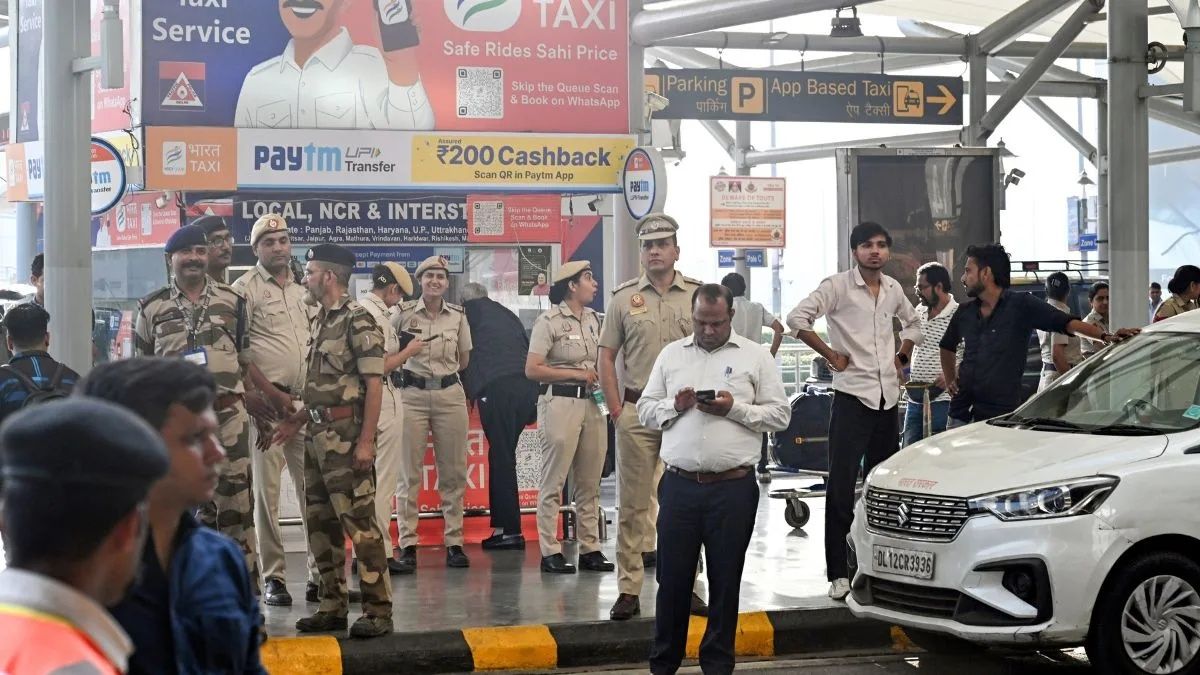
Two individuals suspected of operating for the banned Khalistan Zindabad Force have been deported from Malaysia and arrested upon landing at Delhi's Indira Gandhi International Airport, marking a significant outcome of an intelligence-driven operation coordinated between Malaysian and Indian authorities. The arrests of Gurvinder Singh from Ambala and Manjit Singh from Patiala represent an escalation in efforts to dismantle overseas support networks allegedly funnelling resources to militant groups targeting Indian territory.
Punjab's Police Director General Gaurav Yadav characterised the deportation as part of a broader counterterrorism strategy focused on identifying and neutralising foreign-based facilitators of violence. The operation demonstrates how security threats are increasingly transnational in nature, requiring cooperation across borders to trace funding flows and identify individuals operating from safe havens abroad. For Malaysian authorities, the deportation underscores the country's commitment to preventing its territory from being used as a logistics hub or financial conduit for activities deemed threatening to regional security.
Investigators contend that the two men operated from Malaysia as key coordinators and financiers for KZF-linked cells. Their suspected role centred on channelling resources to operatives within Punjab rather than engaging in direct violence themselves, reflecting a common terrorist financing model where overseas operatives maintain distance from ground-level attacks while orchestrating material support. This particular network was identified during investigations into two separate incidents targeting critical infrastructure in the state, underscoring how counter-terror operations often uncover layered plots involving multiple actors across different jurisdictions.
The breakthrough came as authorities examined an improvised explosive device detonation near Sirhind in Fatehgarh Sahib district on January 23 and a failed explosion attempt near Shambhu in Patiala on April 27. Both incidents triggered comprehensive investigations that expanded beyond immediate perpetrators to encompass the broader logistics chain sustaining such operations. Police recovered substantial material including an RPG launcher, explosives, RDX, hand grenades, and ammunition, providing tangible evidence of coordinated planning and resource acquisition across multiple locations.
Financial tracking proved crucial in the investigation's international dimension. When examining how arrested operatives obtained funds for procurement and operational costs, investigators identified suspicious transfers through overseas channels. This financial forensics work eventually pointed investigators towards Malaysia, where they identified the two suspects as intermediaries managing the flow of resources from international networks back to Punjab-based operatives. The ability to trace money movements across borders highlights how contemporary counterterrorism increasingly relies on financial intelligence alongside traditional surveillance.
The KZF, designated as a terrorist organization by Indian authorities, has maintained low-profile operations compared to earlier militant movements, yet continues attempting attacks on strategic targets. The focus on rail infrastructure, particularly the Dedicated Freight Corridor, suggests targeting the country's economic lifelines. This tactic reflects how contemporary militant groups seek maximum disruption through symbolic or economically significant strikes rather than mass casualty attacks.
Malaysia's cooperation in this matter carries particular significance for Southeast Asia, where multiple governments have grappled with the challenge of terrorist financing networks and radicalization pathways. The region has long faced concerns about foreign fighters, extremist recruitment, and the movement of funds for militant causes. By deporting the two suspects, Malaysia signalled zero tolerance for its territory being exploited as an operational base, though security analysts note that disrupting such networks remains an ongoing challenge as groups adapt their methods and shift locations.
Following their arrival in India, both men were presented before a Patiala court, which placed them in police custody for interrogation. Investigators seek to establish their connections with other operatives and identify additional network members involved in the conspiracy. This custodial phase typically involves detailed questioning about financial transfers, contact persons, code words, and operational procedures to map the complete organizational structure.
Police officials emphasize that the investigation has exposed a transnational infrastructure of handlers and financiers operating internationally to support terror activities. The scope extends beyond the two arrested individuals to encompass the broader ecosystem of facilitators, money launderers, and coordinators necessary to sustain militant operations. Dismantling such networks requires identifying and disrupting these support systems alongside apprehending frontline operators. Officials have indicated that efforts continue to trace the entire operational chain and identify other individuals connected to the conspiracy, suggesting the investigation remains in active phases with potential for further arrests both in India and abroad.