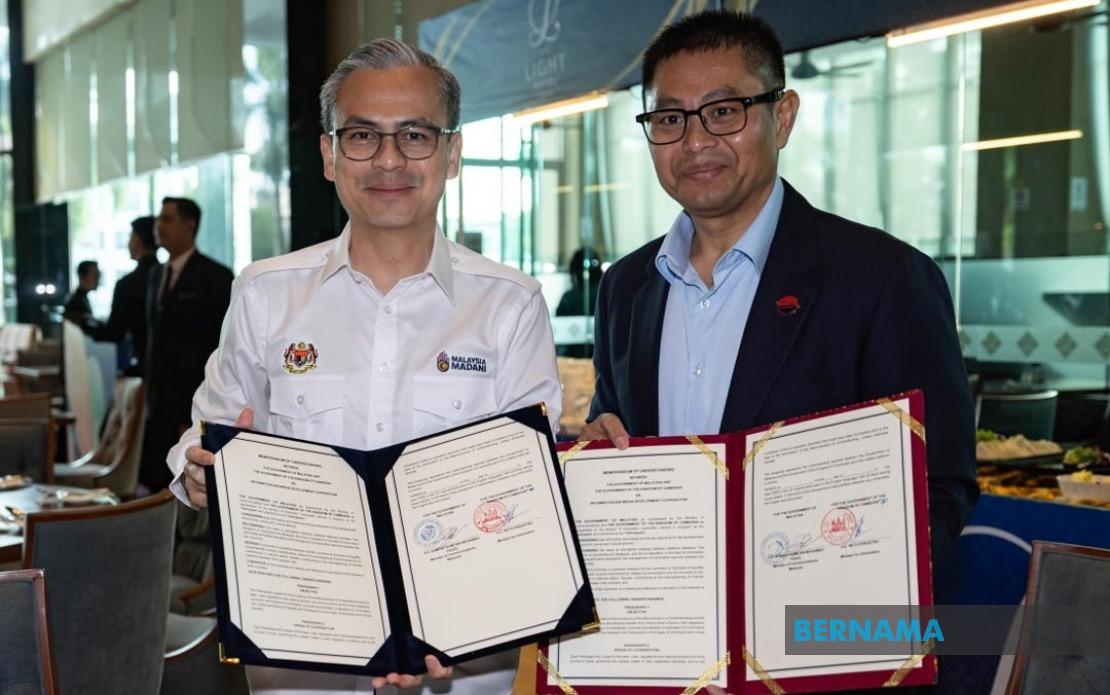
Malaysia and Cambodia have taken a significant step in strengthening their bilateral relationship by formalising cooperation in the media and communications sector through a comprehensive memorandum of understanding signed in Butterworth on June 20. The agreement between Communications Minister Datuk Fahmi Fadzil and Cambodian Information Ministry's Under Secretary of State, Prak Thaveak Amida, represents a strategic move to deepen collaboration at a time when both nations recognise the transformative power of integrated media systems across Southeast Asia.
The MoU establishes a structured framework encompassing multiple dimensions of media cooperation that extend well beyond traditional bilateral exchanges. The partnership covers news and information sharing mechanisms, radio and television broadcasting standards and practices, printing and publishing ventures, development of media professionals through training and capacity building, joint film and documentary initiatives, cybersecurity protocols for media operations, harmonisation of information policies, and alignment of regulatory frameworks. This comprehensive approach signals that both governments view media cooperation not as a peripheral diplomatic exercise but as integral to their broader regional integration agenda.
The emphasis on human capital development within the agreement reflects recognition that sustainable media growth depends fundamentally on skilled professionals. Malaysia and Cambodia can leverage each other's expertise in journalism training, broadcast management, and media production techniques. For Malaysian media organisations, Cambodian partnerships offer opportunities to expand regional coverage and deepen understanding of Southeast Asian stories. Conversely, Cambodian media practitioners can access Malaysian technical expertise and institutional knowledge accumulated through decades of media development in a multicultural, multilingual environment.
Cybersecurity provisions embedded in the MoU address emerging challenges faced by both nations' media sectors. As digital transformation accelerates across Southeast Asia, media organisations increasingly face threats from state and non-state actors seeking to manipulate information ecosystems. By establishing joint cybersecurity protocols and sharing best practices, Malaysia and Cambodia can help protect journalistic operations and infrastructure against sophisticated attacks targeting news organisations. This dimension of cooperation has particular relevance for maintaining editorial independence and public trust in information sources.
The agreement signals both nations' commitment to navigating the complexities of digital communications in ways that promote transparency and accountability rather than restrict information flow. In a region where media freedom remains contested and concerns about disinformation persist, formal cooperation frameworks can establish principles protecting journalistic integrity while supporting governments' legitimate information objectives. The focus on media integrity and credibility, as reflected in the theme of the National Journalists' Day 2026 celebration held concurrently, underscores how media cooperation complements broader democratic and governance objectives.
Cambodia's participation through Under Secretary of State Prak Thaveak Amida, representing Information Minister Neth Pheaktra, demonstrates ministerial-level commitment to the partnership. Amida's presence at Malaysia's National Journalists' Day grand finale, where Prime Minister Datuk Seri Anwar Ibrahim is expected to deliver remarks, reinforces the political significance both governments attach to media sector development. This high-level engagement creates momentum for practical implementation of MoU provisions beyond symbolic gestures.
The timing of this MoU coincides with Malaysia's sixth National Journalists' Day celebration, bringing together approximately 1,000 local and foreign media practitioners. This convergence of diplomatic milestone and industry gathering creates opportunity for immediate knowledge exchange and relationship building among practitioners from both nations. Media leaders, government officials, and journalists can establish personal connections facilitating future cooperation at operational levels rather than relying solely on government-to-government channels.
For Malaysia specifically, the agreement expands its role as a media hub within Southeast Asia. Malaysia's relatively advanced broadcasting infrastructure, publishing industry, and digital media ecosystem position it advantageously to share expertise with neighbouring nations while learning from their distinctive contexts and audience dynamics. Malaysian media organisations seeking regional expansion find Cambodia's growing media market increasingly attractive, and formal cooperation frameworks reduce uncertainty and facilitate market entry.
The partnership reflects broader trends in ASEAN cooperation where nations increasingly recognise interdependence in managing information environments shaped by technological change and globalisation. Media flows across borders; audiences consume content from multiple nations; disinformation campaigns operate regionally; and platform algorithms influence public discourse across Southeast Asia. National approaches to media governance prove insufficient without regional coordination and shared standards. Malaysia and Cambodia's MoU exemplifies pragmatic recognition that media challenges and opportunities transcend national borders.
Regulatory harmonisation provisions within the agreement deserve particular attention, as they address technical barriers impeding media exchange. Divergent broadcast standards, publishing regulations, and content classification systems can fragment Southeast Asian media markets and complicate cross-border production ventures. By aligning regulatory practices, Malaysia and Cambodia create conditions enabling joint projects and streamlined content distribution. This efficiency gains benefit both commercial media enterprises and public broadcasting missions.
The innovation dimension of the MoU positions both nations to co-develop solutions addressing shared challenges in media sustainability and audience engagement. Digital transformation disrupted traditional media business models across Southeast Asia, forcing news organisations to experiment with subscription services, sponsored content, and alternative revenue sources. Malaysian and Cambodian media leaders collaborating on innovation initiatives can benchmark approaches, avoid duplicative experimentation, and accelerate adoption of successful models adapted to regional contexts.
Moving forward, the practical success of this MoU depends on establishing working groups implementing specific cooperation initiatives rather than allowing the agreement to remain purely aspirational. Designation of lead agencies, establishment of regular consultation mechanisms, and allocation of resources for joint projects will determine whether the partnership generates tangible benefits for both nations' media sectors. Malaysian government bodies including Bernama and relevant ministry departments should proactively engage Cambodian counterparts in translating MoU principles into concrete collaborations.

%22%2F%3E%3C%2Fpattern%3E%3C%2Fdefs%3E%3Crect%20width%3D%22100%25%22%20height%3D%22100%25%22%20fill%3D%22url(%23ph32kpdg)%22%2F%3E%3Crect%20width%3D%22100%25%22%20height%3D%22100%25%22%20fill%3D%22url(%23ph32kpdp)%22%2F%3E%3Ctext%20x%3D%2250%25%22%20y%3D%2250%25%22%20text-anchor%3D%22middle%22%20dominant-baseline%3D%22central%22%20fill%3D%22rgba(255%2C255%2C255%2C0.95)%22%20font-family%3D%22Georgia%2C%20'Times%20New%20Roman'%2C%20serif%22%20font-weight%3D%22700%22%20font-size%3D%22170%22%20letter-spacing%3D%22-0.02em%22%3EMalaysia%3C%2Ftext%3E%3C%2Fsvg%3E)