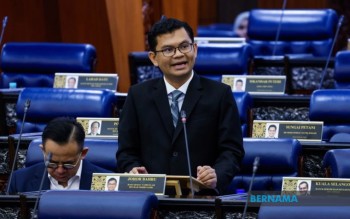
The Malaysian government has mobilised a substantial policy response to the ongoing global supply crisis, with the National Economic Action Council (MTEN) spearheading 120 separate interventions aimed at protecting the economy and cushioning citizens from external shocks. Economy Minister Akmal Nasrullah Mohd Nasir unveiled the scope of this effort during a parliamentary briefing, revealing that 27 decisions have already been fully executed while work continues on the remaining 93 measures currently in various stages of implementation. The announcement underscores Kuala Lumpur's determination to demonstrate active stewardship of economic conditions at a time when supply chain volatility continues affecting prices, production schedules, and business confidence across the region.
The government's strategy reflects a pragmatic acknowledgment that global supply disruptions will not resolve quickly, requiring sustained rather than temporary intervention. Rather than awaiting a swift normalisation of international trade and logistics, the administration has opted for what it characterises as continuous monitoring and periodic policy adjustments throughout an extended recovery period. This posture suggests officials anticipate choppy conditions extending well beyond the immediate horizon, with particular concern about energy markets, which represent a critical input for most economic sectors. The approach targets multiple vulnerability points simultaneously: immediate relief for households contending with elevated costs, targeted support for micro, small and medium enterprises struggling with input expenses and supply uncertainty, and broader measures designed to ensure critical goods remain accessible.
According to Akmal Nasrullah, energy market stabilisation is unlikely before the third quarter of 2026, contingent on geopolitical developments and restoration of normal shipping routes. This timeline carries significant implications for Malaysia's import-dependent economy, as energy costs cascade through manufacturing, agriculture, logistics and utilities. The minister cautioned that uncertainty around energy pricing and availability will continue exerting market influence for another one to two years, suggesting prolonged pressure on operating costs for businesses and household expenses. This extended outlook explains the government's emphasis on sustained intervention rather than one-off emergency measures, positioning officials for a long engagement with volatile conditions rather than betting on rapid external stabilisation.
The structured approach through MTEN reflects Malaysia's institutional effort to coordinate policy responses across multiple agencies and sectors. By centralising decision-making within a single council, the government aims to ensure coherence between fiscal measures, regulatory adjustments, trade facilitation initiatives, and direct assistance schemes. This coordination becomes especially important when supply chain problems interact with domestic inflation, currency movements, and business confidence. The council's function as both a decision-making body and ongoing monitoring mechanism suggests the government intends to treat supply chain management as a continuous process requiring regular data review and tactical adjustments rather than a fixed policy set.
The minister's emphasis on transparency and public communication reveals concern about maintaining confidence even amid external turbulence. By committing to share information about the crisis trajectory and government responses, officials appear focused on preventing public alarm or loss of faith in institutions. In Malaysia's context, where political stability and investor confidence remain economically significant, credible government communication about challenges can itself provide stabilising value. The pledge to offer accurate, timely updates also addresses legitimate public interest in understanding how crises might affect employment, prices, and business prospects across different regions and sectors.
Malaysia's position as a trade-dependent economy with substantial manufacturing and agricultural sectors makes it particularly vulnerable to global supply disruptions. Unlike larger, more self-sufficient economies, Malaysia relies heavily on imported inputs for production and on export markets for revenue. Supply chain instability therefore threatens multiple sides of the economic equation simultaneously—raising costs for domestic businesses while potentially disrupting their ability to fulfil international orders. This vulnerability explains why even one-year or two-year delays in normality represent serious risks, particularly for export-oriented small and medium enterprises with limited financial buffers to absorb extended periods of elevated costs.
The government's stated commitment to managing risks through structured, prudent and data-driven methods suggests an attempt to position Malaysia as a relatively well-ordered economy capable of weathering external shocks more competently than regional peers. This messaging carries implications for foreign investor confidence and Malaysia's standing within supply chain decisions of multinational corporations. Companies evaluating where to source products or establish operations often factor in governmental capacity to manage crises. By publicly demonstrating systematic tracking of supply chain conditions and coordinated policy response, Malaysian authorities aim to preserve Malaysia's attractiveness as a business location.
The distinction between completed and ongoing measures also contains operational significance. The 27 fully implemented decisions likely represent time-bound emergency measures such as price controls on essentials, temporary import duty reductions, or emergency financing schemes for businesses. The 93 measures still underway may include longer-term restructuring efforts such as supply chain diversification, infrastructure development for alternative trade routes, skill development for emerging industries, or regulatory changes intended to improve business resilience. This combination of immediate relief and deeper structural adjustments reflects maturity in crisis management, recognising that emergency measures alone cannot solve systemic problems requiring institutional adaptation.
The minister's framing of the government as simultaneously vigilant without alarm, realistic without defensiveness, and proactive without panic attempts to stake a careful rhetorical position. This balancing act proves important in crisis communication, as excessive concern can become self-fulfilling through reduced investment and consumption, while complacency risks leaving the economy unprepared for adverse developments. By portraying crisis management as disciplined and ongoing rather than reactive and panicked, officials aim to sustain economic activity and confidence while visibly managing downside risks.
Cooperation from non-governmental stakeholders represents another critical element of Malaysia's supply chain strategy. Businesses, transport operators, retailers, and industry associations possess real-time information about supply conditions and can adjust operations more flexibly than government alone. The government's call for multi-stakeholder engagement reflects understanding that government policy creates conditions but cannot micromanage complex supply networks. Private sector participation also distributes adjustment costs and innovation burdens more broadly, preventing government from bearing disproportionate responsibility for managing an inherently global problem.
The parliamentary briefing format itself merits attention as an aspect of governance and accountability. By providing detailed updates to elected representatives, the government creates mechanisms for legislative scrutiny of executive actions, invites input from lawmakers representing diverse constituencies, and builds parliamentary ownership of crisis management decisions. This institutionalised approach to oversight may also protect the government from later accusations of inadequate preparation or poor decision-making should conditions deteriorate unexpectedly. Parliament becomes a repository of shared responsibility for managing external economic challenges beyond any single administration's control.

