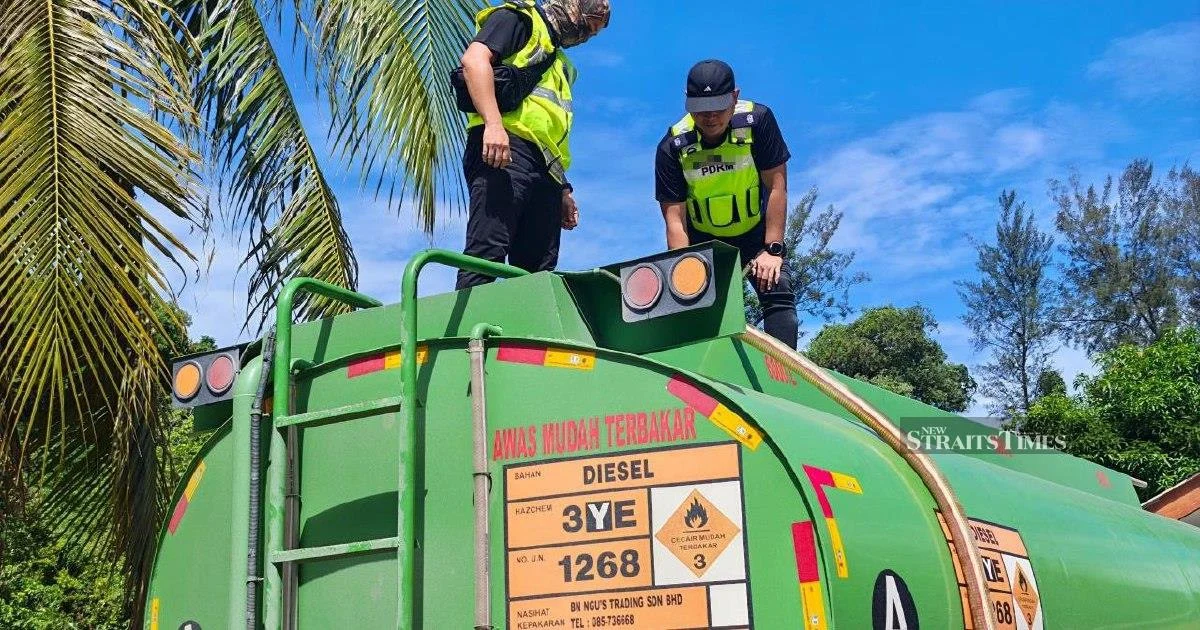
Authorities in Miri have successfully dismantled an organised syndicate engaged in diverting subsidised diesel, marking a significant enforcement victory against subsidy fraud in Sarawak. The operation culminated in the seizure of 15,000 litres of fuel that had been stockpiled at a hidden depot disguised as a residential bungalow in Tanjung Lobang, with four suspects now in custody as investigations proceed.
The discovery reveals the sophisticated methods employed by fuel diversion networks operating in East Malaysia. By concealing large-scale fuel storage within ordinary residential structures, the syndicate exploited gaps in monitoring systems designed to track movement of subsidised petroleum products. The choice of Tanjung Lobang, a semi-industrial area with mixed residential development, provided convenient cover whilst maintaining proximity to distribution routes.
Subsidised diesel schemes in Malaysia represent a significant economic liability for the government, with billions of ringgit allocated annually to keep fuel prices affordable for the general public and small businesses. When criminal networks illegally divert these subsidised stocks, they undermine the policy's intended beneficiaries while generating illicit profits through black-market sales at prices below official channels yet above actual acquisition costs. The captured 15,000 litres represents not only stolen government resources but also unfair competitive advantage for operators willing to break the law.
The Miri operation highlights enforcement efforts by authorities to combat subsidy diversion, which has emerged as a persistent challenge across Malaysia. Regional hubs like Miri become particularly vulnerable due to their distance from federal oversight centres and the relative ease of moving bulk commodities across state and national borders. The concealment strategy suggests the syndicate had operated undetected for a period sufficient to accumulate substantial quantities, indicating possible gaps in neighbourhood reporting or inspection protocols.
Investigations into the arrested quartet will likely focus on identifying the full supply and distribution networks. Authorities typically examine financial records, communication trails, and vehicle movements to map how fuel entered the system and where diverted stocks were ultimately sold. The scale of the seizure suggests this was not a small-time operation but rather an established network with infrastructure and customer relationships, raising questions about whether other hidden depots may exist elsewhere in Sarawak or adjoining regions.
The case underscores broader subsidy system vulnerabilities that policymakers continue to address. Malaysia's fuel subsidy framework, while politically necessary and socially important, creates inherent black-market incentives that sophisticated criminals exploit. The differential between subsidised prices and actual international costs means that even small-scale diversion becomes profitable, while the volume concealed in this single bungalow indicates participants recognised substantial earnings potential.
Miri and surrounding areas have historically served as transshipment points for various contraband operations due to geographical factors and market characteristics. The presence of an organised diesel diversion ring in Tanjung Lobang reflects this broader pattern and suggests that regional law enforcement may face similar challenges across multiple commodity sectors. Coordinated intelligence operations tracking suspicious fuel movements have become increasingly important for prevention.
The four detained suspects face potential charges under laws governing fuel smuggling and subsidy fraud. Malaysian authorities prosecute such cases seriously given the direct impact on government finances and fair competition. Conviction typically results in substantial fines and imprisonment, providing deterrent effect against other would-be operators. The visibility of enforcement actions like the Miri bust serves as a signal that authorities maintain active focus on subsidy-related crimes despite other competing priorities.
Beyond the immediate law enforcement dimension, this discovery reflects evolving criminal sophistication in commodity diversion. The use of residential camouflage rather than obvious industrial structures shows operators understand investigative patterns and deliberately adapt accordingly. This tactical evolution requires authorities to adopt corresponding investigative innovations, including neighbourhood intelligence networks and technology-enabled detection systems.
For Malaysian readers and businesses in Sarawak, the operation demonstrates both the government's commitment to protecting subsidy mechanisms and the reality that such schemes remain targets for criminal exploitation. Legitimate small businesses depending on subsidised diesel prices continue facing unfair competition from illegal operators able to undercut official channels. The successful dismantling in Miri represents progress toward level playing fields, though enforcement success must be sustained consistently across all regions to achieve meaningful impact on subsidy system integrity.

%22%2F%3E%3C%2Fpattern%3E%3C%2Fdefs%3E%3Crect%20width%3D%22100%25%22%20height%3D%22100%25%22%20fill%3D%22url(%23ph21o2sg)%22%2F%3E%3Crect%20width%3D%22100%25%22%20height%3D%22100%25%22%20fill%3D%22url(%23ph21o2sp)%22%2F%3E%3Ctext%20x%3D%2250%25%22%20y%3D%2250%25%22%20text-anchor%3D%22middle%22%20dominant-baseline%3D%22central%22%20fill%3D%22rgba(255%2C255%2C255%2C0.95)%22%20font-family%3D%22Georgia%2C%20'Times%20New%20Roman'%2C%20serif%22%20font-weight%3D%22700%22%20font-size%3D%22170%22%20letter-spacing%3D%22-0.02em%22%3EGabungan%3C%2Ftext%3E%3C%2Fsvg%3E)