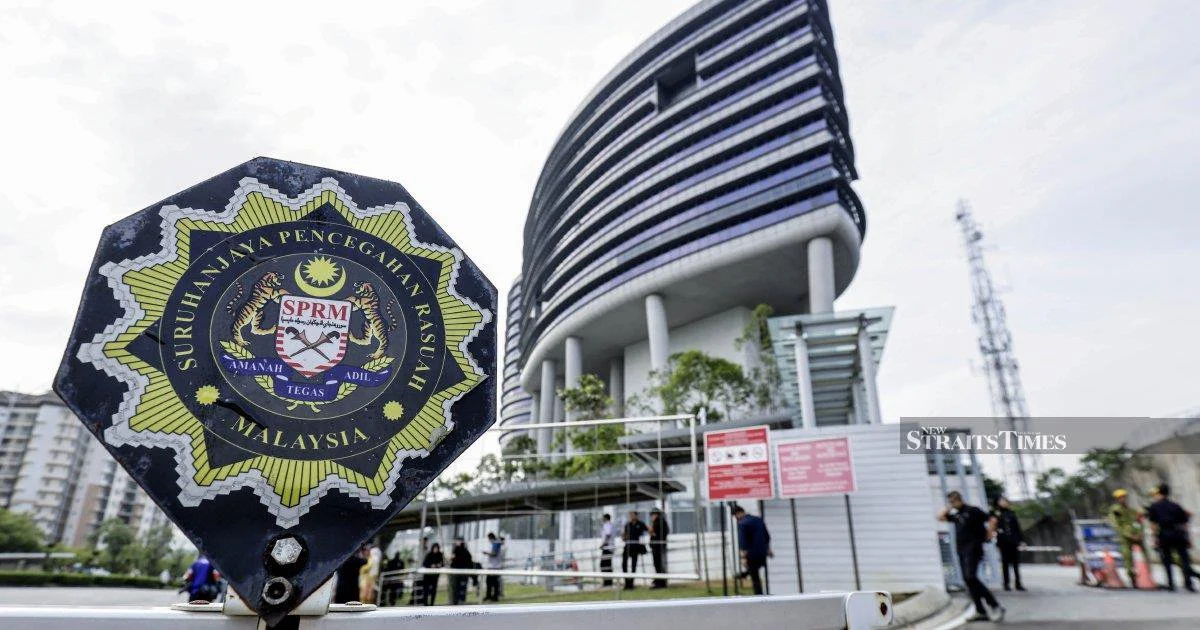
The Malaysian Anti-Corruption Commission has escalated its Op Sutra investigation with formal charges against an individual accused of systematically misappropriating public funds, with proceedings set to commence at the Shah Alam Sessions Court. The scale of the allegations—spanning 158 separate offences—underscores the breadth and complexity of the investigation that MACC has pursued as part of its broader Op Sutra operation.
Op Sutra represents one of MACC's major enforcement initiatives targeting corruption within Malaysia's public sector. The operation has attracted substantial public and parliamentary attention, reflecting growing concerns about financial misconduct among civil servants and officials entrusted with managing taxpayer resources. The sheer number of charges in this single case demonstrates how institutional corruption can manifest across multiple transactions and categories of offence, each representing a distinct breach of public trust.
Misappropriation cases of this magnitude typically involve systematic patterns of financial diversion rather than isolated incidents. When MACC assembles 158 separate counts, it generally indicates extensive documentation of individual transactions, unauthorized payments, or falsified records spanning a considerable timeframe. Such prosecutions demand rigorous forensic accounting and meticulous record-keeping by investigators to establish each offence beyond reasonable doubt before a court.
The decision to proceed with charges represents a critical juncture in the investigative process. MACC's move from investigation to prosecution signals that the commission's team has gathered sufficient evidence to convince senior prosecutors that the case warrants judicial review. This transition also marks the beginning of a legal process where the accused will have opportunity to mount a defence and challenge the prosecution's narrative within the formal court system.
For Malaysian citizens and regional observers monitoring anti-corruption efforts, such prosecutions carry symbolic weight beyond the individual case. They demonstrate whether investigative agencies possess both the legal authority and institutional capacity to pursue complex financial crimes to their conclusion. Success in securing convictions on substantial charges can either bolster public confidence in Malaysia's anti-corruption framework or highlight deficiencies requiring legislative or administrative reform.
The Shah Alam Sessions Court venue indicates that the charges fall within the jurisdiction of sessions courts rather than requiring specialized tribunals. Sessions courts in Malaysia handle serious criminal matters including corruption offences under the Malaysian Anti-Corruption Commission Act. The court system's ability to process complex financial crime cases efficiently remains a concern for many observers monitoring Malaysia's anti-corruption trajectory.
Public funds misappropriation carries particular gravity within Malaysia's governance context. Citizens contributing through taxation expect their financial contributions to support intended public services and infrastructure. When officials or individuals with custodial authority redirect these funds for unauthorized purposes, they undermine the foundational social contract between government and population. Courts treating such cases seriously, through substantial sentences when convictions are secured, reinforces that principle.
The investigation methodology underlying Op Sutra likely involved collaboration across multiple government agencies and forensic specialists. Building cases involving 158 offences requires coordination between MACC investigators, accountants, and prosecutors to construct coherent narratives connecting documents, transactions, and alleged perpetrators. Such multi-agency approaches have become increasingly sophisticated in Malaysia's anti-corruption infrastructure over recent years.
Beyond the immediate case, Op Sutra's continuation and expansion signal MACC's prioritization of embedded institutional corruption rather than limiting focus to high-profile individual wrongdoing. Misappropriation schemes often succeed because they exploit systemic vulnerabilities in procurement processes, approval mechanisms, or financial controls within government departments. Addressing such patterns requires investigations that expose not only individual culpability but also institutional gaps requiring closure.
The courtroom phase will determine not merely guilt or innocence but also establish precedents regarding evidentiary standards for financial crime prosecution in Malaysia. Trial outcomes can influence how future cases are constructed and presented to courts, potentially affecting conviction rates across the anti-corruption landscape. Legal professionals and governance observers frequently examine high-profile corruption trials for insights into Malaysia's judicial approach to state-level financial crimes.
Regional neighbours in Southeast Asia observing Malaysia's anti-corruption enforcement may draw implications for their own institutional capacity and commitment to financial accountability. The region has experienced increasing scrutiny regarding corruption governance, with international observers assessing whether countries maintain genuine enforcement mechanisms or whether systems primarily target political opponents. Credible prosecution of substantial cases across different political contexts strengthens perceptions of institutional impartiality.
As the case progresses through Shah Alam Sessions Court, several outcomes merit observation: whether the accused seeks trial or negotiates plea arrangements, how long the judicial process extends, and ultimately whether conviction results with custodial sentences or other penalties. Each development contributes to the broader narrative regarding Malaysia's commitment to prosecuting public sector corruption comprehensively and fairly, elements that remain central to the country's governance reputation internationally and domestically.

%22%2F%3E%3C%2Fpattern%3E%3C%2Fdefs%3E%3Crect%20width%3D%22100%25%22%20height%3D%22100%25%22%20fill%3D%22url(%23ph21o2sg)%22%2F%3E%3Crect%20width%3D%22100%25%22%20height%3D%22100%25%22%20fill%3D%22url(%23ph21o2sp)%22%2F%3E%3Ctext%20x%3D%2250%25%22%20y%3D%2250%25%22%20text-anchor%3D%22middle%22%20dominant-baseline%3D%22central%22%20fill%3D%22rgba(255%2C255%2C255%2C0.95)%22%20font-family%3D%22Georgia%2C%20'Times%20New%20Roman'%2C%20serif%22%20font-weight%3D%22700%22%20font-size%3D%22170%22%20letter-spacing%3D%22-0.02em%22%3EGabungan%3C%2Ftext%3E%3C%2Fsvg%3E)