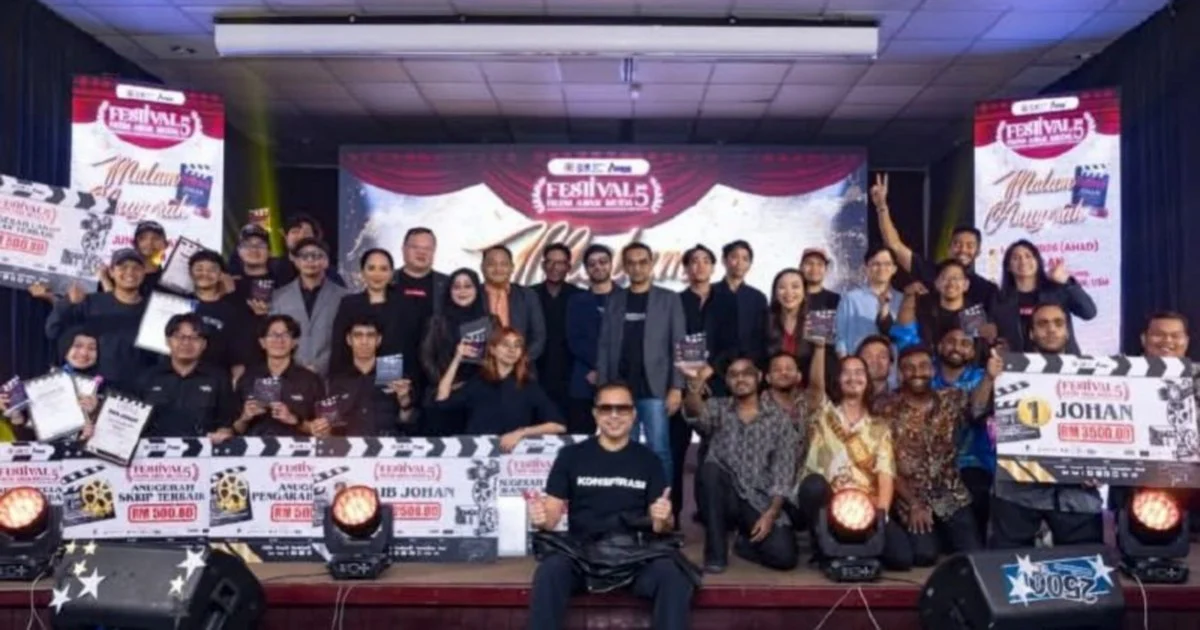
The Malaysian Anti-Corruption Commission has shifted its anti-corruption messaging strategy to embrace creative arts and filmmaking, recognising that young Malaysians respond more effectively to narrative and visual storytelling than traditional awareness campaigns. Through a strategic partnership to support the 5th Youth Film Festival at Universiti Sains Malaysia in Penang, the MACC is positioning culture and cinema as powerful tools for fostering a generation committed to transparency and ethical governance.
This collaborative approach reflects a broader understanding within Malaysia's anti-corruption establishment that institutional integrity requires cultural change beginning in formative years. By engaging university-aged audiences through film festivals and creative competitions, the MACC is embedding anti-corruption values into spaces where young people naturally congregate and exchange ideas. The festival format allows complex issues around bribery, abuse of power, and institutional corruption to be explored through compelling human narratives rather than enforcement-focused messaging.
The decision to partner on a festival of this scale demonstrates the MACC's recognition that corruption prevention extends beyond investigation and prosecution into the realm of public consciousness and values formation. Young people in Malaysia will inherit and shape institutions that currently struggle with integrity challenges across government, business, and civil society. Positioning them as active participants in cultural conversations about corruption, rather than passive recipients of warnings, creates space for genuine engagement with the ethical dimensions of public life.
Filmmaking and visual arts offer particular advantages in reaching diverse audiences across Malaysia's multicultural society. Stories told through film transcend language and class barriers in ways that policy documents and compliance training cannot. A film exploring institutional corruption through the experience of a whistleblower, or examining how bribery networks operate within procurement systems, can lodge itself in viewers' consciousness and shape their future behaviour in ways that abstract principles struggle to achieve.
The festival setting itself carries significance for the MACC's institutional positioning. Rather than appearing solely as an enforcement agency investigating wrongdoing, the commission is presenting itself as an institution invested in cultural renewal and values education. This matters for public trust and legitimacy. When anti-corruption bodies are perceived only as threats to be evaded, their effectiveness diminishes. By supporting creative platforms, the MACC signals that fighting corruption is a societal endeavour requiring broad participation and that young people have important contributions to make.
For Universiti Sains Malaysia and other higher education institutions, hosting such festivals aligns with the growing recognition that universities should incubate not just professional competence but civic virtue. Engineering graduates and business students who have engaged deeply with questions of institutional integrity and ethical responsibility through filmmaking and artistic exploration are more likely to become leaders who genuinely advance governance standards in their respective sectors.
The timing of this initiative carries particular relevance in the Southeast Asian context. Across the region, countries grapple with corruption's corrosive effects on development, investment, and public trust. Malaysia has implemented significant anti-corruption reforms over recent years, but sustaining these improvements requires generational commitment. Young people who grow up understanding corruption not as an inevitable fact of institutional life but as a preventable failure of character and systems are more likely to defend and strengthen integrity standards throughout their careers.
Film festivals also create space for nuanced exploration of corruption that goes beyond stereotypes of individual greed. Effective storytelling can examine how systemic incentives and institutional structures can pull well-intentioned people toward wrongdoing, how transparency mechanisms become corrupted, and how corruption affects ordinary citizens most severely. This complexity helps young audiences develop the sophisticated understanding necessary for actual prevention rather than mere disapproval.
The MACC's approach also acknowledges that deterrence operates differently on different audiences. For some, the threat of investigation and prosecution shapes behaviour. For others, particularly young people building their professional identities, internalised values and peer culture matter more profoundly. By engaging with filmmaking communities and creative networks at universities, the MACC is influencing the cultural narratives that will shape acceptable and unacceptable professional conduct within Malaysia's institutions.
Moving forward, the success of this initiative will depend partly on how filmmakers and artists engage with anti-corruption themes authentically rather than producing didactic propaganda. The most powerful creative works exploring institutional failure tend to be those that treat audiences as intelligent observers capable of drawing their own conclusions. If the festival becomes a platform for genuine artistic exploration of governance challenges, it could influence how an entire generation thinks about their responsibilities as future leaders and citizens.
The collaboration between the MACC and Universiti Sains Malaysia represents a recognition that building integrity in governance requires engaging not just the rational mind but also the emotional imagination. Stories stay with people in ways that arguments do not. A film that haunts viewers with the human costs of corruption, or that reveals the intricate networks through which wrongdoing operates, may ultimately prove more influential than a thousand compliance briefings. In positioning creative arts as central to anti-corruption work, the MACC is investing in the cultural foundations upon which institutional integrity ultimately rests.

%22%2F%3E%3C%2Fpattern%3E%3C%2Fdefs%3E%3Crect%20width%3D%22100%25%22%20height%3D%22100%25%22%20fill%3D%22url(%23ph21o2sg)%22%2F%3E%3Crect%20width%3D%22100%25%22%20height%3D%22100%25%22%20fill%3D%22url(%23ph21o2sp)%22%2F%3E%3Ctext%20x%3D%2250%25%22%20y%3D%2250%25%22%20text-anchor%3D%22middle%22%20dominant-baseline%3D%22central%22%20fill%3D%22rgba(255%2C255%2C255%2C0.95)%22%20font-family%3D%22Georgia%2C%20'Times%20New%20Roman'%2C%20serif%22%20font-weight%3D%22700%22%20font-size%3D%22170%22%20letter-spacing%3D%22-0.02em%22%3EGabungan%3C%2Ftext%3E%3C%2Fsvg%3E)