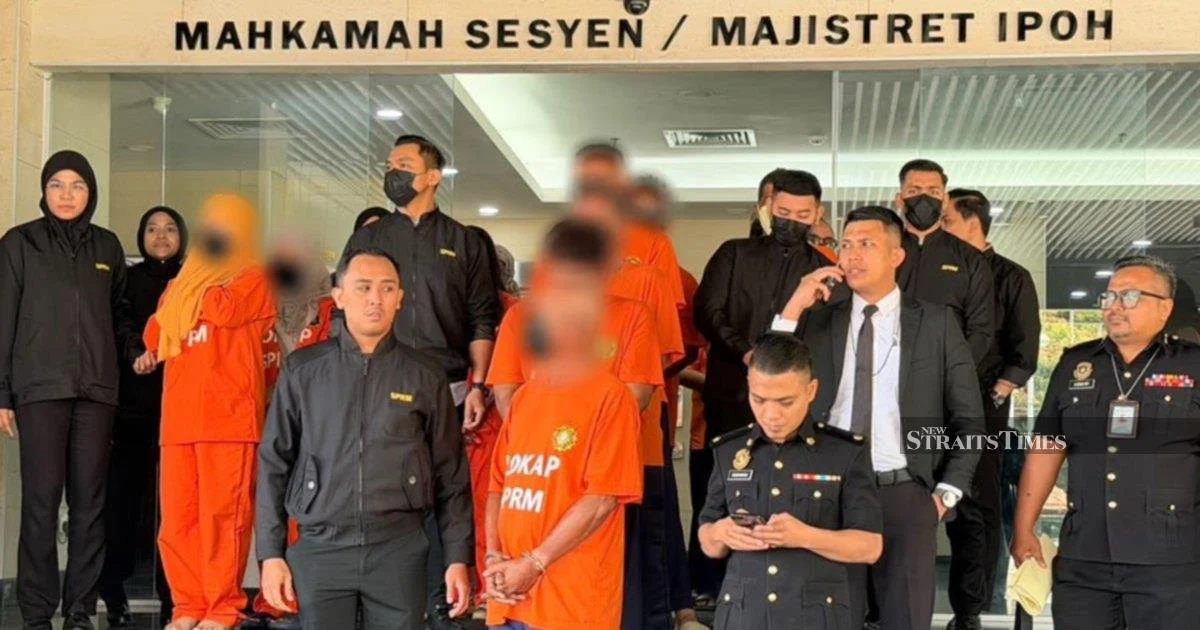
The Malaysian Anti-Corruption Commission has launched a significant crackdown on public sector graft, remanding 13 suspects in Ipoh as part of an investigation into a substantial bribery scheme worth roughly RM2.5 million. Among those detained are both the current director and a predecessor of an unnamed government agency, signalling that the corruption allegations span multiple administrations and persist within institutional structures. The operation underscores the MACC's intensified focus on high-level misconduct within the civil service, where procurement decisions intersect with potential financial gain.
The investigation centres on allegations that senior officials solicited and accepted bribes in exchange for favouring particular bidders in government contract awards. Such arrangements represent a fundamental breach of public trust and undermine the integrity of Malaysia's procurement system, which is supposed to ensure competitive bidding and value-for-money outcomes for taxpayers. The scale of the alleged scheme—spanning RM2.5 million—suggests a pattern of systematic wrongdoing rather than isolated incidents, raising questions about oversight mechanisms and internal controls within the affected agency.
Government procurement fraud remains a persistent challenge across Southeast Asia, with Malaysia grappling with ongoing efforts to strengthen transparent and accountable public spending. The involvement of sitting and former leadership figures indicates that corruption may have been embedded within decision-making processes, potentially affecting multiple contract cycles and awards. This development reflects a broader pattern in which high-ranking officials are implicated in graft cases, demonstrating that institutional position does not shield individuals from investigation when evidence emerges.
The MACC's detention of 13 suspects simultaneously suggests a coordinated operation targeting a network rather than individuals acting in isolation. Such a multi-suspect approach typically indicates that investigators have identified relationships and transactional flows connecting various parties—whether agency insiders, external contractors, or intermediaries facilitating bribe transfers. The scale of the simultaneous remand demonstrates investigative sophistication and coordination across the commission's enforcement arms.
For Malaysia's broader anti-corruption agenda, this case reinforces both progress and persistent vulnerability. The MACC's ability to move decisively against senior civil servants demonstrates institutional independence and prosecutorial will. However, the very fact that such schemes allegedly developed and operated within a government agency highlights gaps in preventive controls, audit oversight, and whistleblower protection mechanisms that remain critical reform areas.
Contract-related corruption poses particular risks in Malaysia's economy, as major infrastructure, information technology, and service delivery projects depend on government procurement. Corrupt award practices inflate costs, reduce competition, deliver inferior quality, and divert public resources toward connected vendors rather than capable providers. The ripple effects extend beyond individual projects to erode business confidence in fair competition and discourage honest firms from bidding for public work.
The detention of both current and former leadership suggests investigators are probing continuity of corrupt practices across different periods of management. This temporal dimension is significant because it may reveal whether corrupt systems were deliberately perpetuated when leadership changed, or whether new directors inherited and continued problematic arrangements established by predecessors. Understanding these dynamics helps regulators identify whether corruption reflects individual moral failure or systemic institutional dysfunction.
For Malaysian businesses and civil society, the case carries several implications. Contractors and suppliers operating in government markets face heightened scrutiny and potential implication in corruption investigations, even if approached by corrupt officials seeking bribes. Legitimate firms must document interactions transparently and report suspicious requests to appropriate authorities. Simultaneously, the operation signals that the MACC retains prosecutorial resources and willingness to pursue complex financial crime cases involving multiple actors and substantial sums.
International observers monitoring Malaysia's anti-corruption performance will view this case as evidence of continuing enforcement activity, though sustained convictions and appropriate sentencing will ultimately determine whether such operations translate into effective deterrence. Regional trading partners and investors assess governance quality partly through visible anti-corruption actions, making high-profile prosecutions relevant to Malaysia's economic positioning and regulatory reputation.
The investigation now advances to formal charges, further interrogation, and potential court proceedings. These stages will reveal additional details about bribe mechanisms, payment methods, and the specific contracts involved. Evidence gathering and witness testimony will determine whether all detainees face charges and what penalties the judiciary ultimately imposes. The case may also trigger institutional reform within the affected agency, including revised procurement procedures, enhanced audit protocols, and restructured approval authorities designed to reduce future vulnerability to similar schemes.
As Malaysia continues modernizing its anti-corruption framework, cases like this provide practical intelligence about operational vulnerabilities within public institutions. The government's response—whether through procedural reforms, technological safeguards, or organizational restructuring—will influence whether such schemes become rarer or represent recurring problems within Malaysia's public sector landscape.

%22%2F%3E%3C%2Fpattern%3E%3C%2Fdefs%3E%3Crect%20width%3D%22100%25%22%20height%3D%22100%25%22%20fill%3D%22url(%23ph21o2sg)%22%2F%3E%3Crect%20width%3D%22100%25%22%20height%3D%22100%25%22%20fill%3D%22url(%23ph21o2sp)%22%2F%3E%3Ctext%20x%3D%2250%25%22%20y%3D%2250%25%22%20text-anchor%3D%22middle%22%20dominant-baseline%3D%22central%22%20fill%3D%22rgba(255%2C255%2C255%2C0.95)%22%20font-family%3D%22Georgia%2C%20'Times%20New%20Roman'%2C%20serif%22%20font-weight%3D%22700%22%20font-size%3D%22170%22%20letter-spacing%3D%22-0.02em%22%3EGabungan%3C%2Ftext%3E%3C%2Fsvg%3E)