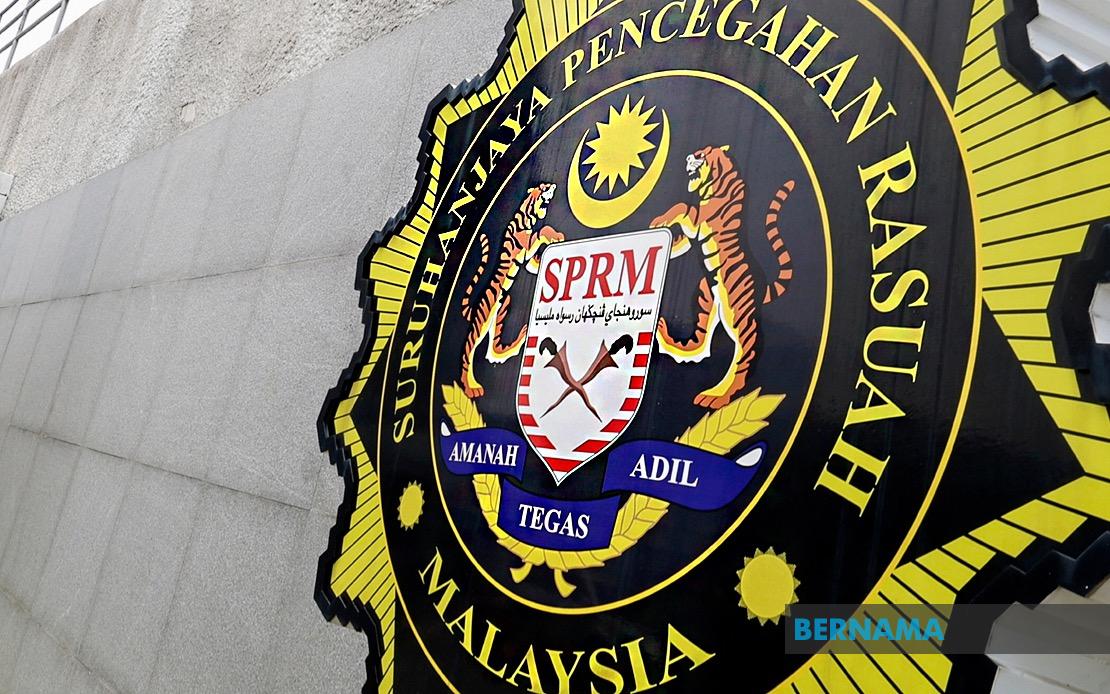
The Malaysian Anti-Corruption Commission (MACC) has arrested 13 suspects in connection with an alleged corruption scheme centred on a government agency in northern Malaysia, with investigators alleging that approximately RM2.5 million in illicit payments were channelled through intermediaries to secure lucrative government contracts. The detentions, which took place between 8 pm and 11 pm on Monday, targeted individuals ranging from civil servants to private business owners and company directors, with ages spanning from their 30s to 60s.
According to the MACC's Strategic Communications Division, the corruption network operated by leveraging administrative positions within the agency to manipulate procurement processes. The scheme allegedly funnelled direct-award and quotation-based project contracts to companies controlled by cartel members, effectively creating a monopoly that excluded legitimate competitors from accessing government business opportunities. This form of procurement corruption represents a systemic challenge in the Southeast Asian region, where institutional weaknesses and inadequate oversight mechanisms can create vulnerabilities exploitable by organised criminal syndicates.
The composition of those detained reveals the multi-layered nature of the corruption conspiracy. Among the 13 suspects, eight hold positions as civil servants within government structures, while the remaining five operate as private entrepreneurs and company proprietors. This division highlights how corruption of this magnitude typically requires collaboration between officials who control access and decision-making authority, and private actors seeking to leverage those connections for commercial advantage. The involvement of both a serving director and a former director suggests that the scheme may have evolved or continued across administrative transitions, indicating systemic rather than isolated wrongdoing.
Judicial oversight during the preliminary detention phase proceeded through Ipoh Magistrate's Court, where Magistrate Anis Hanini Abdullah approved the MACC's remand applications. The court granted differential detention periods reflecting investigative priorities: three suspects, including two civil servants and a company director, were remanded for two days, while the remaining ten suspects faced five-day detention periods extending through June 20. This staged approach allows investigators to prioritise interrogation of key figures while maintaining custody of supporting witnesses and accused persons.
Investigators have identified a suspicious pattern in how contractors allegedly accessed government contracts. According to preliminary findings, bidding companies were reportedly required to surrender between 10 and 15 per cent of contract values as bribes, with these payments funnelling through intermediaries directly to the agency's directors. The percentage structure suggests a formalised arrangement rather than ad-hoc corruption, indicating that the scheme possessed organisational sophistication and possibly written protocols. This level of systematisation makes detection more difficult during routine audits and requires targeted investigation resources.
The alleged conspiracy timeline extends from 2024 through 2026, suggesting the scheme either began recently or represents a continuation of longer-standing arrangements that investigators only recently uncovered. The fact that the alleged activities span into 2026 indicates authorities may still be documenting ongoing criminal conduct, raising questions about whether the arrested individuals represent the entire network or merely the exposed layer of a larger operation. Malaysia's procurement sector, valued at billions of ringgit annually, faces ongoing vulnerability to such schemes without sustained enforcement attention.
Operasi Drain, launched simultaneously across Kuala Lumpur, Selangor, Pahang, and Perak, demonstrated the MACC's escalated enforcement posture against procurement-related corruption. The coordinated raids across four states targeted 25 locations including residences, corporate offices, and government facilities, suggesting that investigators identified a geographically dispersed network rather than isolated misconduct within a single jurisdiction. This multi-state operation reflects the reality that modern corruption schemes frequently operate across administrative boundaries, requiring inter-agency coordination to dismantle effectively.
Asset seizures during the raids provided tangible evidence of the alleged scheme's profitability. Authorities recovered approximately RM1.5 million in cash alongside luxury timepieces, high-powered motorcycles, two vehicles, and jewellery valued at approximately RM1 million. The nature of seized assets suggests that individuals within the corruption network leveraged their illicit gains for lifestyle inflation, acquiring goods associated with wealth accumulation rather than reinvesting proceeds into legitimate business expansion. Such conspicuous consumption patterns often precipitate detection, as financial investigators identify suspicious asset ownership inconsistent with legitimate income sources.
The investigation operates under Section 17(a) of the MACC Act 2009, which addresses solicitation and acceptance of gratification by public officers. This statutory framework provides prosecutors with clear grounds for pursuing charges while also enabling civil asset forfeiture proceedings against recovered property. The relevant legislation establishes institutional independence for the MACC, theoretically insulating corruption investigations from political interference, though enforcement consistency remains variable across administrations and jurisdictions.
For Malaysian readers and Southeast Asian observers, this case illuminates persistent vulnerabilities within public procurement systems despite regulatory frameworks theoretically designed to prevent such abuses. The involvement of both active and former government officials raises concerns about knowledge transfer within bureaucracies and whether departing officials carry institutional relationships enabling continued misconduct. The scheme's apparent concentration within northern Malaysian agencies invites scrutiny of whether regional administrative capacity disparities or governance weaknesses create differential vulnerability to organised corruption.
The case underscores broader challenges confronting the region's anti-corruption infrastructure. While detection and prosecution capability has improved, the sophistication of modern corruption schemes—particularly when organised through cartel structures—increasingly outpaces standard audit and oversight mechanisms. The percentage-based bribery structure suggests technical knowledge about procurement processes, implying that conspirators possessed genuine understanding of government contracting systems. This expertise, combined with positional authority, created conditions enabling systematic theft from public resources intended for development and service delivery.
Looking forward, this investigation's outcomes will influence how Malaysian procurement agencies implement preventive controls and transparency mechanisms. Successful prosecutions could deter similar schemes by demonstrating enforcement credibility, while acquittals or lenient sentences would signal permissiveness potentially attracting further corruption. The case also provides investigative templates for other Southeast Asian anti-corruption agencies confronting comparable procurement cartels, particularly given the region's common administrative structures and analogous governance vulnerabilities across national boundaries.

%22%2F%3E%3C%2Fpattern%3E%3C%2Fdefs%3E%3Crect%20width%3D%22100%25%22%20height%3D%22100%25%22%20fill%3D%22url(%23ph21o2sg)%22%2F%3E%3Crect%20width%3D%22100%25%22%20height%3D%22100%25%22%20fill%3D%22url(%23ph21o2sp)%22%2F%3E%3Ctext%20x%3D%2250%25%22%20y%3D%2250%25%22%20text-anchor%3D%22middle%22%20dominant-baseline%3D%22central%22%20fill%3D%22rgba(255%2C255%2C255%2C0.95)%22%20font-family%3D%22Georgia%2C%20'Times%20New%20Roman'%2C%20serif%22%20font-weight%3D%22700%22%20font-size%3D%22170%22%20letter-spacing%3D%22-0.02em%22%3EGabungan%3C%2Ftext%3E%3C%2Fsvg%3E)