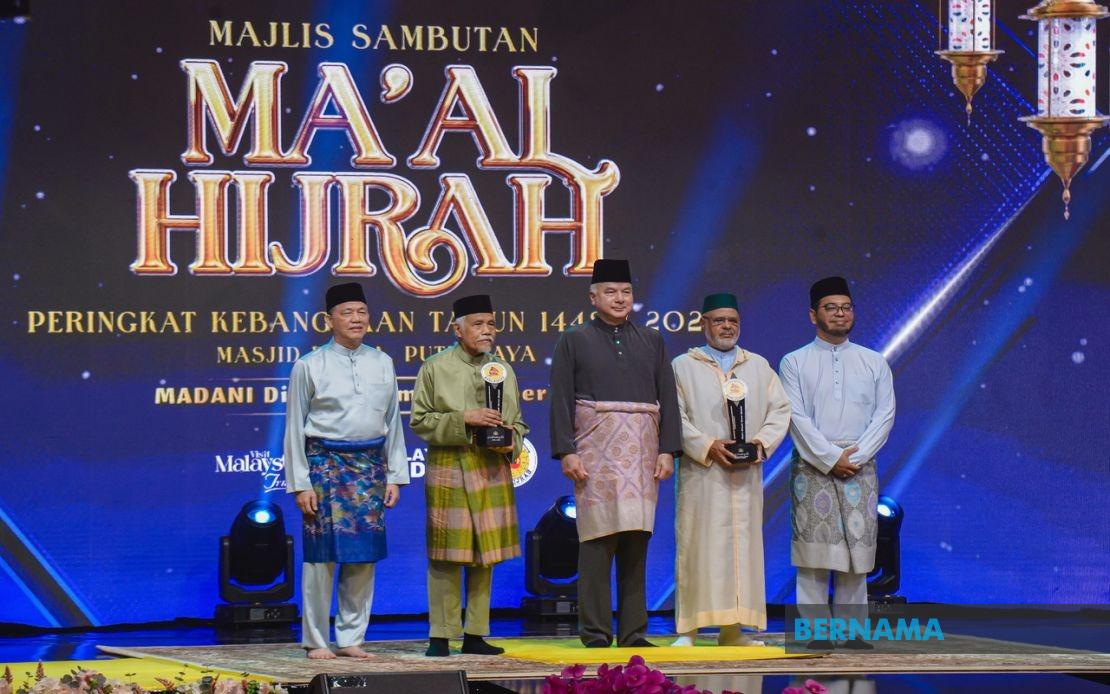
Malaysia's Maal Hijrah 1448H celebrations held on June 17 underscored the Islamic concept of transformation as a catalyst for societal progress, stronger governance and religious cohesion across the nation. The nationwide observance, structured around the theme "MADANI Dihayati, Ummah Diberkati", integrated spiritual activities ranging from Quranic recitations to scholarly discourses, with particular emphasis placed on how principled leadership strengthens public welfare and builds resilient civilisations.
The significance of this year's commemoration extended beyond ceremonial practice into substantive discourse on Islamic governance and community values. Throughout the observance, religious scholars and government representatives articulated how the historical hijrah—the Prophet Muhammad's migration from Mecca to Medina—serves as a template for personal and collective renewal. This spiritual framework was positioned not merely as historical reflection but as a living principle guiding contemporary decision-making in governance, social policy and community building. The focus on quality leadership proved particularly resonant given Malaysia's ongoing efforts to strengthen institutional integrity and public service excellence.
The principal gathering attracted approximately 5,000 participants and featured Deputy Prime Minister Datuk Seri Fadillah Yusof and Minister in the Prime Minister's Department (Religious Affairs) Dr Zulkifli Hasan among other senior officials. Their attendance underscored the federal government's commitment to observing this Islamic occasion as a national priority, signalling to civil society the importance of spiritual and moral dimensions in governance. The prominence of ministerial representation reflects broader Malaysian policy positioning religion not as peripheral to state functions but as foundational to national identity and institutional legitimacy.
The centrepiece of the main ceremony involved the presentation of national and international recognition awards. Sultan Nazrin of Perak, performing his ceremonial role, honoured Prof Emeritus Datuk Dr Osman Bakar, rector of the International Islamic University Malaysia, with the National Tokoh Maal Hijrah Award. This recognition acknowledged Osman Bakar's intellectual contributions to Islamic thought and his institutional stewardship of Malaysia's premier Islamic university. Simultaneously, the International Tokoh Maal Hijrah Award recognised Dr Ahmad Al-Raysuni, a distinguished Moroccan Islamic jurisprudence scholar, reflecting Malaysia's positioning as a bridge between Southeast Asian and broader Muslim-majority contexts.
The awards programme extended across multiple categories, honouring individuals whose contributions exemplify the hijrah principle of purposeful transformation. Community activist Datuk Ag Sharin Alimin, drawing on his extensive background in religious affairs administration in Sabah, received recognition in the male category, while former deputy state secretary Datuk Masnah Matsalleh was similarly honoured for female category contributions. These selections emphasised that meaningful change emerges not from governmental pronouncements alone but from sustained grassroots engagement by committed individuals working within institutional structures to advance Islamic values and community welfare.
Parallel observances in Sabah, attended by approximately 1,000 people, further demonstrated how Maal Hijrah celebrations franchised across Malaysia's diverse administrative contexts. Chief Minister Datuk Seri Hajiji Noor's participation, alongside committee leadership by Datuk Dr Mohd Arifin Mohd Arif (who additionally serves as Sabah's Local Government and Housing Minister), illustrated how regional administrations integrated the occasion into their governance calendars. The welcoming of Tun Musa and his wife by state leadership personalised what might otherwise remain abstract ceremonial ritual, grounding the celebration in established protocols of respect and state ceremony.
A particularly poignant element emerged in the honouring of Jusoh @ Muda Ismail, a 95-year-old Quranic teacher recognised by Ahmad Samsuri. Ismail's selection highlighted how the hijrah principle encompasses intergenerational knowledge transmission and spiritual lineage continuation. As adopted student of the late Tuan Guru Haji Mat Lintar, a renowned Quranic scholar, Ismail embodied the living connection between Islamic scholarly tradition and contemporary community education. His recognition at age 95 validated the notion that spiritual contribution knows no retirement, and that preservation of Islamic learning constitutes continuous hijrah toward civilisational resilience.
The thematic architecture of this year's Maal Hijrah observance—emphasising renewal, leadership quality and ummah cohesion—resonates particularly for Malaysia as the nation navigates demographic complexity, religious pluralism and developmental pressures. For Malaysian readers, the celebration's insistence on principled leadership carries immediate relevance to public discourse surrounding governance standards and institutional accountability. The focus on quality rather than nominal authority suggests that religious observance, when authentically practised, generates expectations for ethical conduct throughout society.
The nationwide character of these celebrations, spanning federal ceremonies in Kuala Lumpur to regional observances in Sabah and presumably across other states, underscores Islam's integrative function within Malaysian federalism. Maal Hijrah celebrations operate simultaneously as religious observance, patriotic occasion and institutional performance, reinforcing that Islam constitutes not a separable domain but a foundational element of Malaysian national identity. For regional readers across Southeast Asia, Malaysia's approach to honouring Islamic occasions while maintaining secular constitutional frameworks offers instructive example of negotiated coexistence.
The selection of award recipients from diverse professional backgrounds—academia, civil administration, community activism, religious education—suggests implicit acknowledgment that hijrah transformation operates across multiple domains simultaneously. Neither purely spiritual nor entirely material, the celebration insisted that meaningful progress requires integrated commitment spanning intellectual, administrative, communal and pedagogical dimensions. This holistic framing distinguishes the observance from purely commemorative occasions, instead positioning it as occasion for assessing societal alignment with Islamic principles guiding personal conduct and collective organisation.
Looking forward, the Maal Hijrah 1448H observance establishes expectations that its themes—transformation, ethical leadership, unified purpose—should inform subsequent policy implementation and institutional conduct. The prominence of religious affairs ministry representation, alongside deputy prime ministerial participation, signals governmental commitment to treating Islamic guidance as instrumental to national governance rather than ceremonial supplement. For Malaysian civic consciousness, this positioning carries implications extending beyond the specific celebration into broader conversations regarding religion's appropriate role in plural democracy and developing nation governance.

%22%2F%3E%3C%2Fpattern%3E%3C%2Fdefs%3E%3Crect%20width%3D%22100%25%22%20height%3D%22100%25%22%20fill%3D%22url(%23ph21o2sg)%22%2F%3E%3Crect%20width%3D%22100%25%22%20height%3D%22100%25%22%20fill%3D%22url(%23ph21o2sp)%22%2F%3E%3Ctext%20x%3D%2250%25%22%20y%3D%2250%25%22%20text-anchor%3D%22middle%22%20dominant-baseline%3D%22central%22%20fill%3D%22rgba(255%2C255%2C255%2C0.95)%22%20font-family%3D%22Georgia%2C%20'Times%20New%20Roman'%2C%20serif%22%20font-weight%3D%22700%22%20font-size%3D%22170%22%20letter-spacing%3D%22-0.02em%22%3EGabungan%3C%2Ftext%3E%3C%2Fsvg%3E)